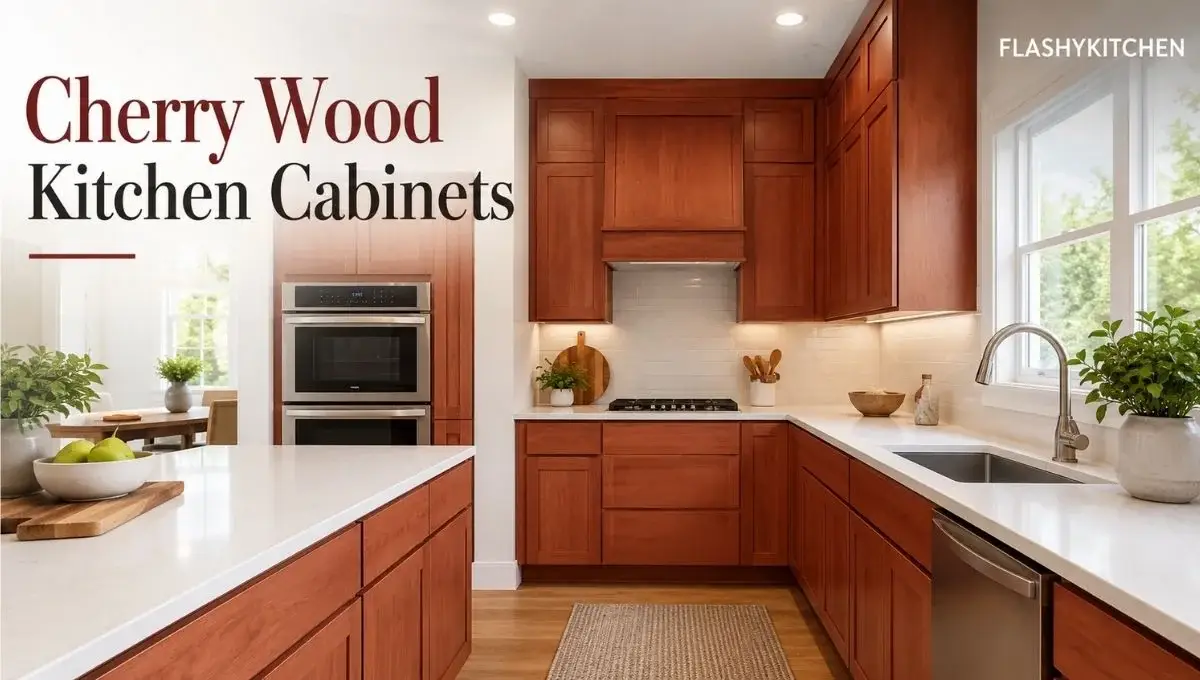
Choosing cherry wood kitchen cabinets brings soft reddish-brown tones and a smooth, straight grain to your kitchen layout. This durable hardwood deepens in color naturally as it absorbs everyday light. While cherry suits traditional layouts, clean door profiles and lighter surface pairings make it excellent for modern spaces. However, cabinet construction details vary widely, making specification checks highly important before buying.
Are cherry wood kitchen cabinets a good choice? Yes, they offer durable American black cherry hardwood that adds strength and natural appeal to your remodeling project. They work well in both traditional and modern rooms when paired with balanced surface colors.
- Color: Light pinkish-brown to deeper reddish-brown tones that naturally develop with age and light.
- Grain: Fine, smooth, and usually straight, with natural markings in some boards.
- Construction: Available with solid cherry door parts, cherry veneer, and plywood or engineered cabinet boxes.
- Best styles: Shaker, transitional, raised-panel, farmhouse, and modern flat-panel kitchens.
- Main drawback: Natural color change and higher cost may not suit homeowners wanting a fixed, uniform cabinet color.
What Are Cherry Wood Kitchen Cabinets?
True cherry cabinets are crafted from American black cherry hardwood, a lumber prized for its strength and smooth texture. Its fine grain and straight patterns accept clear coats and stains evenly.
The outer sapwood starts pale, while inner heartwood displays pinkish-brown tones that darken over time. Comparing cherry to other kitchen cabinet styles and materials helps you select the right cabinetry base for your room.
Natural wood variation is normal. Boards often feature mineral streaks, pin knots, gum pockets, or pitch pockets. These natural markings add authentic personality rather than acting as structural defects. If you prefer high contrast and bold patterns, hickory kitchen cabinets might suit you better, whereas cherry wood is more subtle.
Why Does Cherry Wood Change Color Over Time?
Fresh cherry wood starts with a light reddish-brown tint that looks lighter than older showroom displays. Natural darkening occurs over the first few months as UV exposure and indoor lighting oxidize the wood fibers. This natural patina deepens into a medium reddish-brown.
Direct sunlight speeds up color development. Cabinets near windows darken faster than shaded pantry corners, creating uneven exposure. Replacement doors will initially look lighter until they age to match surrounding fronts.
Clear coats allow maximum natural darkening, while dark cherry stains slow visible oxidation. Ask your supplier how your chosen finish ages, and use window coverings to block harsh direct sunlight.
Real Cherry vs Cherry Veneer vs Cherry-Colored Cabinets
A product labeled with a cherry name does not always contain real American black cherry wood. Lower-priced lines often use a cherry-tone finish or reddish-brown stain applied to less expensive woods. Others rely on a cherry-look laminate over engineered panels.
Our specification research at FlashyKitchen shows quality cabinet lines often combine materials for structural stability. A door frame may feature solid cherry stiles and rails, while the center panel uses cherry veneer over an MDF center panel to prevent seasonal warping. A reddish-brown stain can also be applied to cheaper birch cabinets to mimic cherry.
The cabinet box itself usually consists of furniture-grade plywood or particleboard. Exposed ends often require matching skins or decorative end panels to match front doors. Always review written product specifications to confirm exact wood species and box construction.
What Are the Pros and Cons of Cherry Cabinets?
Cherry cabinetry offers lasting benefits, but its living qualities require careful consideration before buying.
Key Advantages
- Smooth texture: The fine, closed grain provides a uniform surface that feels soft and accepts finishes evenly.
- Aging character: The wood develops a deeper color over time that laminates cannot duplicate.
- Versatile finishing: It accepts clear coats, medium warm brown tones, and dark red stains equally well.
- Flexible design use: Works well as complete kitchen cabinetry or a standalone accent island.
Potential Drawbacks
- Color shifts: Natural darkening makes guaranteeing an exact final shade difficult over several years.
- Uneven aging: Sunlight exposure causes upper cabinets near windows to darken faster than shaded lower boxes.
- Higher investment: Solid cherry doors cost more than standard oak, birch, or alder options.
- Replacement differences: A newly ordered door will look noticeably lighter than older installed units for several months.
Natural, Light, Red, and Dark Cherry Cabinet Colors
Homeowners can finish cherry hardwood in several distinct shades depending on lighting and style goals. A natural cherry finish uses a clear coat that highlights the grain and allows pinkish-brown heartwood to deepen organically. Light and medium cherry finishes add subtle golden or warm brown undertones for an even starting shade.
Dark cherry stains and espresso finishes saturate the wood with deep reddish-brown pigments. Remember that wood species and finish color are entirely separate concepts. A dark red cherry stain can be applied to other woods, so color alone never proves wood type.
During our visual research, we found online product photos often look different from installed cabinetry due to sample age, studio lighting, and screen display settings. Inspect physical cabinet-door samples inside your own kitchen at different times of day before making a final choice.
Popular Cherry Kitchen Cabinet Styles
The door profile you select determines whether your kitchen leans toward classic architectural detail or sleek contemporary design. If you prefer a lighter, cooler neutral look instead of red tones, white oak kitchen cabinets are a great alternative.
- Shaker cabinet doors: Featuring a simple recessed center panel and clean rail framing, cherry Shaker cabinets bridge traditional and modern tastes.
- Raised-panel doors: This ornate style adds decorative carving and depth, making it popular for formal or traditional kitchens.
- Flat-panel and slab doors: Solid slab doors eliminate face framing entirely, allowing natural wavy grain to serve as a modern design statement.
- Glass-front cabinets: Replacing wood center panels with glass breaks up dark cabinet runs while displaying dishware.
Choosing frameless cabinets with full-overlay slab doors instantly modernizes cherry wood, proving this lumber is not limited to old-fashioned layouts.
Modern Cherry Wood Kitchen Cabinets
Using cherry wood kitchen cabinets in a contemporary home requires balancing warm brown tones with bright, simple surfaces. Here are five practical layout ideas to keep your remodeling project looking fresh:
- Pair natural cherry with warm white quartz: A clear coat on cherry Shaker cabinets creates a crisp contrast against white quartz countertops.
- Install two-tone cabinetry: Use medium reddish-brown cherry for lower base cabinets and paint upper wall cabinets soft cream to reflect ceiling light.
- Build a statement cherry island: Keep perimeter cabinets warm white or greige, and use a dark cherry wood kitchen pantry cabinet or center island to anchor the room.
- Choose modern Shaker doors with simple hardware: Combine slim Shaker frames with matte black hardware or brushed brass pulls for an industrial edge.
- Match flat-panel doors with a simple backsplash: Let natural wood variation shine by pairing slab doors with a clean warm white tile backsplash.
In small kitchens, avoid dark espresso stains on wall cabinets. Lighter finishes, open shelving, and glass-front doors prevent the room from feeling closed in or visually heavy.
What Wall Colors, Countertops, Backsplashes, Floors, and Hardware Match Cherry?
Balancing cherry’s natural red and golden undertones requires selecting surrounding surfaces that complement rather than clash with the wood.
Countertops and Backsplashes
Light surfaces brighten cherry kitchens immediately. Warm white quartz, cream granite, and beige quartzite soften dark wood grain. For dramatic contrast, black granite or charcoal soapstone pairs well with natural cherry, though dark counters require strong task lighting. Match these tops with a simple warm white backsplash, cream handmade-look tile, or soft beige stone to keep visual focus on cabinetry.
Wall Paint Colors
Avoid bright yellow or cold blue paints, which fight against reddish-brown wood. Instead, paint walls in warm white, soft cream, light greige, or muted sage green to create a calming backdrop.
Flooring Choices
When matching flooring, compare undertones rather than matching darkness. Creating visual separation between floor and cabinets is highly important. If you prefer a deep brown without reddish tones, walnut cabinets are another natural wood choice. Pairing cherry with dark wood flooring requires light rugs, bright walls, and ample daylight to prevent a heavy appearance.
Hardware Finishes
Brushed brass and champagne bronze hardware highlight cherry’s warm golden undertones. For clean contrast, matte black hardware adds a modern touch, while brushed nickel and polished nickel provide a crisp, traditional finish.
Cherry Wood Kitchen Cabinets Cost and Buying Factors
The price of cherry wood kitchen cabinets depends heavily on door construction, finish complexity, and box quality. Because American black cherry is a premium hardwood, it generally costs 10 to 25 percent more than standard maple, oak, or alder cabinetry.
Basic ready-to-assemble or stock cabinets with cherry-veneered center panels represent the lowest price tier. Semi-custom lines featuring solid cherry stiles and rails, dovetail drawers, and soft-close hinges fall into the mid-range budget. Fully custom cabinetry with custom stains, glazes, and matching interior wood skins commands the highest price.
When comparing bids, protect your remodeling budget by requesting a complete written cabinet quote. Verify that the estimate specifies exact wood species, plywood cabinet-box construction, finished decorative end panels, moldings, delivery fees, and installation labor. A low initial box price often leaves out essential trim pieces and matching side skins that increase final project cost.
How Do You Clean and Care for Cherry Cabinets?
Proper daily maintenance protects the smooth texture and clear finish of your hardwood cabinetry. Clean cabinet doors using a soft, damp microfiber cloth and mild dish soap diluted in warm water. Immediately dry the wood with a clean towel to prevent moisture from pooling around bottom rail joints.
Never use abrasive scrubbing pads, ammonia, bleach, or silicone-based polishing sprays, as these harsh chemicals strip the protective clear coat and leave a sticky residue. To promote even natural darkening, rotate countertop appliances periodically so sunlight reaches all cabinet surfaces equally.
Are Cherry Kitchen Cabinets Still in Style in 2026?
Cherry cabinets remain entirely in style for 2026 when paired with clean, updated design elements. While heavy red glazes and ornate cathedral-style arch doors look dated, natural cherry wood itself is an architectural material with lasting value.
To keep cherry cabinetry looking current, homeowners choose Shaker or flat-panel doors, low-sheen matte finishes, and minimal hardware. Combining warm brown tones with white quartz countertops, integrated lighting, and open layouts ensures the wood looks intentional and modern rather than old-fashioned.
Final Verdict: Are Cherry Cabinets Right for Your Kitchen?
Investing in cherry wood kitchen cabinets is a smart choice for homeowners who value natural wood grain, lasting durability, and warm color character. While they require a higher initial budget and darken naturally over time, their ability to suit both Shaker and modern slab designs makes them a versatile remodeling investment.