Choosing kitchen equipment gets confusing when every list treats dozens of tools as essential. A normal Indian home does not need restaurant machines, ten pans, a full knife block or a cupboard full of single-purpose gadgets. The better approach is to buy equipment that matches the food you cook, the space you have and how often you will use each item.
For most homes, that means a reliable cooking setup, a few pieces of cookware, basic preparation tools, common utensils and selected appliances. Indian cooking also makes a pressure cooker, kadai, tawa and mixer grinder especially useful. This guide separates real essentials from useful extras and easy-to-skip purchases.
Quick Answer
A practical kitchen equipment setup should cover preparation, cooking, handling, measuring and storage without creating unnecessary clutter. Beginners should start with versatile items that solve several jobs, then add specialist tools only when repeated use justifies them.
- Start with one useful knife and a stable chopping board.
- Add a pressure cooker, kadai, tawa and saucepan.
- Keep a few spatulas, ladles and tongs.
- Choose a mixer grinder if chutneys, pastes or masalas are common.
- Delay duplicate pans and single-purpose appliances until you need them.
What Kitchen Equipment Do You Actually Need?
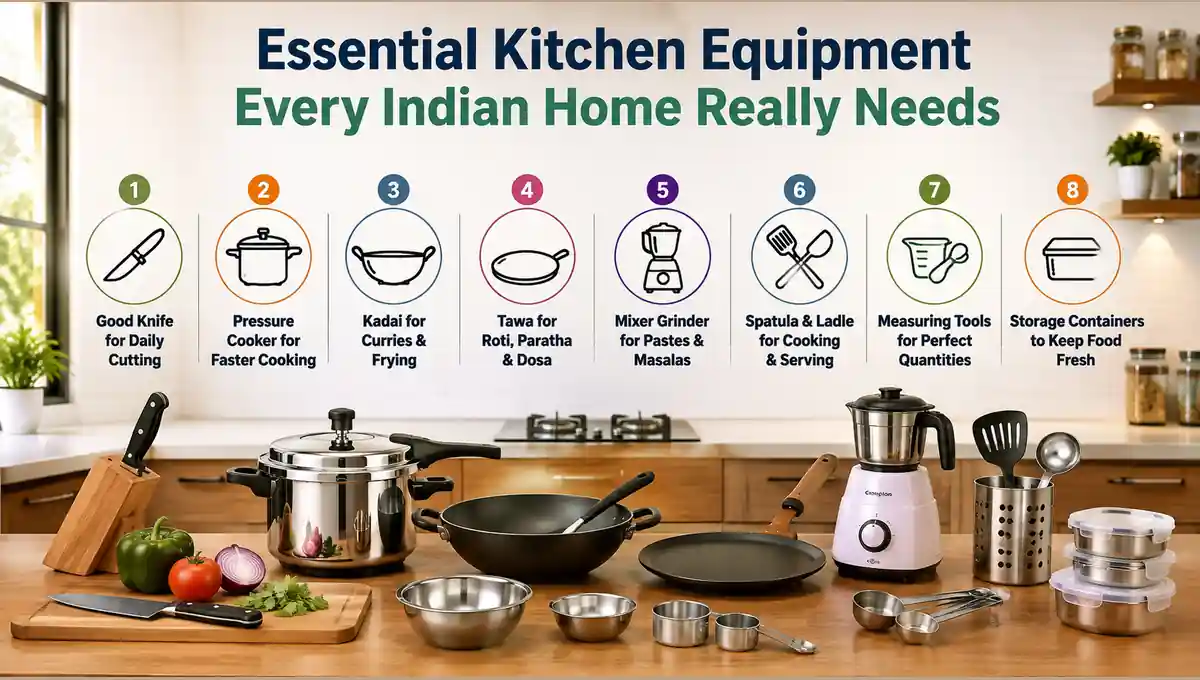
The basic kitchen equipment for a home is much smaller than many 50-item lists suggest. A beginner can cook a wide range of Indian meals with a good knife, chopping board, pressure cooker, kadai, tawa, saucepan, a few utensils, storage containers and the appliances they genuinely use.
People often use kitchen tools and equipment, kitchen utensils and equipment, cookware and appliances as overlapping terms. That is fine. What matters is the job each item performs.
| Equipment | Main use | Priority | Can another item replace it? |
|---|---|---|---|
| Kitchen knife | Cutting vegetables, fruit and herbs | Essential | A chopper covers only some jobs |
| Chopping board | Stable cutting surface | Essential | No good everyday substitute |
| Pressure cooker | Dal, beans, rice and faster cooking | Essential for many homes | A normal pot works, but takes longer |
| Kadai | Curries, frying, tadka and sautéing | Essential | Deep frying pan for some jobs |
| Tawa | Roti, paratha, dosa and shallow cooking | Depends on menu | Flat frying pan for some jobs |
| Saucepan or pot | Tea, milk, boiling and sauces | Essential | Kadai for limited jobs |
| Spatula and ladle | Stirring, turning and serving | Essential | Large spoon for limited jobs |
| Mixer grinder | Chutneys, masalas and pastes | Useful to essential | Mortar and pestle for small amounts |
| Measuring tools | Repeatable quantities | Useful | Regular cups only for rough cooking |
| Food storage containers | Atta, rice, dal, spices and leftovers | Essential | Existing food-safe boxes can work |
A basic kitchen equipment list should tell you what to buy first, not pressure you to own everything. The phrase “50 kitchen tools and equipment and their uses” describes a real search need, but it is a poor shopping rule if half those items sit unused.
For home kitchen equipment, frequency matters more than novelty. If a tool saves time every week, it deserves space. If you use it twice a year, delay the purchase or use something you already own.
Which Food Preparation Tools Are Worth Having?
Food preparation equipment should make chopping, peeling, mixing and washing ingredients easier without filling a drawer with duplicates. One comfortable general-purpose knife, a smaller knife if needed, a chopping board, peeler, grater, sieve or colander and two mixing bowls cover most daily prep.
A large knife set is unnecessary for many beginners. One sharp chef’s knife can handle vegetables, herbs and general cutting, while a smaller knife helps with peeling and fine work.
Learn basic care before buying more blades. The knife sharpening guide explains how to restore an edge safely.
A manual chopper can help if you prepare onions or vegetables in large batches. It should save enough prep time to justify washing and storing another container and blade.
Choose a chopping board that stays stable while cutting. Very hard glass or metal cutting surfaces are poor everyday partners for a sharp knife because they are harder on the blade edge.
Peelers, graters and kitchen scissors are useful only if they match your cooking habits. Apply the same rule to garlic presses and other single-purpose gadgets: add one after a repeated task becomes inconvenient.
What Cookware Works Best for Everyday Indian Cooking?
A practical cooking equipment list for many Indian homes starts with a pressure cooker, kadai, tawa, saucepan and one larger pot or frying pan. This set covers dal, rice, curries, tadka, roti, tea, boiling, sautéing and occasional frying without creating stacks of nearly identical cookware.
A pressure cooker earns its place if you regularly cook dal, chana, rajma or foods that take longer in an open pot. Follow its instructions and replace worn gaskets or other safety parts with suitable replacements rather than improvising repairs.
A kadai is one of the most flexible pieces of cookware. It can handle curries, gravies, shallow frying, deep frying and tadka, so most homes do not need a separate electric deep fryer.
A tawa is useful if roti, paratha, dosa or similar flat foods appear often in your meals. If you rarely make them, a flat frying pan may cover enough of the same work.
A saucepan handles chai, milk, sauces and smaller boiling jobs. Add a larger pot only when your batch size or family cooking needs it.
This is where beginners can overspend. Four well-used pieces usually serve a new kitchen better than a matching 10-piece set containing several sizes you rarely touch.
Which Small Utensils and Measuring Tools Are Useful?
Small kitchen utensils should make common movements easier. Start with a spatula or turner, ladle, tongs, serving spoon and a whisk only if you regularly mix batters, eggs or sauces.
Match utensils to cookware. A broad turner works well for dosa or shallow frying, a ladle suits dal and curry, and tongs help handle hot rotis and other foods.
Measuring cups and measuring spoons are useful when you follow recipes closely. A kitchen scale measures weight instead of volume and becomes especially useful for baking, portioning or recipes written in grams.
If you already own a scale but rarely use it, the kitchen scale guide explains tare, weighing containers and ingredient measurement.
A masala dabba is practical when you use the same spices every day. It keeps common masalas together, while larger food storage containers can hold atta, rice, dal and backup spices.
Which Kitchen Appliances Are Actually Worth the Space?
Kitchen appliances should earn the slab or cabinet space they occupy. For many Indian homes, a refrigerator, gas stove or induction cooktop and mixer grinder matter more than an air fryer, bread maker, electric chopper or another specialist machine.
A mixer grinder is particularly useful for chutneys, masala pastes, coconut mixtures and grinding small batches. If those jobs are common, it can reduce the need for several separate appliances.
Do you need a food processor if you already have a mixer grinder? Not necessarily. A food processor becomes useful when you regularly need larger-volume slicing, grating, chopping or dough work that takes too long by hand.
A microwave, OTG, toaster, electric kettle, rice cooker and air fryer can all be useful, but none belongs on every essential kitchen equipment list. Buy according to what you cook rather than what appears in a product catalogue.
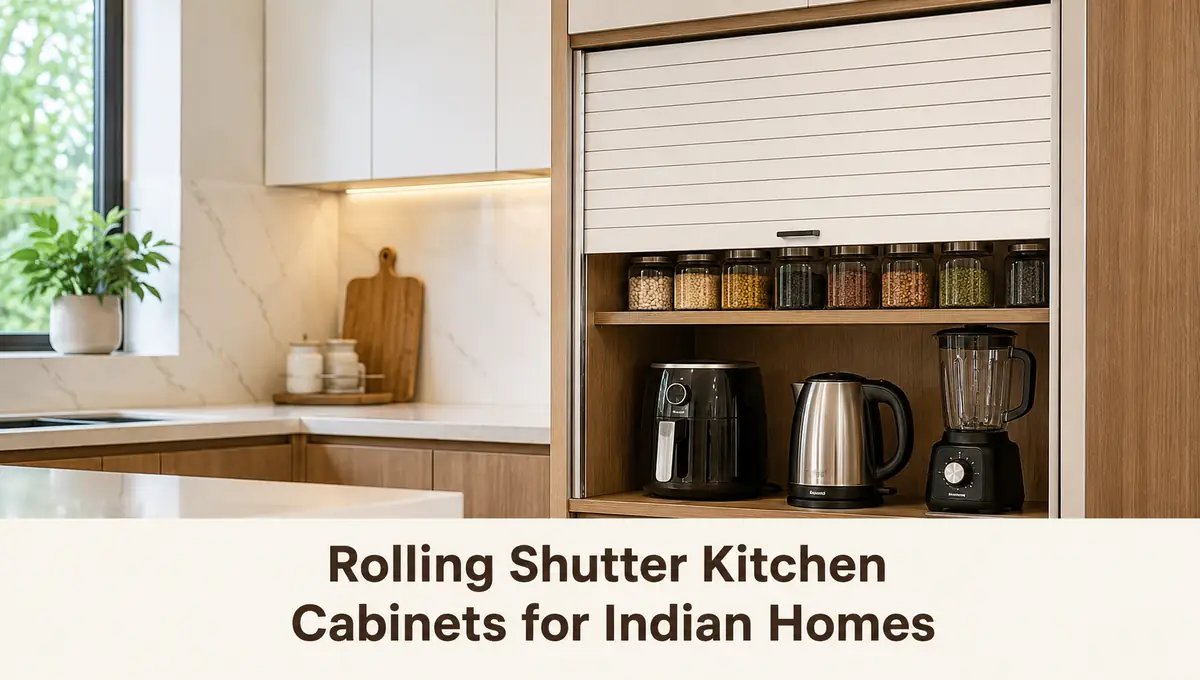
Equipment in a small modular kitchen needs an even stricter filter. Measure the available space before buying a large appliance and decide whether it will stay on the kitchen slab or be stored after use.
The appliance storage guide can help if cupboards are already becoming crowded. You can also compare small kitchen appliances when compact size matters.
For electrical appliances, also check warranty terms, authorised service availability and spare-part support in your area before choosing between similar options.
Which Kitchen Tools Can You Skip?
You can skip tools that duplicate a job you already handle comfortably or solve a problem you rarely have. This is the best way to keep a first kitchen genuinely useful without taking up too much space.
A dedicated deep fryer is unnecessary for most homes because a suitable kadai can handle occasional frying. A large knife block is also hard to justify if one or two knives cover nearly all your prep.
You can usually delay a food processor when chopping volume is low, multiple pans of almost identical size, bread makers if you rarely bake, and single-purpose egg or vegetable gadgets.
Regional tools are different from useless gadgets. An idli stand, wet grinder, dosa tawa, coconut scraper or chakla-belan can be valuable if the foods they support appear often in your home.
The same logic applies to newer appliances and gadgets. A recently released machine is not automatically more useful than the manual tool you already use comfortably.
Ask two questions before buying: “How often will I use this?” and “Can something I already own do the same job?” If both answers are weak, delay the purchase.
Which Materials Are Better for Daily Use?
No single material is best for every item. Stainless steel, cast iron and non-stick cookware behave differently, so choose by heat, weight, cleaning needs and the food you cook.
Stainless-steel tools and cookware work well for many pots, bowls and utensils because they do not depend on a non-stick surface coating. Foods that stick easily can require more heat control and cooking technique.
Cast iron cookware holds heat well and suits tawas and selected pans. It is heavier and needs proper drying and routine care to reduce rust.
Non-stick cookware makes eggs, dosa and lower-oil cooking easier, but the coating needs gentler utensils and cleaning. Replace badly damaged or peeling coated cookware instead of continuing to scrape food across a failing surface.
Wood, suitable plastic and other knife-friendly chopping boards work better for routine cutting than very hard surfaces. Replace a board when deep damage makes proper cleaning difficult.
Inspect appliance cords, loose handles and cracked parts as well. The appliance cleaning guide covers cleaning basics, while kitchen safety tips help with knives, hot cookware and electrical equipment.
What Should a Beginner Buy First?
Kitchen equipment for beginners should be bought in the order it solves real cooking tasks. Start with a small core set, cook for a few weeks, then add equipment only when a repeated need becomes clear.
A sensible buying order is:
- Set up your gas stove or induction cooktop and refrigerator if needed.
- Buy one useful knife, chopping board and basic prep tools.
- Add a pressure cooker, kadai, tawa and saucepan according to your meals.
- Get a few spatulas, ladles and tongs.
- Add a mixer grinder if chutneys, masalas or pastes are frequent.
- Buy specialist appliances only after repeated use justifies them.
There is no useful single national price for a complete starter setup. Costs change sharply with cookware material, appliance size, brand, seller and how many electrical appliances you include.
For a tighter budget, spend first on safe, frequently used basics and delay duplicates. The largest purchases are usually appliances and cookware sets, so decide the shortlist first and compare current prices only for items you genuinely need.
Conclusion
The best kitchen equipment list is not the longest one. Start with dependable prep tools, a pressure cooker, kadai, tawa, basic pots and utensils, then add appliances according to your cooking habits.
Before buying another tool, ask how often you will use it and whether something you already own can do the same job. That simple filter keeps your kitchen practical, affordable and easier to organise.