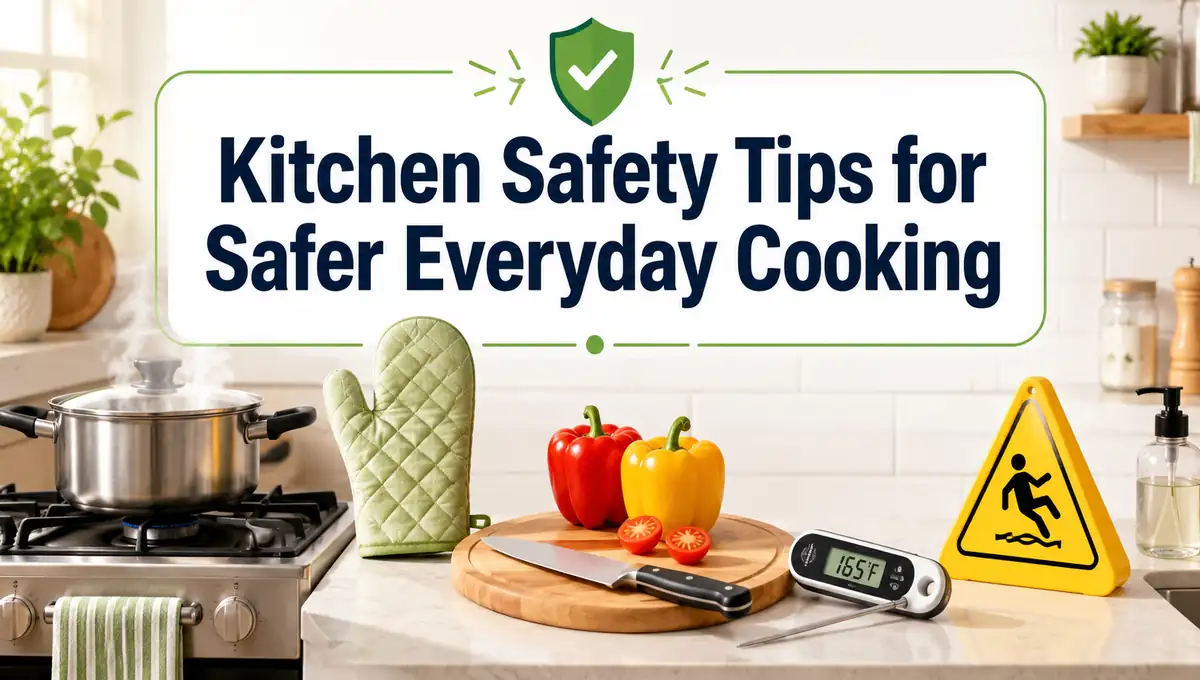
What are kitchen safety tips? They are everyday habits that reduce cuts, burns, fires, falls, electrical injuries, and foodborne illness while you cook. Good kitchen safety is less about buying special gear and more about controlling heat, sharp tools, food, appliances, and traffic. Why is kitchen safety important? Several hazards can exist in the same small space at once. By the end of this guide, you should know which habits to use before, during, and after cooking, when a problem needs professional help, and which common shortcuts are not worth the risk.
Quick Answer
What are kitchen safety tips in practical terms? They are habits that control sharp tools, heat, food, electricity, and traffic. If you’re asking what is kitchen safety, these five rules cover the basics:
- Clean spills and clutter before they cause a fall.
- Handle sharp tools and hot cookware deliberately.
- Stay with stovetop cooking and keep burnable items away.
- Cook and chill food to verified safe temperatures.
- Keep children, pets, water, and damaged electrical equipment away from active cooking.
Even 10 kitchen safety rules should start with these five priorities.
What Are Kitchen Safety Tips That Matter Every Day?
The best kitchen safety guidelines remove hazards before cooking gets busy. Most kitchen safety hazards come from repeatable problems such as clutter, distraction, poor visibility, wet floors, loose clothing, and tools left in the wrong place.
- Wipe up water, oil, and food spills as soon as you see them. Do not leave cabinet doors, bags, stools, or boxes in a walking path.
- Give commonly used ingredients and tools a fixed storage place. Better pantry organization reduces the need to search around hot pans or step over supplies.
- Use strong task lighting over cutting, cooking, and cleanup areas. Better kitchen lighting ideas make knife edges, spills, and hot surfaces easier to see.
- Tie back long hair, avoid loose sleeves near flames, and use a timer when you may lose track of time. These safety tips in the kitchen reduce distraction instead of relying on a vague reminder to “be careful.”
A clean cooking environment also makes clutter and misplaced tools easier to spot. The best practices for kitchen safety are repeatable routines. If you are exhausted or too distracted to watch a stove, choose a no-cook option or wait; preventing kitchen accidents matters more than finishing a meal.
How Do I Stop Getting Cut or Burned in the Kitchen?
Kitchen knife safety depends on predictable handling. Knife safety in the kitchen improves when blades stay visible, cutting surfaces stay stable, and hot cookware is treated as hot even after it leaves the oven.
- Use the right knife on a stable cutting board, keep your free hand out of the cutting path, and cut with control. A sharp knife generally requires less force than a dull one, which can help reduce slipping.
- Never leave a knife submerged in a sink. Current university safety guidance independently warns against knives hidden in soapy or sink water because another person may reach in without seeing the blade.
- Do not try to catch a falling knife. Step back and let it fall. To keep knives safely stored, use a block, rack, or protected drawer; thoughtful cabinet storage ideas can also keep blades away from children.
- Use dry oven mitts or potholders. Penn State Extension warns that moisture in a holder can turn to steam against hot cookware and cause a serious burn.
- Turn pan handles inward, lift lids so steam escapes away from your face, and assume an oven-heated skillet handle is still hot after the pan reaches the stovetop. These habits help you avoid burns and cuts without making normal cooking complicated.
What Should I Do If a Pan or Oil Catches Fire?
Kitchen fire safety starts with preventing a small fire from growing. Good fire safety in the kitchen means staying close enough to active cooking to notice trouble before flames spread.
- Stay in the kitchen while frying, boiling, grilling, or broiling. For longer baking or roasting, remain at home, check the food regularly, and use a timer. NFPA identifies unattended cooking as a leading factor in cooking fires.
- Keep towels, food packaging, wooden utensils, paper, and loose fabric away from burners. Among the most useful cooking safety tips are safe cooking practices that remove fuel from the area around a flame or hot surface.
- For a small stovetop pan fire, National Fire Protection Association guidance says to slide a lid over the pan, turn off the burner, and leave it covered until it cools. Never carry a burning pan or pour water onto a grease fire.
- Treat a fire extinguisher in the kitchen as backup, not permission to fight a spreading fire. If you have any doubt about controlling the fire safely, get everyone outside and call 911 or your local emergency number.
- Do not use the stove when alcohol, medication, or extreme tiredness makes you drowsy. Safe cooking habits sometimes mean choosing a no-cook meal instead. That simple choice can help prevent kitchen fires.
These emergency safety measures matter more than improvised internet fire-fighting tricks. An extinguisher cannot make a spreading fire safe to fight.
How Do Food Safety and Sanitation Fit Into Kitchen Safety?
Kitchen safety and sanitation protect against hazards you cannot see. Safety and sanitation in the kitchen depend on what touches food, how hot food gets, and how quickly perishable food is chilled.
- Wash your hands with soap and water for at least 20 seconds before and after handling food. Clean cutting boards, dishes, utensils, and counters between food-preparation tasks.
- Avoid cross contamination by keeping raw meat, poultry, seafood, and eggs away from ready-to-eat foods. Safe food preparation also means using clean plates and utensils after raw foods have touched them.
- Use a food thermometer instead of judging meat only by color. A weakness in many broad safety lists is the advice to “cook thoroughly” without a measurable target. Current FoodSafety.gov guidance provides specific minimum internal temperatures.
| Food or storage item | Safe target | Practical use |
|---|---|---|
| Refrigerator | 40°F or below | Cold storage |
| Freezer | 0°F | Frozen storage |
| Whole cuts of beef, pork, lamb, veal, goat, or bison | 145°F + 3-minute rest | Check the thickest part |
| Ground meat and sausage | 160°F | Verify doneness |
| Poultry and leftovers | 165°F | Cook or reheat safely |
FoodSafety.gov specifies 145°F plus a three-minute rest for listed whole cuts, 160°F for ground meats, and 165°F for poultry and leftovers. FDA guidance sets refrigerators at 40°F or below and freezers at 0°F.
- Store food properly after cooking. FDA guidance says perishables should be refrigerated within two hours, or within one hour when the temperature is above 90°F.
Proper food handling is central to food safety in the kitchen. Kitchen hygiene tips help, but a clean-looking counter does not replace separation, temperature control, and prompt refrigeration.
How Do I Use Kitchen Appliances Safely?
Kitchen appliance safety means keeping electricity away from water and hands away from moving parts. Electrical appliance safety starts with dry work areas, intact cords, and following the manufacturer’s instructions.
- Unplug blenders, food processors, mixers, and similar appliances before touching blades or clearing a jam. Never put a metal utensil into a toaster while it is connected to power.
Keep cords away from sinks, hot burners, sharp edges, and walking paths. If an appliance sparks, smells burned, has a damaged cord, or repeatedly trips a breaker, stop using it rather than improvising a repair.
Keeping only the small kitchen appliances you use often can leave more room to work safely. Electrical or gas repairs may require a licensed professional depending on the work and local rules.
How Do I Keep Kids, Pets, and Traffic Away From Hazards?
Kitchen safety for kids and kitchen safety for pets depend on distance and predictable traffic. NFPA guidance recommends keeping children at least three feet from the stove and from areas where hot food or drinks are prepared or carried.
- Treat that three-foot area as an active cooking zone. Turn pot handles inward, keep hot drinks away from counter edges, store matches and sharp tools out of reach, and keep pets from moving underfoot.
Kitchen layout matters too. Furniture should not force people through the route between the sink, range, and main prep area while someone carries boiling water or a hot pan. A practical kitchen furniture guide can help you judge clear movement paths as well as appearance.
Most core safety habits are free. If a damaged outlet, gas appliance, smoke alarm, or other safety device needs repair or replacement, costs vary by product, job, and region. Continuing to use faulty equipment is the worse decision.
A Safer Kitchen Starts With Repeatable Habits
What are kitchen safety tips worth remembering? Safe cooking habits should be simple and repeatable. Keep knives visible, stay with active cooking, use dry heat protection, separate raw food, verify temperatures, and keep traffic away from hot surfaces. Check your floor, stove, tools, and food storage before cooking. If equipment is damaged or a fire is spreading, stop rather than improvise. For better home cooking safety, choose three weak spots in your routine and fix them before your next meal.



5 thoughts on “What Are Kitchen Safety Tips? 20 Essential Rules for Home Cooks”