Introduction
A rolling shutter kitchen cabinet changes how you use counter and storage space. These shutters slide open and roll away neatly instead of swinging outward, hiding appliances and daily-use items behind a clean front. This guide covers what rolling shutters cost in India, which sizes fit standard cabinets, which brands deliver real quality, and whether this solution suits your cooking style. You will know if a rolling shutter is right for your home by the end.
Quick Answer
A rolling shutter kitchen cabinet is a tambour door that rolls up or sideways instead of swinging open. It suits appliance garages, breakfast counters, and tall storage units. For most Indian kitchens, a 600mm wide aluminium shutter with soft-close costs between ₹8,000 and ₹16,000 depending on brand and finish.
- Best use: Hiding mixer grinders, toasters, kettles, and daily masala jars
- Common sizes: 450mm, 600mm, 900mm widths; 1320mm standard height
- Budget range: ₹6,500 to ₹18,000 per shutter for quality aluminium or glass
- Top brands in India: Hettich, Hafele, Ebco, DBR, REHAU
- Main alternative: Lift-up or bi-fold shutters when you prefer a solid door look
What Is a Rolling Shutter Kitchen Cabinet?
A rolling shutter kitchen cabinet uses a tambour door — a series of interlocking slats that slide along a track and roll into a compact coil when opened. Unlike hinged doors that swing outward and block movement, a rolling shutter disappears into the cabinet body.
How it works: The shutter moves along aluminium or PVC tracks. In vertical designs, it rolls upward into a housing at the top of the cabinet. In horizontal designs, it slides sideways and coils at one end. The shutter itself is made from aluminium slats, PVC, glass, or stainless steel with a powder-coated or anodized finish.
Where Indian homes use it: Rolling shutters work well in small kitchens where door swing space is limited. They are common in appliance garages, breakfast counters, crockery units, and tall storage cabinets. A kitchen shutter cabinet keeps daily-use items accessible while hiding clutter.
Key difference from regular shutters: A hinged door needs clearance to open. A rolling shutter needs none. That makes it ideal for narrow kitchens, counters facing windows, and cabinets above the hob where a swinging door would hit the chimney.
Benefits and Limitations
Benefits
- Zero swing clearance: The shutter rolls into itself, so you lose no space in front of the cabinet
- Full access: When open, the entire cabinet front is exposed, making it easy to reach items at the back
- Clean look: A closed rolling shutter hides clutter and gives a streamlined appearance
- Space efficiency: Saves up to 30% space compared to traditional swing doors, based on REHAU manufacturer specifications
- Customizable: Available in aluminium, PVC, glass, and stainless steel finishes
Limitations
- Moving parts wear out: Tracks, rollers, and slats can jam or break with rough daily use
- Limited sealing: Rolling shutters don’t seal as tightly as hinged doors, so dust can enter more easily
- Repair complexity: A jammed or broken shutter is harder to fix than a simple hinge replacement
- Higher cost: A quality rolling shutter costs more than a basic hinged door for the same cabinet size
- Not for heavy use: Frequent opening and closing of a low-quality shutter leads to early failure
Who should skip rolling shutters: If you rarely need to hide appliances and your kitchen has adequate door clearance, a standard hinged shutter is cheaper and more durable. Rolling shutters add value only where swing space is genuinely limited or where a clutter-free look matters.
Rolling Shutter Sizes and Dimensions
Getting the size right is critical. A shutter that doesn’t match your cabinet opening will jam or leave gaps. Before buying, check the standard kitchen cabinet dimensions to understand how your existing cabinets are built.
Standard Sizes
Indian modular kitchen manufacturers produce rolling shutters in standard widths that match cabinet dimensions:
| Cabinet Width | Shutter Width | Common Use |
|---|---|---|
| 450mm (18 inch) | 400mm | Narrow gaps, spice storage |
| 600mm (24 inch) | 550mm | Appliance garage, breakfast counter |
| 900mm | 850mm | Large storage, tall units |
Standard height is 1320mm, adjustable up to 1400mm. This fits most base and tall cabinets. For upper cabinets, shorter heights of 400mm to 600mm are common.
How to measure: Measure the internal cabinet opening width, not the outer frame. Subtract 40-50mm from the cabinet width to get the correct shutter width. For a 600mm cabinet, order a 550mm shutter. For depth, most rolling shutters need at least 100mm of housing space at the top or side to coil the slats.
While comparing manufacturer specifications from DBR and REHAU, I found that DBR lists minimum cabinet depth as 300mm while REHAU specifies 296mm. This small difference exists because REHAU uses a plug-and-play cassette system that needs slightly less clearance. For most Indian cabinets — typically 550-600mm deep — both requirements are easily met.
Common sizes in inches: 18-inch (450mm) and 24-inch (600mm) are the most searched sizes. A 24-inch rolling shutter kitchen cabinet fits most standard Indian base units.
Size Mistakes to Avoid
- Ordering the exact cabinet width: The shutter needs clearance on both sides for the track. Always order 40-50mm less than the cabinet width
- Ignoring the coil housing: Vertical shutters need housing at the top. Horizontal shutters need space at the side. Check that your cabinet depth can accommodate this
- Wrong track type: Some shutters need surface-mounted tracks, others need recessed tracks. Confirm which type your cabinet can accept
- Skipping the soft-close check: Not all rolling shutters come with soft-close. A shutter without it slams shut and wears out faster
Materials and Types
Aluminium Shutters
Aluminium rolling shutter for kitchen cabinets is the most popular choice in India. The slats are lightweight, rust-resistant, and available in powder-coated, anodized, and brushed stainless steel finishes. Aluminium shutters handle kitchen humidity well and don’t warp like wood. They are the best all-round choice for Indian cooking conditions.
Price range: ₹10,500 to ₹25,000 for a standard 600mm unit.
PVC Shutters
PVC rolling shutter for kitchen cabinets is the budget alternative. These shutters are lightweight and fully waterproof, making them suitable for under-sink areas and wash zones. However, PVC slats discolour over time and are less durable than aluminium. They work well in rental properties or budget kitchens where cost matters more than longevity.
Price range: ₹6,800 to ₹10,200 for a 450-900mm unit.
Glass Shutters
Glass rolling shutter for kitchen cabinets adds a premium look. These shutters use frosted or clear toughened glass panels set within aluminium frames. They suit crockery display units and upper cabinets where you want to see contents without opening the door.
Price range: ₹15,000 to ₹18,000 depending on glass type and frame quality.
Stainless Steel Shutters
Stainless steel roller shutters offer the best durability for Indian kitchens. The finish resists rust, oil, and heat damage. These shutters work well in heavy-use areas and commercial-style home kitchens.
Price range: ₹10,000 to ₹20,000 for standard sizes.
Corner Shutters
Corner rolling shutters are curved units designed for corner cabinets. They slide around the corner and disappear into the side, providing access to otherwise dead space.
Price range: ₹8,000 to ₹15,000.
Rolling Shutter Kitchen Price Guide
Kitchen rolling shutter prices vary by city, brand, material, and whether installation is included. The ranges below reflect published prices from Indian manufacturers and marketplaces as of August 2026.
Manufacturer pages and marketplace listings sometimes quote different prices for similar-looking products. DBR lists PVC shutters at ₹6,779 to ₹10,169 on their own website, while the same shutters appear at ₹9,999 to ₹10,500 on Amazon India. This gap happens because marketplace listings include shipping and platform fees, while manufacturer websites show base prices before GST and delivery. Always confirm what a quote includes before comparing prices.
| Shutter Type | Budget Range | Premium Range | Best For |
|---|---|---|---|
| PVC shutter | ₹6,500 – ₹8,000 | ₹8,000 – ₹10,500 | Budget kitchens, rental homes |
| Aluminium shutter | ₹10,500 – ₹12,000 | ₹15,000 – ₹25,000 | Daily-use cabinets, appliance garages |
| Glass shutter | ₹15,000 – ₹16,000 | ₹17,000 – ₹18,000 | Crockery display, premium kitchens |
| Stainless steel shutter | ₹10,000 – ₹14,000 | ₹16,000 – ₹22,000 | Heavy-use, commercial-style kitchens |
| Corner rolling shutter | ₹8,000 – ₹12,000 | ₹14,000 – ₹18,000 | Corner storage optimization |
What affects the price:
- Brand: Hettich and Hafele cost more than Ebco and DBR
- Mechanism quality: Soft-close adds ₹1,500 to ₹3,000
- Track type: Recessed tracks cost more than surface-mounted
- Size: Larger shutters cost proportionally more
- Material: Glass and stainless steel are more expensive than PVC
Installation cost: If not included, expect to pay ₹500 to ₹1,500 per shutter for professional installation. A carpenter can install a simple surface-mounted shutter, but recessed tracks need precise routing.
Brand Comparison: Hettich vs Hafele vs Ebco vs DBR vs REHAU
Choosing between brands can be confusing. Here is an honest comparison of the brands most commonly available in India.
| Brand | Price Level | Durability | Warranty | Best For |
|---|---|---|---|---|
| Hettich | Premium | Excellent | 10+ years | High-use kitchens, premium builds |
| Hafele | Premium | Excellent | 10+ years | Luxury kitchens, designer projects |
| REHAU | Premium | Excellent | 5-10 years | German-engineered PVC systems |
| Ebco | Mid-range | Very good | 5-7 years | Value-conscious buyers |
| DBR | Budget | Good | 3-5 years | Rental properties, budget kitchens |
Hettich kitchen rolling shutter price ranges from ₹8,000 to ₹18,000 for standard sizes. The German engineering delivers smooth operation and long life. The soft-close mechanism is tested for 80,000+ cycles. Choose Hettich if you use the shutter daily and plan to stay in the home long-term.
Hafele kitchen rolling shutter price starts at ₹8,000 and can go up to ₹20,000 for premium finishes. The brand competes directly with Hettich in the luxury segment. Hafele aluminium roller shutters come in brushed stainless steel and anodized finishes.
REHAU offers the RAUVOLET Crystal Line with a plug-and-play cassette system. The German-engineered PVC shutter saves up to 30% space compared to swing doors. Minimum installation depth is 296mm. Board thickness is 16mm or 18/19mm. This is a premium solution for those who want German quality without metal slats.
Ebco kitchen rolling shutter price ranges from ₹5,000 to ₹10,000. The quality is close to Hettich for most home use, but the price is significantly lower. Ebco uses German-style mechanisms with Indian manufacturing. For most Indian kitchens, Ebco offers the best value.
DBR is a budget manufacturer offering rolling shutters from ₹6,500 to ₹10,500. The quality is acceptable for light use but may fail faster under heavy daily operation. DBR works well for rental homes or second kitchens.
The honest recommendation: For daily-use appliance garages, choose Ebco — you get reliable quality without the Hettich premium. For occasional use or budget projects, DBR is acceptable. Hettich, Hafele, and REHAU make sense only if budget is not a constraint.
Where to Use a Rolling Shutter in Your Kitchen
Appliance Garage
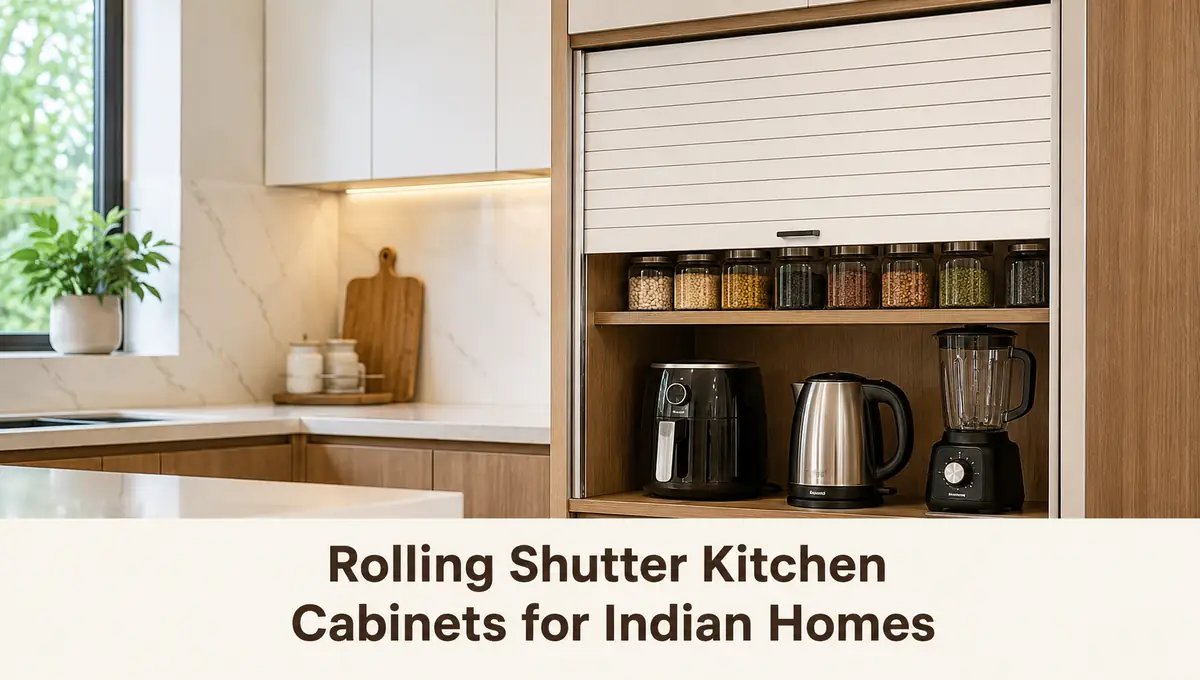
The most popular use for rolling shutter kitchen cabinets in India is the appliance garage. This is a counter-level cabinet with a rolling shutter that hides your mixer grinder, toaster, kettle, and other daily-use appliances. When you need the appliance, roll up the shutter. When done, close it for a clutter-free counter.
Placement: Corner counter sections work best because they are often unused. A rolling shutter cabinet here gives you dedicated appliance storage without sacrificing work space. Pair it with smart kitchen cabinet storage ideas to make the most of the space.
Breakfast Counter
In open-plan Indian kitchens, a breakfast counter with a rolling shutter serves double duty. The shutter hides the serving area when not in use and opens to reveal a clean counter for serving food or morning breakfast.
Crockery Display Unit
Glass rolling shutters work beautifully for crockery units. You can display your best dinnerware while keeping it dust-free. The glass allows visibility, and the rolling mechanism keeps the front clear when open.
Tall Units and Pantry Storage
Vertical rolling shutters on tall units provide full-length access without door swing. This works well in narrow kitchens where a full-height hinged door would block movement. A rolling shutter kitchen cabinet in this application replaces traditional doors entirely. If you have a kitchen pantry storage cabinet, a rolling shutter front keeps groceries hidden but accessible.
Corner Cabinets
Corner rolling shutters are specifically designed for corner cabinets where standard doors leave dead space inaccessible. The curved shutter slides around the corner, providing full access to items stored deep inside.
Rolling Shutter Alternatives for Your Kitchen
If a rolling shutter doesn’t fit your budget or needs, several alternatives exist.
Lift-up shutters swing upward and stay horizontal when open. They work well for upper cabinets but require overhead clearance. If you have a chimney or low ceiling, a lift-up shutter may not fit. Lift-up mechanisms are simpler than rolling shutters and often more durable.
Bi-fold shutters fold in half and slide to one side. They provide similar space savings to rolling shutters but with a different look. Bi-fold shutters cost less than rolling shutters and have fewer moving parts that can fail.
Sliding shutters move sideways on tracks. They work well for wide cabinets where a single door would be too heavy. Sliding shutters are the cheapest space-saving option but don’t provide full access to the cabinet interior.
Standard hinged shutters are the most durable and affordable option if you have adequate door clearance. They seal better against dust and cost significantly less than a rolling shutter. Choose this if space is not a constraint. If your existing cabinets have damaged doors, kitchen cabinet refinishing vs refacing is a cheaper way to refresh them than replacing with rolling shutters.
How to choose: If you need to hide appliances daily and have limited counter space, a rolling shutter is worth the investment. If you just need cabinet doors that close, a hinged shutter is better value.
Installation and Fitting
Installing a rolling shutter kitchen cabinet requires more precision than hanging a standard door.
DIY installation: Possible for surface-mounted shutters with pre-assembled tracks. You’ll need a drill, screwdriver, level, and measuring tape. The process takes 30-60 minutes per shutter.
Professional installation: Required for recessed tracks and premium soft-close mechanisms. A carpenter or kitchen installer will route the cabinet to accept the track and ensure smooth operation. Installation cost ranges from ₹500 to ₹1,500 per shutter.
Pre-installation checklist:
- Confirm the shutter width matches your cabinet opening (subtract 40-50mm)
- Verify that the cabinet has enough depth for the coil housing (minimum 300mm)
- Check that no electrical points, plumbing, or gas lines interfere with the track path
- Ask whether installation is included in the quoted price
- Confirm warranty coverage requires professional installation
Important: If you are retrofitting shutters into an existing modular kitchen, check how the cabinets are constructed. Some older cabinets use thinner board that cannot support recessed tracks. Surface-mounted tracks are safer for retrofit projects. Before ordering, learn how to organize kitchen cabinets to plan exactly where the shutter will go.
Maintenance and Durability
How long does a kitchen rolling shutter last? With proper care, a quality aluminium shutter from Ebco, Hettich, or Hafele lasts 10-15 years. A budget PVC shutter may need replacement after 3-5 years of daily use.
Cleaning: Wipe the slats monthly with a damp cloth to remove oil, dust, and cooking residue. Clean the tracks every 2-3 months using a vacuum attachment or a soft brush. Debris in the tracks causes sticking and accelerated wear.
Lubrication: Apply silicone spray to the tracks every 6 months. Never use cooking oil or grease — these attract dust and gum up the mechanism.
Troubleshooting common problems:
- Shutter sticks: Clean the track and apply silicone spray. Check for bent slats that catch on the track
- Shutter won’t roll up fully: Check the coil housing for obstructions. A displaced slat can block the coil
- Soft-close stops working: Look for debris in the mechanism. The damper may need replacement after several years
- Slats come loose: Tighten the connecting clips or replace the damaged slat
Common Mistakes to Avoid
- Ordering the wrong size. The shutter must be 40-50mm narrower than the cabinet opening. Ordering the exact cabinet width guarantees a jam.
- Choosing PVC for daily-use cabinets. PVC is cheap but discolours and cracks under frequent use. Spend slightly more for aluminium or stainless steel.
- Skipping soft-close. A shutter without soft-close slams shut, loosens slats, and wears out tracks. The ₹1,500-3,000 upgrade is worth it.
- Ignoring the coil housing space. Vertical shutters need housing at the top. Horizontal shutters need space at the side. If your cabinet doesn’t have this, the shutter won’t work.
- Installing without a level. Uneven tracks are the top cause of jamming and derailment. Always use a spirit level during installation.
- Buying based on price alone. A cheap rolling shutter fails faster and costs more in repairs than a mid-range option. Choose Ebco or better for daily use.
- Forgetting maintenance. Rolling shutters have moving parts that need occasional cleaning and lubrication. Neglect leads to early failure.
Frequently Asked Questions
Is rolling shutter good for kitchen?
Yes, rolling shutters are good for kitchens where swing space is limited or where you want to hide appliances. They provide full cabinet access without door clearance. However, they cost more than hinged doors and have moving parts that need maintenance. Choose quality brands like Ebco or Hettich for daily use.
How much does a 2 ft rolling shutter cost?
A 2-foot (600mm) rolling shutter costs between ₹6,500 and ₹18,000 in India depending on material and brand. PVC shutters from DBR cost ₹6,500 to ₹10,500. Aluminium shutters from Ebco cost ₹5,000 to ₹10,000. Glass or premium Hettich shutters cost ₹12,000 to ₹18,000.
What is the size of a rolling shutter in a kitchen?
Standard kitchen rolling shutter sizes are 450mm (18 inches), 600mm (24 inches), and 900mm widths. Height is typically 1320mm, adjustable up to 1400mm. The shutter itself is 40-50mm narrower than the cabinet opening. Minimum cabinet depth is 300mm.
What is the standard size of a roller shutter?
The standard size for a kitchen roller shutter is 600mm width × 1320mm height. This fits most modular kitchen base and tall cabinets. For upper cabinets, shorter heights of 400mm to 600mm are common. Always verify measurements against your specific cabinet before ordering.
What is the alternative for rolling shutter in kitchen?
Alternatives include lift-up shutters that swing upward, bi-fold shutters that fold and slide, standard sliding shutters, and traditional hinged doors. Hinged doors are cheapest and most durable but need swing clearance. Lift-up shutters suit upper cabinets. Bi-fold shutters work for medium-width cabinets.
Which material is best for kitchen rolling shutter?
Aluminium is the best overall material for Indian kitchens. It resists rust, handles humidity well, and lasts 10-15 years. Stainless steel offers even better durability but costs more. PVC is budget-friendly but discolours and cracks. Glass adds premium looks but is fragile and expensive.
Can I install a rolling shutter myself?
Surface-mounted rolling shutters with pre-assembled tracks can be installed DIY with basic tools. Recessed tracks and premium soft-close mechanisms need professional installation. A poorly installed shutter will jam, derail, or wear prematurely. Confirm installation requirements before buying.
What is the minimum depth for a rolling shutter cabinet?
The minimum cabinet depth for a rolling shutter is 300mm, according to DBR specifications. REHAU specifies a minimum installation depth of 296mm for their plug-and-play cassette system. Indian base cabinets are typically 550-600mm deep, providing adequate space for most mechanisms.
Conclusion
A rolling shutter kitchen cabinet earns its place when swing space is limited or when you want hidden appliance storage on the counter. Choose a 600mm aluminium shutter from Ebco for the best balance of quality and price, and budget ₹8,000 to ₹16,000 per shutter. Skip PVC for daily use, invest in soft-close, and verify measurements before ordering. The right rolling shutter keeps your kitchen clutter-free every day — the wrong one jams within months.