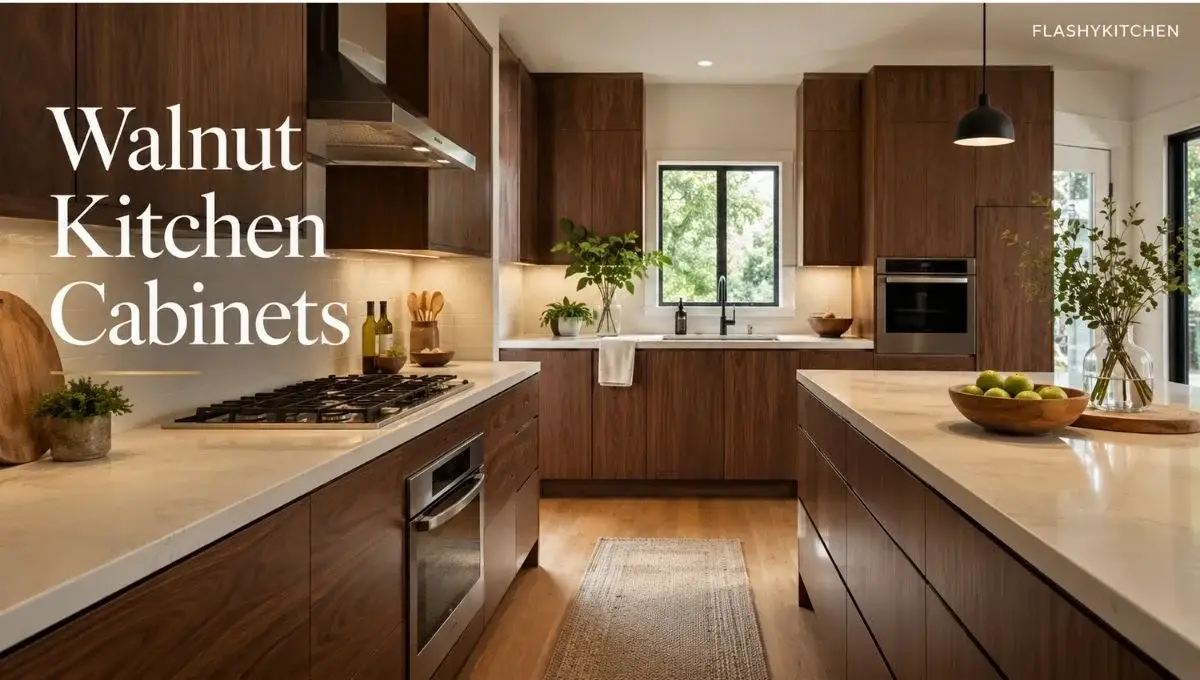
Walnut cabinetry brings warm brown tones and flowing natural wood grain to modern and traditional kitchen designs. Choosing walnut kitchen cabinets is a major decision for any homeowner, making it vital to understand the materials behind the label. Products sold as walnut range from solid American black walnut to real wood veneer and printed plastic surfaces. Knowing these differences helps you select durable cabinet construction, match kitchen lighting, and compare quotes accurately without overspending.
Quick Answer
Walnut kitchen cabinets are an excellent choice if you want natural brown warmth and distinct wood grain without applying dark artificial stains. They perform well in modern, transitional, and mid-century layouts when paired with light countertops and balanced lighting.
- Color: Medium to dark brown with natural gray, golden, and chocolate variations.
- Grain: Flowing and visible, with distinct patterns that change from board to board.
- Construction: Available as solid wood, real wood veneer, or manufactured walnut-effect cabinetry.
- Best styles: Slab, Shaker, flat-panel, frameless, and mid-century modern designs.
- Main drawback: Real walnut costs more than standard woods, and dark cabinetry requires careful lighting balance in small rooms.
What Are Walnut Kitchen Cabinets?
Real walnut cabinetry is built from American black walnut, a durable hardwood prized for its natural coloration and strength. Unlike lighter woods that require heavy staining to appear dark, walnut grows with a natural chocolate-brown heartwood. This center wood often blends with lighter sapwood along the outer edges, creating subtle golden-brown or gray-brown variations across cabinet doors and drawer fronts.
The natural wood grain moves in straight lines or flowing cathedral patterns. Because no two trees grow identically, natural color variation and distinct wood figure appear on every door. To see how walnut compares to other wood species and box construction methods, review our kitchen cabinet styles and materials guide. Understanding these properties helps you set realistic expectations for your completed remodel.
Real Walnut vs Walnut Veneer vs Walnut-Effect Cabinets
When reviewing manufacturer specifications for this guide, we found that product labels can easily mislead buyers. A cabinet named “walnut” might be solid hardwood, a thin real-wood slice, or a printed melamine surface.
- Solid walnut: Used primarily for solid walnut cabinet doors, door frames, or custom drawer fronts. Solid wood handles daily wear well and allows for future sanding or repairs.
- Walnut veneer: A thin sheet of real wood bonded over a stable core like furniture-grade plywood or an MDF core. Veneer resists warping and moisture expansion better than solid wood in humid kitchens.
- Walnut effect: A manufactured laminate cabinet front printed with a walnut pattern. It contains no real wood and cannot be sanded or refinished.
- Walnut-colored: A label indicating only the stain or brown walnut finish applied to a less expensive wood species.
Always read detailed cabinet specifications. Check the door frame, center panel, cabinet box, and finished sides to verify what you are buying.
What Are the Pros and Cons of Walnut Cabinets?
Understanding the everyday advantages and limitations of walnut cabinetry helps you decide if the material fits your household habits and budget.
Pros
- Natural warmth: Medium-brown tones add depth and visual contrast without relying on artificial dark stains.
- Visible character: Flowing grain lines make simple cabinet fronts look interesting and unique.
- Style versatility: Fits modern organic, transitional, traditional, and mid-century modern kitchen layouts.
- Flexible placement: Works well as a complete kitchen installation or as a standalone walnut kitchen island.
Cons
- Higher material cost: Solid walnut and high-quality veneer cost more than standard oak, maple, or birch cabinetry.
- Light sensitivity: Natural wood aging occurs over time as sunlight and UV exposure gradually lighten or shift the brown tones.
- Visual weight: Darker brown cabinetry can make small or dimly lit kitchens feel enclosed if not balanced properly.
- Replacement matching: Ordering a replacement door years later may result in a slight color and grain mismatch due to aging and batch variation.
Natural, Black, Light, and Dark Walnut Colors
Homeowners often feel confused by cabinet color terminology. American black walnut is the actual tree species, not a black paint color. In its raw, unfinished state, natural walnut displays medium-brown tones with cool gray undertones. Unlike cherry wood kitchen cabinets that naturally ripen into a deep reddish-amber over time, natural black walnut centers on rich brown, gray, and subtle golden hues.
Some manufacturers apply a dark walnut stain to create a uniform coffee color that hides sapwood variations. Others use a clear, low-sheen finish to highlight the lighter sapwood and natural color variation. Be aware that online photos often look darker or redder than real life due to studio lighting. Always order a physical cabinet-door sample and view it under morning daylight, afternoon sun, and evening task lighting before deciding.
Popular Walnut Cabinet Styles
Because walnut displays an active grain pattern, it looks best on clean, simple door shapes that let the natural wood act as the primary design feature.
- Walnut Shaker cabinets: A flat center panel with a clean recessed frame. This classic shape balances traditional warmth with modern, straight lines.
- Walnut slab cabinets: Completely flat doors with no frame or beveling. Slab fronts showcase continuous natural wood grain across wide drawers and pantry doors.
- Walnut flat-panel cabinets: Often used in frameless cabinets (European-style cabinets) to maximize interior storage and create flush visual lines.
- Mid-century modern walnut cabinets: Flat or slim-Shaker doors paired with warm wood tones, simple geometry, and integrated pulls or basic hardware.
While sleek slab fronts define modern spaces, Shaker frames also work beautifully in transitional rooms where homeowners want natural wood texture without the heavier, wilder grain contrast found in hickory kitchen cabinets.
Modern Walnut Kitchen Cabinet Ideas
You do not need to install dark wood on every wall to enjoy modern walnut kitchen cabinets. Here are five practical layout ideas:
- Two-tone perimeter: Use dark walnut lower cabinets to hide daily scuffs and shoe marks, while hanging warm white upper cabinets to keep the room bright.
- The walnut island: Build a solid walnut kitchen island as a central focal point surrounded by cream or warm white perimeter cabinets.
- Slab doors with hidden pulls: Use continuous walnut slab cabinet doors with handleless push-to-open hardware for a streamlined organic kitchen layout.
- Frameless Shaker mix: Pair walnut Shaker cabinetry with white quartz countertops and open shelving to keep upper wall spaces feeling open and airy.
- Floor-to-ceiling pantry wall: Use grain-matched walnut veneer for a large pantry wall, contrasting it against light gray-brown base cabinets.
For small kitchens, limit dark wood to base cabinets or a single accent wall. Use strong LED task lighting under upper cabinets and keep your backsplash light to bounce daylight across the room.
What Countertops, Backsplashes, Floors, and Hardware Match Walnut?
Walnut acts as a strong visual anchor, so your surrounding kitchen materials should provide clean balance and useful visual contrast.
Countertops Light surfaces keep walnut kitchen cabinets from looking too heavy in enclosed rooms. Warm white quartz, cream quartz, and marble-look surfaces create clean contrast against brown wood. If you prefer natural stone, light granite, taupe quartzite, or matte soapstone pair well with medium-brown cabinetry. Avoid busy, dark brown countertops that clash with the wood’s natural figure.
Backsplashes Keep the backsplash simple so it does not compete with the active wood grain. Choose a warm white backsplash, soft beige ceramic squares, or cream handmade-look tile. Light stone slabs that match your countertop also create a seamless, calm background.
Flooring You do not need to match your wood floors to your cabinets exactly. In fact, slight visual contrast looks better and avoids a monotone appearance. Pair medium walnut cabinetry with light oak flooring, natural stone tile, or neutral porcelain planks. Keeping the floor lighter or cooler than the cabinets ensures the room feels grounded and well-proportioned.
Hardware Brushed brass hardware and aged brass handles bring out the warm golden undertones in walnut wood. Matte black hardware creates a sharp, modern industrial look, while polished or brushed nickel offers a clean, cool contrast against the warm brown cabinetry.
How Much Do Walnut Kitchen Cabinets Cost?
Walnut is a denser, higher-priced hardwood than standard kitchen cabinet materials. Pricing depends heavily on how the cabinet box and doors are constructed. Because American black walnut is a sought-after hardwood with slower growth rates, solid walnut and high-quality veneers generally cost more than birch, maple, or white oak kitchen cabinets.
- Stock and RTA cabinets: Ready-to-assemble (RTA) cabinets with walnut-effect melamine or basic veneer fronts are the most budget-friendly option.
- Semi-custom cabinets: Offering real walnut veneer center panels and solid wood frames, this category balances custom sizing with moderate pricing.
- Custom walnut cabinets: Built from solid American black walnut with sequence-matched veneer across wide drawer stacks, custom layouts represent the highest cost.
When shopping, always compare complete written quotes rather than just the basic cabinet-box price. A low initial estimate may exclude required costs for decorative panels, fillers, toe kicks, soft-close hinges, delivery, and professional installation. Checking the completed project cost protects your remodeling budget from surprise fees.
How to Care for Walnut Cabinets
Proper daily maintenance protects the wood finish and prevents moisture damage over the lifespan of your kitchen.
- Wipe spills immediately: Water left sitting on cabinet edges can damage clear coats and swell veneer cores over time.
- Clean grease early: Use a soft microfiber cloth dampened with warm water and mild dish soap to remove cooking residue before it hardens.
- Dry wet zones: Pay close attention to cabinets near the sink, dishwasher, and trash pull-out. Always dry these areas with a clean towel after dishwashing.
- Avoid harsh cleaners: Never use vinegar, baking soda, bleach, abrasive scrubbing pads, or heavy furniture oils unless the cabinet manufacturer explicitly recommends them.
Are Walnut Kitchen Cabinets Worth It?
Walnut cabinetry is worth the cost if you want natural brown coloration, unique flowing grain, and a warm focal point for your home. It is an excellent fit for mid-century modern, contemporary, and transitional kitchens where the wood’s natural character can stand out.
However, walnut may not suit homeowners who need the lowest possible price, want perfectly uniform color without natural variation, or have a small kitchen with very little natural daylight. If your layout requires sequence-matched veneer, large pantry walls, or custom fillers, working with an experienced cabinet designer ensures the wood grain flows cleanly across your cabinetry.
Conclusion
Selecting walnut kitchen cabinets brings natural brown warmth, distinct wood grain, and lasting character to your kitchen remodel. Because products range from solid hardwood to printed laminates, checking construction details ensures you get genuine quality for your budget. Before ordering, compare physical door samples, test them under your home lighting, and review complete written quotes that include hardware, delivery, and professional installation.