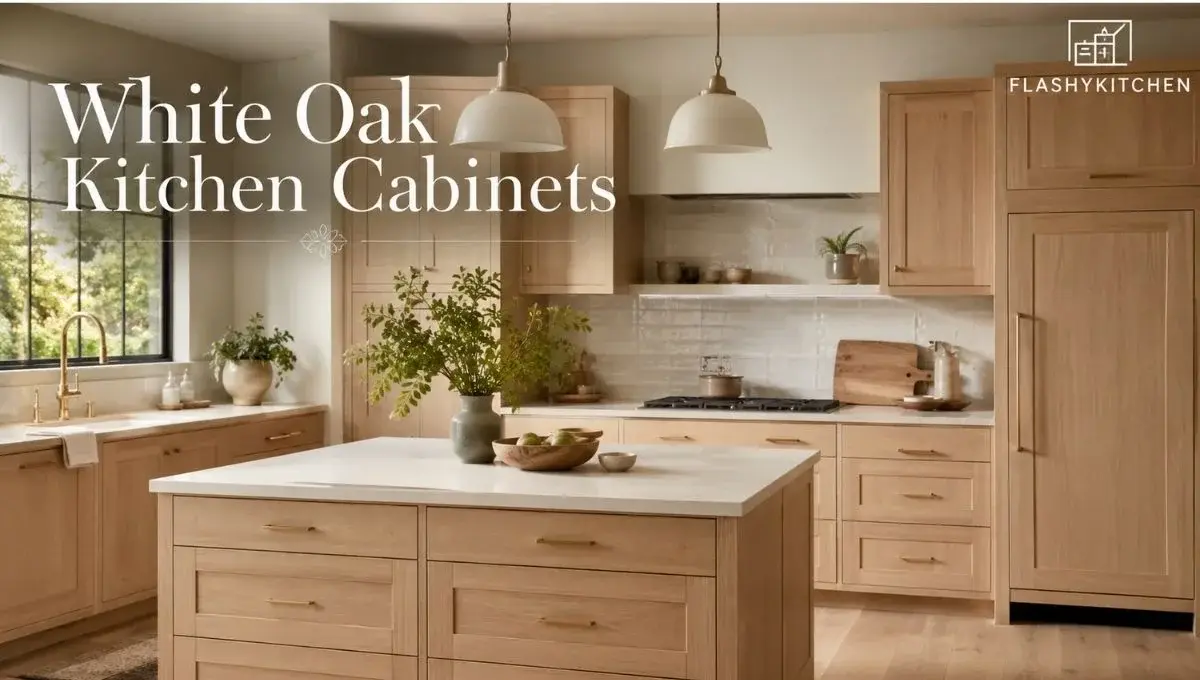
White oak kitchen cabinets bring natural warmth, visible wood grain, and a soft, light-wood appearance to the kitchen. They work especially well in modern, Scandinavian, Japandi, farmhouse, and transitional interiors.
The 2026 U.S. Houzz Kitchen Trends Study also found that wood became the leading cabinet color choice among homeowners renovating their kitchens.
Quick Answer
White oak cabinets are a strong choice for homeowners who want natural wood, flexible styling, and a warm neutral color. They are durable and timeless, but premium wood cuts, custom construction, and grain matching can increase the overall cost.
- Color: Warm beige, light brown, and soft golden tones
- Grain: Visible natural grain that varies depending on the wood cut
- Durability: Strong hardwood, although lifespan also depends on construction and finish
- Best styles: Shaker, slim Shaker, slab, Japandi, farmhouse, and transitional
- Main drawback: Premium cuts and carefully matched grain can be expensive
What Are White Oak Kitchen Cabinets?
White oak is a durable hardwood with a light-to-medium brown color and clearly visible grain. Natural white oak kitchen cabinets usually look softer and less orange than traditional golden oak cabinets.
This modern appearance comes from differences in:
- Wood selection
- Lumber cut
- Stain color
- Clear-coat finish
- Cabinet door design
The term “white oak cabinets” does not always mean that every cabinet component is made from solid oak.
For example, a cabinet may include:
- Solid white oak door frames
- White oak veneer center panels
- Veneered finished sides
- Furniture-grade plywood cabinet boxes
- Solid wood or plywood drawer boxes
Manufacturers normally list these materials separately in their product specifications.
While researching this guide for FlashyKitchen, I found that product names alone rarely explain the complete cabinet construction. Before purchasing, check the door frame, center panel, finished sides, cabinet box, drawers, hinges, and glides.
Our Kitchen Cabinets Complete Guide explains the wider differences between cabinet materials, construction types, and buying options.
Pros and Cons of White Oak Cabinets
White oak adds natural texture without making a kitchen feel dark or visually heavy. However, its cost and natural variation may not suit every homeowner.
Advantages of White Oak Cabinets
- Natural warmth and visible wood grain
- Strong and durable hardwood
- Works with clear coats and many stain colors
- Complements modern and traditional interiors
- Available in Shaker, slab, inset, and custom door styles
- Pairs well with light, dark, and neutral countertops
- Can be used throughout the kitchen or only as an accent
Disadvantages of White Oak Cabinets
- Usually costs more than painted or lower-cost wood cabinets
- Natural boards may vary in grain and color
- Rift-sawn and quarter-sawn oak can be expensive
- Custom sizing and grain matching raise the total price
- Some clear finishes may make the wood look warmer or more yellow over time
- Sunlight can gradually affect the wood tone
Cabinet lifespan also depends on the box construction, protective finish, hardware, installation quality, and regular care.
For a stronger and more rustic grain pattern, compare hickory kitchen cabinets. For a smoother and more uniform light-wood appearance, birch kitchen cabinets may be a better option.
Plain-Sawn vs Rift-Sawn vs Quarter-Sawn White Oak
The way the log is cut affects the grain pattern, visual consistency, material usage, and price.
Plain-Sawn White Oak
Plain-sawn, also known as flat-sawn white oak, usually displays wider grain movement and noticeable cathedral-shaped patterns.
This cutting method uses the log efficiently, making it one of the more affordable white oak options. It works well in farmhouse, traditional, rustic, and transitional kitchens where natural grain variation is welcome.
Rift-Sawn White Oak
Rift-sawn white oak kitchen cabinets have a straighter, quieter, and more consistent grain pattern. They usually show less visible flecking than quarter-sawn oak.
The clean grain works especially well on:
- Slab cabinet doors
- Slim Shaker doors
- Tall pantry cabinets
- Integrated refrigerator panels
- Large kitchen islands
Rift cutting produces less usable material from each log, so it normally costs more than plain-sawn white oak.
Quarter-Sawn White Oak
Quarter-sawn white oak kitchen cabinets also have relatively straight grain, but they can display distinctive ray flecks.
Some homeowners appreciate this natural figure because it gives the cabinets more character. Others prefer the calmer and more consistent appearance of rift-sawn white oak.
Popular White Oak Cabinet Door Styles
White oak works with several cabinet door designs, allowing it to fit both contemporary and traditional kitchens.
White Oak Shaker Cabinets
White oak Shaker kitchen cabinets combine a simple framed door with visible natural wood grain. They are a popular choice for farmhouse, transitional, and modern organic kitchens.
The classic Shaker profile adds detail without making the room feel overly decorative.
White Oak Slim Shaker Cabinets
White oak slim Shaker kitchen cabinets use narrower rails and stiles than traditional Shaker doors. This creates a cleaner, more contemporary appearance while preserving some framed-door detail.
Slim Shaker cabinets work well in Japandi, Scandinavian, transitional, and modern kitchens.
White Oak Slab Cabinets
White oak slab kitchen cabinets have smooth, flat door fronts. Their simple design allows the grain to become the main visual feature.
Slab doors are particularly effective when the manufacturer carefully aligns the grain across multiple cabinet fronts.
White Oak Inset Cabinets
White oak inset kitchen cabinets have doors and drawers fitted inside the cabinet face frame. This produces a precise, furniture-style appearance.
However, inset construction requires more detailed manufacturing and installation, so it generally costs more than standard overlay cabinetry.
Which Finish Looks Best on White Oak Cabinets?
The best finish depends on whether you want to preserve the wood’s natural tone, make it lighter, or add more depth.
Natural Clear Finish
A clear finish keeps the grain visible and gives the cabinets a simple, natural appearance. However, even a clear coat can slightly warm the wood or bring out soft yellow and golden tones.
Light Beige Stain
A light beige stain can create a soft, neutral appearance while reducing some of the natural color variation between boards.
This finish works particularly well with warm white counters, cream backsplashes, and light natural flooring.
Honey or Medium-Brown Stain
Honey and medium-brown stains create a richer, more traditional look. They can add depth to the grain but may make the cabinets appear warmer.
Whitewashed or Bleached Oak
Whitewashed, bleached, limed, and cerused finishes can make white oak appear lighter while emphasizing its texture.
These finishes are commonly used in Scandinavian, coastal, Japandi, and modern organic kitchens.
Direct sunlight may gradually alter the appearance of natural wood. During research, two common homeowner concerns appeared repeatedly: whether white oak would become too yellow and whether the design would eventually feel dated.
Do not choose a finish from one online photograph. Place a physical cabinet door sample beside your countertop, flooring, backsplash, and wall paint. Check it during daylight, evening light, and normal kitchen lighting.
For a deeper red-brown wood tone, compare cherry wood kitchen cabinets.
Modern White Oak Kitchen Cabinet Ideas
White oak is flexible enough to be used throughout the kitchen or as a focused design accent.
Pair White Oak With Warm White Quartz
Modern white oak kitchen cabinets pair naturally with warm white or cream quartz countertops. The light surface keeps the kitchen bright while allowing the wood grain to remain visible.
Avoid choosing a countertop based only on brightness. Compare the undertones to make sure the white does not look too blue or cold beside the oak.
Use Dark Countertops for Contrast
Charcoal, dark gray, or black countertops create stronger contrast with white oak cabinets.
This combination works well in modern kitchens because the dark surface visually grounds the room without hiding the natural wood texture.
Create a White Oak Kitchen Island
A white oak kitchen island can add warmth to a kitchen with painted perimeter cabinets.
Popular perimeter colors include:
- Warm white
- Cream
- Sage green
- Mushroom
- Soft greige
- Muted taupe
Using white oak only on the island can also reduce costs because you are not purchasing premium wood cabinets for the entire kitchen.
Combine White Oak and White Cabinets
White oak and white kitchen cabinets work best when the material change happens at a clear visual point.
For example, use white oak on:
- The kitchen island
- A tall pantry wall
- Base cabinets
- Open shelving
- An appliance cabinet section
Use painted white cabinetry on the remaining areas to keep the design intentional rather than uneven.
Design a White Oak Farmhouse Kitchen
Farmhouse white oak kitchen cabinets often include Shaker doors, warm metal hardware, handmade-look backsplash tile, and simple stone countertops.
The natural grain adds farmhouse character without requiring distressed finishes or heavy decorative details.
Add a Dark-Wood Accent
A darker wood island or tall cabinet wall can add contrast to a light white oak kitchen.
For deeper brown tones and a more luxurious appearance, walnut kitchen cabinets can work well as an accent material.
What Countertops Match White Oak Cabinets?
White oak cabinets can work with both light and dark countertop materials.
Popular options include:
- Warm white quartz
- Cream quartz
- Beige quartz
- Selected quartzite
- Soapstone-style surfaces
- Charcoal countertops
- Black stone surfaces
Pay close attention to undertones. A cool blue-white countertop may clash with warm white oak, while creamy whites and soft beige surfaces usually create a more balanced combination.
Always compare full-size samples under the actual lighting in your kitchen.
What Flooring Works With White Oak Cabinets?
Wood flooring can be used successfully with white oak cabinetry. The floor and cabinets do not need to match perfectly.
A small difference in color or grain often creates better visual separation. For example, slightly darker floors can ground light white oak cabinets, while pale flooring can create a brighter Scandinavian look.
Stone-look porcelain, limestone-style tile, and warm neutral flooring are also suitable choices.
What Hardware Looks Best With White Oak?
The right hardware can make white oak cabinets feel warmer, more modern, or more neutral.
- Brushed brass: Adds warmth and works well in modern organic and farmhouse kitchens
- Matte black: Creates strong contrast and a more contemporary appearance
- Brushed nickel: Provides a balanced and neutral look
- Polished nickel: Adds a slightly more refined or traditional finish
- Minimal wood pulls: Create a soft Japandi or Scandinavian look
Compare the hardware directly against the cabinet sample before placing a full order.
How Much Do White Oak Kitchen Cabinets Cost?
White oak kitchen cabinet cost varies considerably because the final price depends on more than the wood species.
Important pricing factors include:
- Number and size of cabinets
- RTA, stock, semi-custom, or custom construction
- Solid white oak versus white oak veneer
- Plain-sawn, rift-sawn, or quarter-sawn wood
- Shaker, slab, or inset doors
- Custom cabinet dimensions
- Grain matching
- Stain or specialty finish
- Drawer and hardware quality
- Finished side panels
- Decorative panels and trim
- Delivery and installation
- Manufacturer warranty
Rift-sawn wood, inset doors, selective grain matching, and custom sizing can significantly increase the total project cost.
Do not compare cabinet companies using only one cabinet-box price. Ask each supplier for a complete written quote that includes:
- Door frame material
- Center panel material
- Cabinet box construction
- Finished exposed sides
- Drawer box material
- Hinges and drawer glides
- Finish details
- Decorative panels
- Delivery charges
- Installation cost
- Warranty coverage
This makes it easier to compare the real value of each cabinet package.
How to Care for White Oak Cabinets
Proper care helps protect both the wood and its finish.
Wipe spills, grease, and moisture as soon as possible. Use a soft cloth and a cleaner approved by the cabinet manufacturer.
Avoid allowing water to remain around:
- The kitchen sink
- Dishwasher edges
- Cabinet toe kicks
- Coffee stations
- Water dispensers
- Wet cleaning cloths
Harsh detergents, abrasive pads, strong degreasers, and some multipurpose cleaners can damage cabinet finishes.
Always follow the cleaning and care instructions provided with your specific cabinet line.
Are White Oak Cabinets Worth It?
White oak kitchen cabinets can be worth the cost for homeowners who want natural grain, warm neutral color, durable wood doors, and broad design flexibility.
They may not be the best choice for someone who:
- Has a very limited cabinet budget
- Wants every door to have identical grain
- Prefers completely smooth painted cabinetry
- Does not want natural color variation
- Is uncomfortable with gradual wood-tone changes
A cabinet designer or experienced installer can help manage grain direction, custom panels, inset doors, appliance panels, and complex cabinet runs.
Before ordering, review a full-size door sample and request written construction details for every major cabinet component.
Final Thoughts
White oak kitchen cabinets offer natural warmth, visible grain, durable wood construction, and enough design flexibility to work in many kitchen styles.
Their higher price and natural variation are important trade-offs. Compare physical samples, wood cuts, finishes, construction specifications, warranties, and complete written quotes before making your final decision.