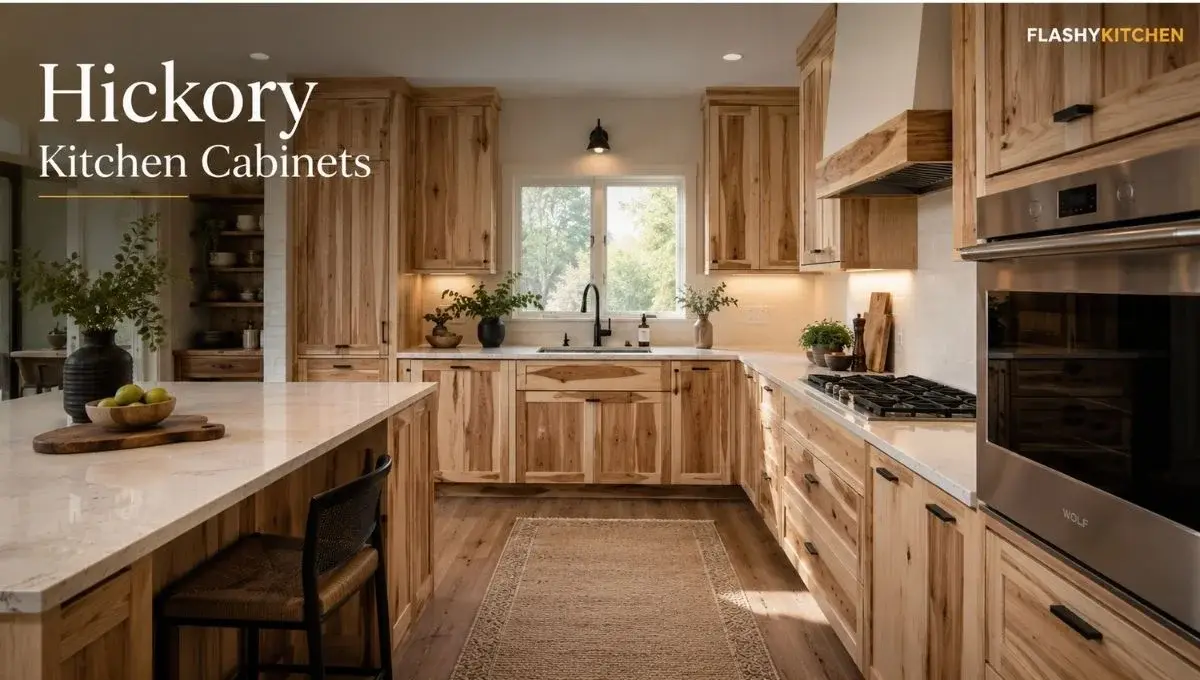
Installing hickory kitchen cabinets introduces bold patterns and organic color contrast into home designs. Hickory is an exceptionally dense American hardwood recognized for its distinct light and dark markings. Because grading rules and construction standards differ by manufacturer, understanding your material options is essential. Learning how to evaluate wood character, review quotes, and balance active grain patterns ensures you select cabinetry that fits both your lifestyle and remodeling budget.
Quick Answer
Hickory kitchen cabinets are a practical option if you want durable hardwood and prominent natural variation without applying heavy artificial stains. They perform best in farmhouse, rustic, craftsman, and transitional kitchens when paired with calm, solid-colored surrounding materials.
- Color: Creamy white sapwood blended with pale brown and reddish heartwood for high contrast.
- Grain: Bold, sweeping grain patterns that vary significantly from door to door.
- Durability: High density resists dents and impacts, though finish quality affects long-term wear.
- Best styles: Shaker, flat-panel, farmhouse, and traditional framed designs.
- Main drawback: The dramatic light-and-dark variation can look overly busy in minimalist or poorly lit spaces.
What Are Hickory Kitchen Cabinets?
True hickory cabinetry is built from American hickory, a heavy hardwood prized for its structural strength and coarse texture. Unlike wood species with uniform coloring, hickory contains a pale brown to deep reddish-brown heartwood running alongside a creamy white sapwood. When these sections are processed into cabinet components, they produce a distinct striped look.
The grain lines move in prominent straight or wavy directions. Natural mineral streaks and small color flecks are standard properties of the wood. To see how these physical properties compare to alternative wood species or box designs, view our comprehensive guide to kitchen cabinet styles and materials. Setting realistic expectations for this natural variation prevents surprises once your order arrives.
Natural vs Rustic vs Knotty Hickory Grades
Wood grading terminology can easily confuse buyers during a kitchen remodel. These labels describe the visual selection of the wood faces rather than the structural durability of the cabinet box.
Standard hickory cabinetry with a clear natural finish shows the true color of the wood while limiting open knots. If you select rustic hickory, the manufacturer allows heavier color variations, prominent mineral streaks, and visible pin knots across the doors. Knotty hickory specifically features large, unsealed knots intended for a cabin or lodge appearance. Homeowners who want a dark wood look but prefer a more uniform, uniform grain pattern often choose walnut kitchen cabinets instead. Always request a brand’s wood-character guide to verify their specific grading definitions.
What Are the Pros and Cons of Hickory Cabinets?
Evaluating the everyday advantages and drawbacks of hickory cabinetry helps determine if this active wood profile fits your daily routine and design preferences.
Pros
- High impact resistance: Its dense fiber structure resists surface dents and structural wear from busy household use.
- Pronounced visual interest: The natural wood configuration turns the cabinetry into the main design features of the room.
- Stain flexibility: Accepts clear protective seals well, but can also take medium stains to tone down heavy color contrast.
- Diverse styling: Pairs easily with rustic farmhouse, traditional craftsman, or modern organic kitchen layouts.
Cons
- Visual clutter: Active grain styles can overwhelm small rooms if combined with detailed tile backsplashes or patterned stone.
- Knot texture: Lower wood grades feature open knots that do not align with clean, modern minimalist preferences.
- Installation difficulty: The dense hardwood requires sharp tool bits and can slow down field trimming and custom adjustments.
- Batch variations: Getting an exact color match on a replacement door years down the road is difficult due to natural tree growth variations.
Solid Wood vs Hickory Veneer Construction
Reviewing manufacturing specifications reveals that cabinetry sold under a specific wood name rarely uses solid hardwood for every component.
Quality framed cabinets generally feature solid hickory face frames and solid wood door frames. The center door panel, however, frequently utilizes a real hickory veneer bonded over a plywood or MDF core. This engineered center core prevents the door from warping, expanding, or splitting when kitchen humidity levels change during cooking. The cabinet box itself typically consists of plywood or furniture-grade particleboard. Buyers must check if the manufacturer includes matching finished cabinet sides or structural exterior skins so the exposed box faces match the hickory doors.
Natural, Stained, and Dark Hickory Finishes
The coating applied to your cabinet doors determines how much the natural wood character stands out in the room. A natural clear coat maximizes the visual division between light sapwood and dark heartwood. Light stains add subtle undertone warmth while leaving the natural grain fully visible.
Medium-brown stains help blend the light and dark areas together, creating a softer look that subdues the striped appearance. Dark stains mask the color contrast almost entirely, turning the wood a deep coffee tone while leaving the deep grain texture intact. This texture behaves differently than the smoother aging process found in cherry wood kitchen cabinets. Because online photos can look misleading due to editing, compare physical sample doors in your room under daylight and evening LED bulbs before placing a final deposit.
Popular Hickory Cabinet Styles
Because hickory features highly active visual lines, simple door profiles help balance the kitchen design so the space feels cohesive.
- Hickory Shaker cabinets: A flat center panel surrounded by a clean recessed frame. This look balances traditional texture with modern geometry.
- Raised-panel doors: Classic profile styles featuring contoured center panels, best suited for traditional farmhouse or estate properties.
- Slab cabinet fronts: Flat, frame-free doors that showcase continuous grain lines across modern or mid-century layouts.
Selecting a simple door style prevents the wood character from clashing with your layout architecture.
Design Ideas for Balancing Active Grain
You can install hickory cabinetry without making your home look like an isolated log cabin. Use these layout ideas to keep the design current:
- Bright quartz pairing: Combine natural hickory door faces with solid white quartz countertops to keep work surfaces bright.
- Two-tone configuration: Install hickory base cabinets to withstand daily floor scuffs, and use painted white upper cabinets to open up overhead space.
- Textured kitchen island: Build a standalone hickory island as a central accent piece, surrounded by neutral cream or light gray perimeter cabinets.
- Streamlined modern Shaker: Use clear-coated doors with minimal black bar pulls and a plain white backsplash to establish a modern organic style.
For small kitchens, avoid running dark wood from floor to ceiling. Limit the material to lower cabinets, prioritize under-cabinet lighting, and choose solid wall colors to prevent visual crowding.
Countertops, Backsplashes, Floors, and Hardware Pairings
To ensure your cabinetry feels grounded, surround it with quiet materials that do not compete for visual attention.
Wall Colors Select paint tones that complement the underlying wood hues. Warm white, soft cream, light greige, and muted sage green provide an excellent balance. If your layout features natural hickory cabinetry paired with black countertops, keeping the walls a soft greige prevents the workspace from feeling enclosed.
Countertops & Backsplashes Solid or lightly veined surfaces work best. Warm white quartz, soft beige stone, and black soapstone provide clear contrast without adding visual noise. For the backsplash, choose a plain white subway tile or a solid stone slab that matches the countertops. Avoid complex mosaic tiles or busy granite patterns.
Flooring Your floor should provide clear visual separation from the cabinet faces. If you plan to use wood flooring, avoid attempting to match the hickory pattern exactly. Homeowners who prefer a calmer foundation often look toward floor profiles that resemble white oak kitchen cabinets for a smoother background. Neutral slate, large-format porcelain tile, or light stone-look flooring also keep the focus on the cabinetry.
Hardware Matte black hardware creates a sharp contemporary boundary against light and dark wood stripes. Brushed brass or champagne bronze options pull forward the golden undertones in the grain, while brushed nickel maintains a traditional feel.
Understanding Total Cabinet Quote Costs
Hickory sits in a mid-to-high price bracket, comparable to maple or oak, but custom grain matching can increase project totals.
Ready-to-assemble (RTA) boxes with basic veneer door panels offer a budget-friendly starting point. Semi-custom configurations with plywood boxes and solid wood frames occupy the middle tier, while fully custom cabinetry built with sequence-matched character wood represents the highest cost.
When reviewing options, compare comprehensive written quotes rather than individual box prices. A low shelf price often excludes required elements like toe kicks, fillers, crown moldings, soft-close hardware, shipping fees, and professional installation. Checking the total completed cost keeps your remodel on track.
Maintenance and Care Guidelines
Durable wood still requires routine care to protect its topical clear coat and avoid moisture damage over time.
- Clean spills instantly: Wipe away liquids from door edges immediately to prevent moisture from degrading the seal or swelling the core.
- Remove grease early: Wipe down areas near the stove using a soft microfiber cloth, warm water, and mild dish soap before cooking film hardens.
- Dry wet zones: Keep surfaces around the sink and dishwasher dry to protect low door edges from standing water.
- Avoid harsh additives: Never clean doors with vinegar, baking soda, bleach, abrasive pads, or heavy industrial oils unless approved by your manufacturer.
Are Hickory Kitchen Cabinets Worth It?
Hickory cabinetry is worth the cost if you want an impact-resistant wood with high natural color contrast and distinct grain lines. It serves as a durable, texturally rich choice for busy households that appreciate traditional craftsman, farmhouse, or organic design aesthetics.
However, it will not suit homes intended for uniform painted surfaces, quiet minimalist lines, or zero color variation. If your layout features wide drawer banks or tall pantry doors, consulting an experienced cabinet designer helps ensure the natural wood panels are balanced across the room cleanly.
Conclusion
Investing in hickory kitchen cabinets brings durable American hardwood and rich organic patterns into your home. Because product options range from uniform clear-coated lines to heavy knotty grades, checking material specifications ensures you receive the correct visual style. Before making a final payment, compare physical samples in your home’s natural light, verify construction details, and secure a complete written quote including installation.