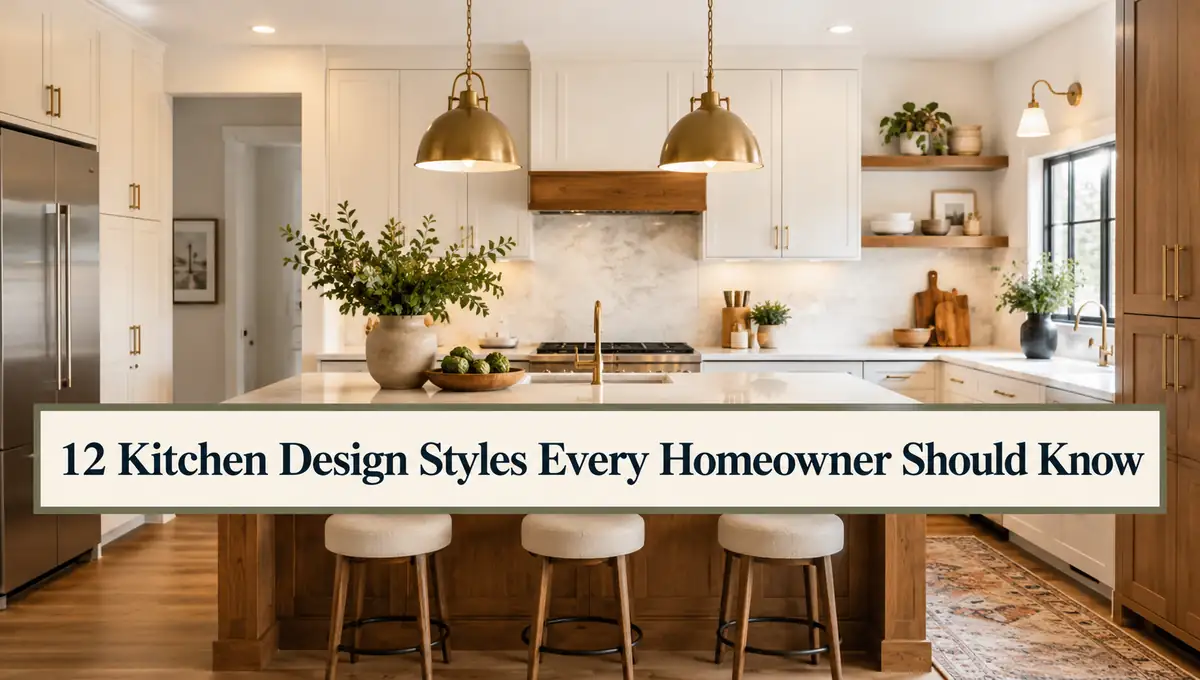
Kitchen design styles are easier to choose once you stop judging a room by color alone. Cabinet doors, materials, lighting, hardware, architecture, and the amount of detail all work together to create a recognizable look. The harder question is which look fits your house, your existing kitchen, and the features you want to keep.
This guide clearly explains 12 distinct styles and the differences homeowners often confuse. It also shows how to mix styles, handle a small kitchen, use 2026 trends carefully, and avoid choices that are expensive to reverse.
Quick Answer
Choose a kitchen design style from the permanent parts of the room first: architecture, cabinets, flooring, and major surfaces. Then use color, lighting, hardware, and decor to reinforce that direction or add a controlled second influence without rebuilding the room.
- Separate style from layout, color schemes, and short-term trends.
- Pick one dominant style before mixing another.
- Let cabinet profiles carry much of the visual language.
- Use easier-to-change details for trend-driven choices.
- Judge popularity only after checking what suits your home.
What Counts as a Kitchen Style?
A kitchen style is a repeated visual language, not one paint color, cabinet door, or floor plan. The main types of kitchen interior design styles connect cabinet profiles, materials, proportions, lighting, hardware, and architectural details so the room reads as Modern, Traditional, Scandinavian, Farmhouse, or another clear direction.
That distinction prevents a common classification mistake. An L-shaped kitchen describes layout, an all-white kitchen describes palette, and two-tone cabinets describe a treatment. Those choices can appear inside many styles.
The same rule applies to cabinet doors. Shaker cabinets can suit Transitional, Farmhouse, Cottage, Scandinavian-influenced, and some Contemporary rooms. Slab or flat-panel cabinets often support Modern looks, while raised-panel and glass-front cabinets lean Traditional.
While reviewing current kitchen style guides, cabinet profile appears as one of the most consistent cues across otherwise different style explanations. That makes cabinetry a better starting point for identifying kitchen interior design styles than wall color alone.
Which Style Fits Your House?
The best kitchen design styles are not universal; the right one works with the house, the fixed features you plan to keep, and the amount of visual detail you enjoy. Start with architecture and cabinetry before choosing backsplash tile, hardware, or pendant lighting.
Look first at what is expensive to remove. Flooring, cabinet boxes, windows, ceiling details, and built-in millwork create the visual base. If they stay, choose a style that can work with them.
Next, decide how much detail feels comfortable. Raised panels, crown molding, a decorative range hood, and layered finishes move toward Traditional or Victorian. Slab fronts, clean lines, simple hardware, and quieter surfaces move toward Modern or Contemporary.
Natural wood tones, texture, aged metals, and softer colors support Farmhouse, Cottage, Scandinavian, and Mediterranean rooms. If you prefer crisp geometry and fewer decorative layers, Modern or Industrial may fit better.
Kitchen cabinet design styles matter because doors occupy so much visual area. Before replacing sound cabinetry, identify whether a new door, finish, or hardware choice could move the room closer to the style you want. The wider cabinet type options help separate door style from cabinet construction.
Ask whether you like the style itself or only one current photo. Build the base around long-life choices and use flexible details for trends.
12 Kitchen Styles and How to Recognize Them
The different types of kitchen design styles below represent distinct visual languages rather than colors or layouts. Use the table to compare the strongest cues, then read each kitchen style to understand its benefits, limitations, and best use.
| Style | Cabinet cue | Palette/material cue | Best fit |
|---|---|---|---|
| Modern Kitchen Style | Slab or flat-panel | Wood, white, black, restrained stone | Clean architecture |
| Contemporary Kitchen Style | Current clean profiles | Mixed current finishes | Flexible newer homes |
| Traditional Kitchen Style | Raised or detailed doors | Warm wood, stone, layered finishes | Formal or classic homes |
| Transitional Kitchen Style | Shaker or restrained profiles | Warm neutrals, mixed old/new cues | Broad remodeling fit |
| Farmhouse Kitchen Style | Shaker, painted or wood | Warm whites, wood, simple tile | Casual, character-rich rooms |
| Scandinavian Kitchen Style | Simple fronts | Pale wood, white, soft neutrals | Light, calm spaces |
| Mid-Century Modern Kitchen Style | Flat fronts | Walnut, color, geometric accents | 1950s–60s character |
| Cottage Kitchen Style | Simple framed doors | Soft color, beadboard, mixed texture | Small, relaxed kitchens |
| Coastal Kitchen Style | Clean simple doors | Light woods, whites, muted blues | Bright, airy homes |
| Industrial Kitchen Style | Flat or simple fronts | Steel, dark metal, brick, concrete | Loft-like architecture |
| Mediterranean Kitchen Style | Framed or detailed doors | Warm stone, tile, earthy color | Textured interiors |
| Victorian Kitchen Style | Detailed cabinetry | Dark wood, patterned tile, ornate metal | Period homes or layered rooms |
Modern Kitchen Style
A Modern kitchen style uses simple forms, limited ornamentation, and clear geometry. Slab cabinets, flat-panel cabinets, restrained hardware, integrated storage, and carefully controlled materials do more work than decoration.
Warm wood can stop the room from feeling harsh. Walnut, white oak, quartz, or natural stone can all fit if the surfaces remain visually controlled. If you are asking what cabinets suit a Modern kitchen, start with simple fronts rather than decorative door profiles.
Modern kitchen design styles examples often show fewer visible objects and stronger lines. Texture, wood grain, and lighting can add warmth without changing the style.
Contemporary Kitchen Style
A Contemporary kitchen style describes what feels current now, so it changes over time. Contemporary kitchens can combine simple cabinet profiles with warmer woods, natural texture, softer neutrals, and restrained contrast.
Modern refers to an established design language, while Contemporary absorbs current materials and preferences. Choose Contemporary if you want a current look without following one historical movement.
Traditional Kitchen Style
A Traditional kitchen style uses visible detail and layered materials. Raised-panel cabinets, crown molding, glass-front cabinets, a substantial range hood, marble or other stone, and brass hardware can make the room read as Traditional.
Several related details, not one ornate item, make a kitchen look Traditional. The limitation is visual weight, especially in a small room.
Traditional works best when the architecture can support its richer cabinet profiles and decorative features.
Transitional Kitchen Style
A Transitional kitchen style keeps a classic base while reducing ornament. Shaker cabinets, warm neutrals, straightforward quartz or stone, simple hardware, and cleaner lighting help bridge Traditional character with a quieter current look.
This style suits someone who wants clean lines without making the room feel too stark. Shaker kitchen cabinets add enough detail to feel grounded without becoming formal.
Transitional is also easier to update than heavily decorated Traditional design because fewer fixed details control the room.
Farmhouse Kitchen Style
A Farmhouse kitchen style favors practical-looking materials, warmth, and relaxed detail. Painted or natural Shaker cabinets, wood accents, apron-front sinks, simple tile, black hardware, and open shelving are common cues.
Soft whites, muted greens, warm wood, and earthy colors work more naturally than a cold monochrome palette. If you wonder what colors work with a Farmhouse kitchen, start with colors that relate to wood, stone, and other natural materials.
The main mistake is stacking too many rustic signals. Distressed wood, signs, barn-door details, patterned tile, and vintage fixtures all at once can make the kitchen feel themed.
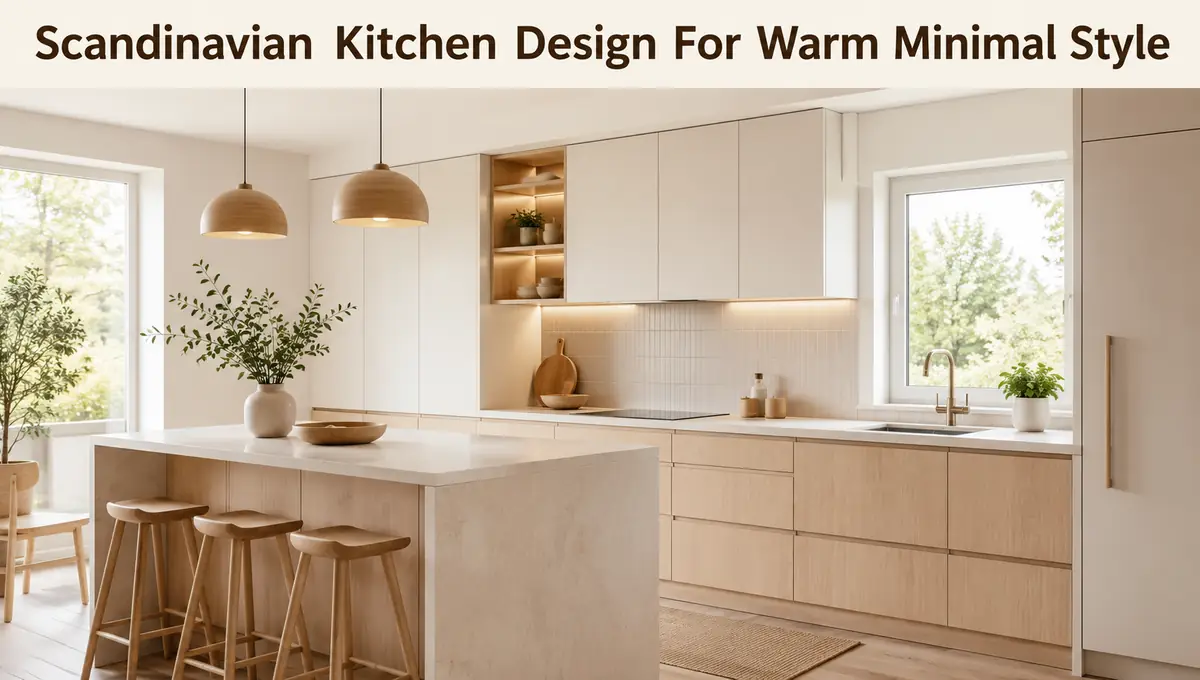
Scandinavian Kitchen Style
A Scandinavian kitchen design emphasizes light, useful storage, simple forms, and natural materials. Pale white oak, soft neutral colors, clean cabinet fronts, quiet hardware, and good natural light are stronger cues than white paint alone.
Wood grain, matte surfaces, restrained tile, and simple textiles add warmth without visual heaviness.
Scandinavian and Minimalist kitchens are related, but the Scandinavian kitchen style normally relies more on natural warmth and tactile materials.
Mid-Century Modern Kitchen Style
A Mid-Century Modern kitchen style draws from the design language associated with the 1950s and 1960s. Flat fronts, walnut, simple forms, geometric accents, and controlled color make the style recognizable.
The benefit is warmth without heavy molding. A period-inspired 1950s kitchen can go further, while a current remodel can borrow the proportions without becoming a themed set.
Mid-Century Modern works especially well when the home already has simple architecture and strong horizontal lines.
Cottage Kitchen Style
A Cottage kitchen style feels collected, soft, and informal. Painted framed doors, beadboard, glass-front cabinets, small-scale pattern, wood surfaces, and a little open shelving create character without the formality of Traditional design.
Cottage can work in a small kitchen because a few details establish the look. Soft greens, cream, muted blue, and natural wood can add character without overwhelming the room.
Too many displayed objects and patterns can make limited space feel crowded.
Coastal Kitchen Style
A Coastal kitchen style uses light, natural texture, and an easy palette rather than literal beach decor. White, sand, pale blue, light wood, woven texture, and simple cabinet doors can carry the look without shells or nautical signs.
The benefit is visual lightness, which can suit kitchens that receive plenty of daylight.
The common mistake is relying on themed accessories instead of materials and color relationships. A strong Coastal kitchen should still read as Coastal after the decorations are removed.
Industrial Kitchen Style
An Industrial kitchen style uses materials associated with workspaces: steel, blackened metal, concrete, brick, dark hardware, and simple cabinetry. The style works best when the room or building already supports some visual weight and exposed texture.
Industrial suits someone who likes Modern simplicity but wants rougher materials and more contrast.
In a compact kitchen, too much dark metal, exposed shelving, brick, and concrete can make the room feel heavy. Borrowing one or two Industrial elements may work better than using the full style.
Mediterranean Kitchen Style
A Mediterranean kitchen style uses warm color, tactile surfaces, and visible craft. Natural stone, terracotta tones, patterned tile, wood, plaster-like walls, arches, and warm metal finishes often work together.
Texture gives Mediterranean design much of its character. Quieter cabinetry can let patterned backsplash tile, stone, or architectural details lead.
The limitation is visual density. Too many strong surfaces, patterns, and warm finishes can compete with each other in a smaller room.
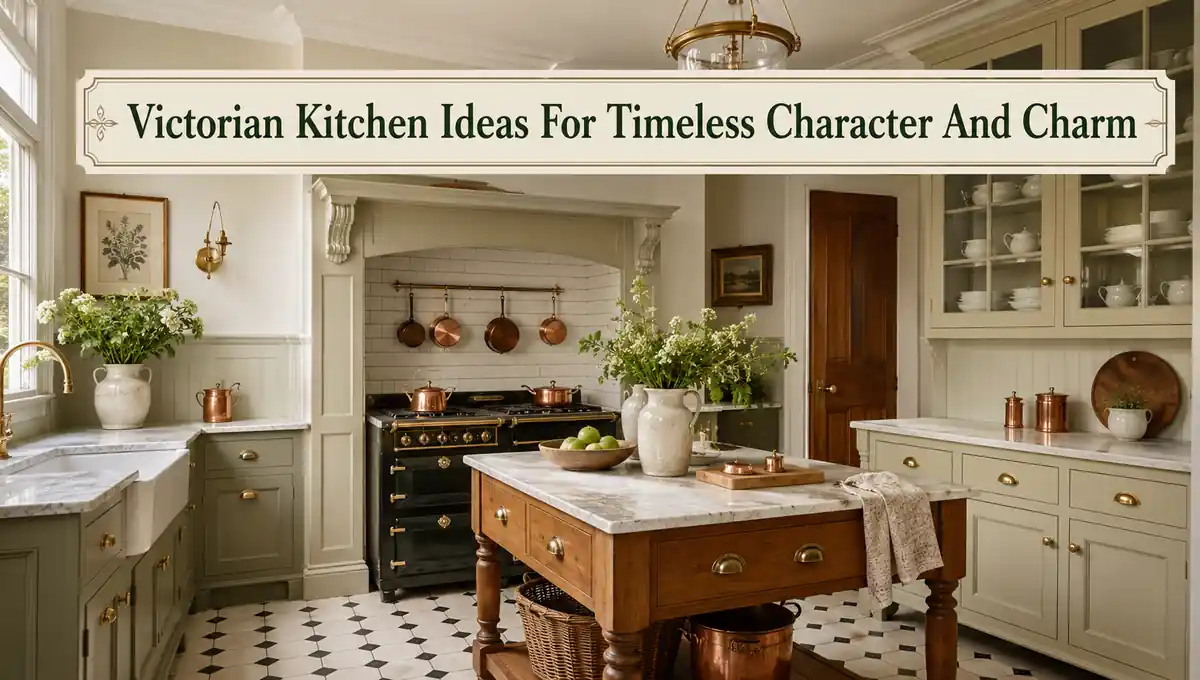
Victorian Kitchen Style
A Victorian kitchen style uses more decorative detail than most styles in this list. Framed cabinetry, darker or painted wood, patterned tile, traditional hardware, glass fronts, and period-aware lighting can fit a home with strong historical features.
A current Victorian kitchen does not need to copy a museum room. Preserve meaningful architectural details, then simplify work surfaces and storage so the room works for current cooking.
Victorian design can feel out of place in a plain newer home if decorative features are added without architectural support. In that situation, borrowing one or two Victorian details may work better.
Modern vs Contemporary and Traditional vs Transitional
Modern and Contemporary are not synonyms, and Traditional and Transitional do not use the same level of detail. This kitchen design styles comparison matters because these four labels create some of the most common selection mistakes.
Modern has established design roots and favors simple forms, flat fronts, and restrained decoration. Contemporary describes the current design moment, so today’s version can borrow warm wood, organic texture, and softer forms that were less common in earlier Contemporary interiors.
Traditional relies on more visible detailing, such as raised panels, molding, layered finishes, and decorative architectural elements. Transitional starts with a classic base and edits much of that detail away.
If you want clean lines but not a very minimal room, Transitional may fit better than Modern. If you want very little ornament but still like warm wood, Modern or Scandinavian may be closer.
A Modern vs Traditional decision is not simply new versus old. It is mainly about form, detail, material treatment, and how strongly you want historical cues to show.
What Kitchen Styles Are Popular in 2026?
Popular kitchen design styles in 2026 lean toward restrained structure combined with warmer, more natural materials. Current professional forecasts favor Transitional/Timeless, Contemporary/Modern/Minimalism, and Organic/Natural directions rather than one single dominant style.
A 2026 North American kitchen-industry survey of 634 professionals asked which styles would be popular over the next three years. Transitional/Timeless led at 72%, followed by Contemporary/Modern/Minimalism at 60% and Organic/Natural at 58%. These figures are professional forecasts, not household market-share numbers.
“Most popular” can mean what already exists, what people choose today, or what professionals expect next. Those measurements should not be averaged together.
Use the latest kitchen design styles 2026 trends as a finishing filter rather than the first decision. Warm wood, natural texture, and softer neutrals can update several established styles without forcing a full redesign.
Can You Mix Two Styles Without Making the Kitchen Look Mismatched?
You can mix two kitchen styles when one clearly leads and the second contributes a limited set of supporting features. A room starts to look mismatched when cabinets, countertops, lighting, flooring, hardware, and architecture each seem to follow a different visual rule.
Begin with the fixed elements. If you are keeping Shaker cabinets and warm flooring, let that base lead. You can move the room toward Transitional with simpler countertops, quieter hardware, and cleaner lighting instead of fighting the cabinets.
Repeat a material, color, or shape to connect both influences. A black pendant feels intentional when black appears again in hardware or a window frame.
Do not mix by percentage. Choose one dominant style, borrow two or three traits from the second, and stop before every surface introduces a new idea.
Lighting is one of the safer places to bridge two styles because fixtures can change without replacing cabinets. These kitchen lighting ideas show how that flexible layer can shift the room later.
Which Kitchen Style Works Best in a Small Kitchen?
Small kitchens usually handle styles with controlled detail, continuous cabinet lines, and a limited material palette more easily. Scandinavian, Transitional, Contemporary, and restrained Cottage kitchen styles often work well because they do not need heavy ornament to feel finished.
Interior design styles for a small kitchen do not have to mean white or Minimalist. Dark cabinets can work when the room has enough light and the surrounding surfaces remain visually quiet.
The bigger risk is stacking features. Dense molding, two cabinet colors, busy tile, open shelving, and bold lighting can compete in a tight room.
Choose one strong style signal. Let the other surfaces support it.
Which Style Choices Are Expensive to Reverse?
Kitchen style affects cost mostly through project scope, not through the name of the style. Cabinet doors, flooring, countertops, built-in millwork, and major architectural work cost more to change than paint, hardware, stools, or many light fixtures.
Think in two layers. The fixed layer includes cabinetry, flooring, major stone, and built-ins. The flexible layer includes paint, hardware, pendant lighting, textiles, and movable decor.
This gives you a cheaper alternative when the current kitchen still works. Sound Shaker cabinets can move from Farmhouse toward Transitional through hardware, backsplash, lighting, and paint.
Avoid replacing well-built cabinets only because a current trend favors another door style. Change fixed elements when condition, function, or a long-term goal justifies it.
Choose a Style You Can Actually Live With
Kitchen design styles work best as decision rules, not labels you must follow perfectly. Choose the base from your home’s architecture, fixed finishes, cabinet profile, room size, and preferred level of detail, then use color, hardware, and lighting to reinforce it.
Your next step is simple: pick your two favorite kitchen styles and write down five defining traits for each. Keep the one that fits more of what you already have, then borrow only the strongest compatible details from the other.