Kitchen Vastu helps Indian homeowners decide where the kitchen, stove, sink, appliances and storage should sit according to traditional Vastu Shastra principles. The harder part is deciding what to do when a flat already has fixed plumbing, gas points, windows and chimney ducting.
Traditional vastu for kitchen design covers direction, fire, water and placement. This guide separates those beliefs from practical kitchen planning, so one rule does not create a worse layout. By the end, you should be able to read your floor plan, judge the main placements, understand common compromises and decide what is worth changing without reducing safety, ventilation or daily usability.
Quick Answer
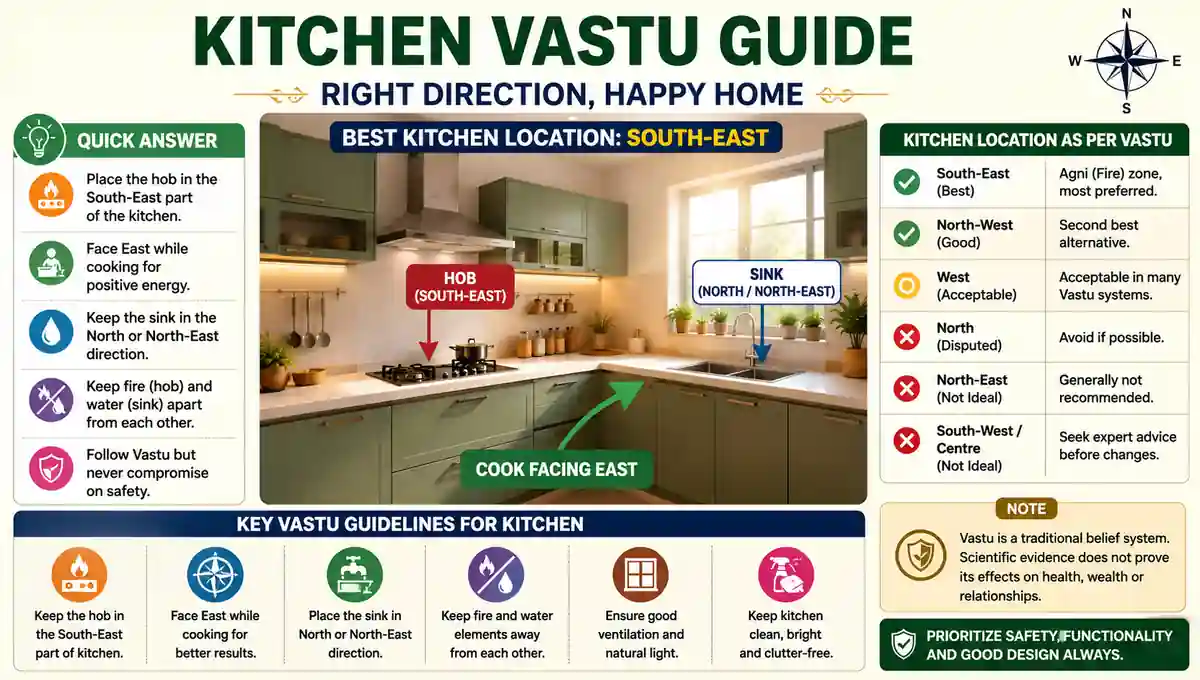
Kitchen Vastu usually favours the South-East of the home, with North-West as the common second choice. Inside the room, the stove is commonly placed toward the South-East so the cook faces East, while the sink and reverse-osmosis (RO) water purifier favour North or North-East.
- Prefer South-East where the floor plan allows.
- Use North-West when South-East is not practical.
- Keep cooking and water zones apart where possible.
- Choose light or warm colours without treating one shade as mandatory.
- In flats, protect safety, ventilation and working space first.
Is My Kitchen Layout Okay? Read the Directions Correctly
Your layout may be broadly acceptable even if every item is not in its traditionally preferred compass zone. First separate the kitchen’s location in the home from appliance placement inside the room and the direction you face while cooking.
Vastu Shastra links different zones with the five elements. The Agni element, or fire, is associated with the South-East, while water is commonly linked with North and North-East. These are traditional Vastu concepts, not scientific proof that a room direction causes health, wealth or relationship outcomes.
Three Directions People Commonly Confuse
If the kitchen room sits in the North-West of your flat, that describes the kitchen’s position in the whole home. You can still place the hob, meaning a built-in cooktop, toward the South-East part of that room.
Your body direction is a third question. If you stand at the hob facing East, your cooking direction is East even though the whole kitchen may be North-West.
This distinction matters when reading a kitchen vastu map. A useful map should show the home’s compass direction first, then the zones inside the kitchen, then the direction of use.
How to Check a Floor Plan Before Moving Anything
- Mark North on the complete flat or house plan.
- Locate the kitchen within that full plan.
- Mark North again inside the kitchen.
- Check the stove, sink, RO, fridge, windows and doors separately.
- Compare any proposed change with safe movement, ventilation and fixed services.
If you are still deciding the general room configuration, compare these directional preferences with practical kitchen design styles before fixing cabinets, plumbing or appliance points.
Which Direction Is Best for Kitchen as per Vastu?
The South-East is the most commonly recommended kitchen direction as per Vastu, while North-West is the usual alternative. Across the India-focused sources reviewed for this topic, those two directions showed the clearest agreement.
A southeast kitchen vastu plan follows the traditional Agneya direction, which is associated with fire. A northwest kitchen vastu arrangement is generally treated as a workable second choice rather than the first preference.
| Direction | Common Vastu view | Practical reading | What to watch |
|---|---|---|---|
| South-East | Preferred | Strongest traditional match for cooking | Keep the main water zone separate where possible |
| North-West | Common alternative | Useful when South-East is unavailable | Check the hob position inside the room |
| East | Often treated as workable | Can support morning light | Do not confuse room direction with cooking direction |
| West | Usually needs case-by-case planning | Often reasonable in an existing flat | Avoid rebuilding solely for a compass preference |
| South | Not usually the first choice | May still work in fixed layouts | Keep heat, ventilation and workflow practical |
| North | Commonly less preferred for the whole kitchen | Existing flats may still use it | Prioritise safe fixed services |
| North-East | Traditionally discouraged | Use internal adjustments where possible | Do not assume demolition is required |
| South-West | Traditionally discouraged | Treat as a compromise layout | Avoid costly structural changes for symbolism alone |
Is southeast kitchen good as per vastu? Under common traditional guidance, yes. The South-East or Agneya direction is the strongest recurring recommendation because of its association with the Agni element.
Is northwest kitchen good as per vastu? It is commonly accepted when South-East is unavailable. This alternative matters in Indian flats, where moving an entire kitchen may be unrealistic.
The centre of the home, sometimes called the Brahmasthan, is also commonly avoided for a kitchen in Vastu traditions. Yet a safe, well-ventilated North-West kitchen can work better in daily life than a cramped or poorly ventilated South-East one.
Where Should the Stove and Sink Go?
Common stove direction vastu guidance places the gas stove or hob toward the South-East of the kitchen, with the cook facing East. Kitchen sink direction vastu guidance usually favours North or North-East and recommends separating the water zone from the fire zone.
Which Direction Should I Face While Cooking?
East is the most common answer for cooking direction as per vastu. The rule describes the direction the person faces while cooking, not merely the side on which the front edge of the stove sits.
Where Should Stove Be Placed as per Vastu?
Gas stove placement as per vastu commonly favours the South-East part of the room. In a compact modular kitchen, this does not mean pushing the burner into an unusable corner.
Leave safe working surface around the hob and keep the chimney arrangement practical. If moving a gas point would be required, use a qualified gas professional rather than altering the connection yourself.
Where Should Kitchen Sink Be Placed as per Vastu?
North or North-East is the usual traditional recommendation for the sink. A kitchen sink guide can help with the practical choices of bowl size and configuration once you know where the plumbing can safely go.
For an existing flat, the drain position matters. Moving a sink may affect waste pipes, waterproofing and cabinet construction, so a small directional improvement may not justify major work.
Can Stove and Sink Be Together as per Vastu?
Common Vastu guidance prefers some separation between the fire and water elements because the stove represents fire and the sink represents water. The reviewed sources do not establish one universal numerical gap that every kitchen must follow.
One published guide gives a four-foot distance, but there were not three comparable sources supporting the same figure. Treat that number as one source’s recommendation, not a settled standard.
If a small kitchen keeps both on one counter, use a practical section of slab between them where the layout permits. Do not break plumbing merely to hit an unsupported distance.
Where Should the Fridge, RO, Appliances, Storage and Slab Go?
A practical kitchen vastu map should treat every item separately because source agreement is not equally strong for all appliances. Stove, sink and water placement show clearer patterns, while refrigerator and colour guidance vary more between Vastu sources.
| Item | Commonly recommended zone | Practical note |
|---|---|---|
| Gas stove or hob | South-East | East-facing cooking is commonly preferred |
| Sink | North or North-East | Keep drain and waterproofing practical |
| RO / drinking water | North or North-East | Keep filter changes and servicing accessible |
| Microwave / oven | South-East | Heat appliances are often grouped with the fire zone |
| Refrigerator | West, South-West or sometimes North-West | Guidance differs between sources |
| Heavy grain storage | South or West | Often suits tall cabinets and pantry units |
| Kitchen slab / platform | East or South-East for the cooking zone | Preserve enough preparation space |
| Chimney / exhaust | Directional advice varies | Duct route and smoke removal must work first |
The water purifier direction as per vastu generally follows the water-zone preference for North or North-East. Keep enough access around the RO for filter replacement and plumbing checks.
Microwave direction as per vastu is commonly linked with South-East because the appliance produces heat. The same logic is often applied to an oven.
Refrigerator direction as per vastu is less settled. While comparing India-focused sources, I found recommendations ranging across West, South-West and North-West, while one specialist source advises not keeping the refrigerator in the kitchen at all.
That disagreement is useful. It tells the homeowner not to rebuild a cabinet run simply because one page gives a different fridge direction.
Kitchen storage as per vastu commonly places heavy grains and utensils toward South or West. This can fit naturally with tall units, lofts and kitchen cabinet storage in an Indian modular kitchen.
Kitchen platform vastu guidance often favours an East or South-East cooking counter. The kitchen slab still needs enough clear space for chopping, hot vessels, tadka preparation and safe movement.
Which Kitchen Colour Is Best as per Vastu?
Kitchen colour as per vastu usually favours light or warm shades such as cream, beige, soft yellow, light green and gentle orange. There is no single colour that every source treats as mandatory for every direction.
If you want a simple low-risk approach, start with a light neutral base and use warmer accents around the cooking zone. This is easier to change later than replacing a sound slab or full cabinet system.
Black granite shows why rigid colour claims can mislead. One India-focused source accepts black granite while preferring lighter stone; another generally discourages black.
So which colour is best for kitchen as per vastu? A light, easy-to-live-with shade that also suits the kitchen direction is the safer interpretation. If sources disagree about a specific colour, do not treat repainting or replacement as a health or financial necessity.
Good task lighting also affects how safely you cut and cook. Use practical kitchen lighting ideas to support the colour scheme rather than expecting colour alone to make a dim worktop usable.
How Do You Apply Kitchen Vastu in a Flat?
Kitchen vastu for flats works best as a priority system rather than a demand for perfect compass placement. Builder flats often have fixed plumbing shafts, gas or piped natural gas (PNG) points, exterior duct openings, structural walls and limited kitchen slab space.
Start with changes that do not disturb building services. Move a freestanding appliance if the new position works better, reorganise storage, adjust colours and check whether the hob can use a preferred part of the existing platform.
Do not begin by breaking the slab or shifting the drain. Plumbing changes can affect waterproofing and cabinet work, while gas and electrical changes need the right qualified trade.
There is also no meaningful national “Vastu correction cost”. The expense comes from the physical work you choose, such as cabinets, plumbing, gas, electrical work, painting or ducting, and it varies by city, labour, material and building conditions.
What to Change First in an Existing Flat
Use the least disruptive changes first:
- Correct movable appliance or storage positions where the layout improves.
- Keep the stove and water zones apart where practical.
- Improve task light, cleanliness and airflow.
- Adjust paint, laminate or décor before replacing sound fixed materials.
- Leave structural, gas, electrical and plumbing changes for qualified professionals.
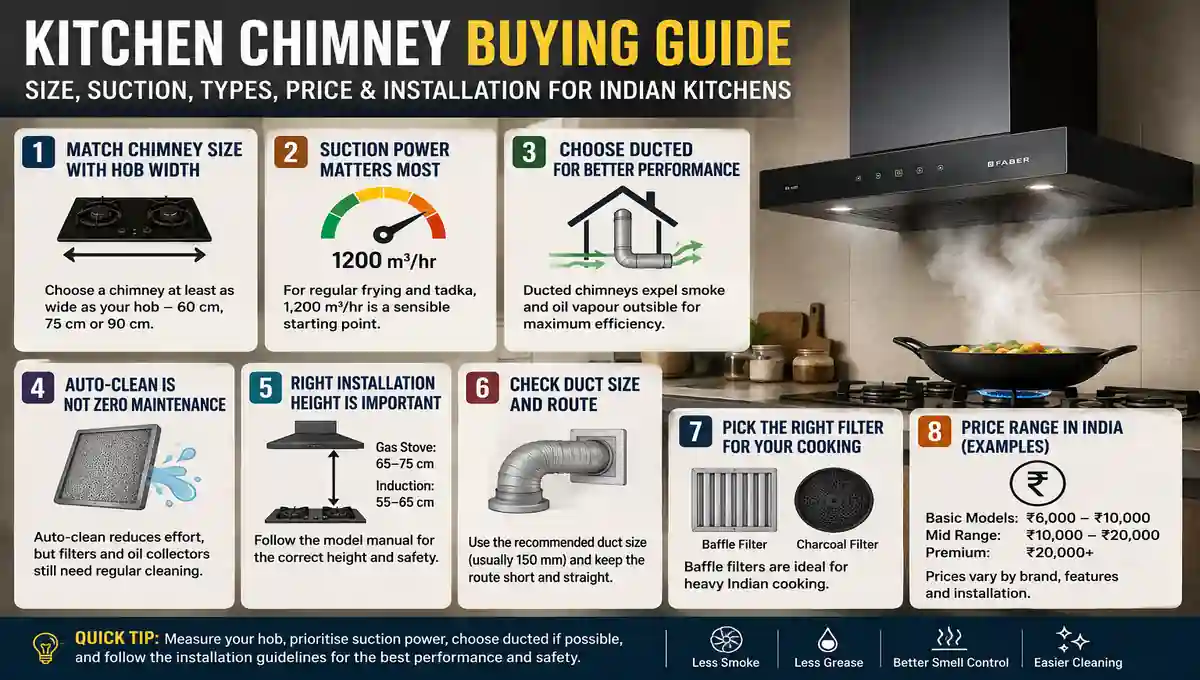
Kitchen ventilation vastu preferences should never reduce actual smoke removal. Indian cooking often includes frying, tadka, tempering, spices and high heat, so chimney performance, exhaust routing and replacement air matter in daily use.
Housing society or apartment rules can also restrict exterior duct changes or structural work. Check the building’s requirements before altering an exterior wall, shaft or shared service route.
Open Kitchens and Compact Modular Layouts
An open concept kitchen can follow common Vastu placement ideas, but odours and grease spread more easily into the living area. Ventilation may therefore matter more than achieving an exact symbolic exhaust direction.
In a one-wall modular kitchen, the stove and sink may have to share the same run. Keep the layout safe and usable rather than sacrificing most of the counter to chase ideal compass zones.
A cramped kitchen with poor movement is not improved simply because its compass placement looks better.
What If Kitchen Is in North East or South West?
A North-East or South-West kitchen is traditionally discouraged, but an existing kitchen does not automatically need demolition. If you are asking what if kitchen is in north east, start by checking what can be adjusted inside the room without disturbing safe fixed services.
The North-East is sometimes called the Ishan corner in Vastu terminology. If the kitchen is there, common traditional advice is to keep the main cooking point away from the exact North-East where the existing counter allows.
For a South-West kitchen, use a better in-room hob position if the existing platform allows it rather than relocating the whole room. For either direction, focus first on practical corrections:
- Improve ventilation and task lighting.
- Keep the hob and sink separated where possible.
- Move heavy storage toward South or West if the cabinetry allows it.
- Use easier colour changes before replacing fixed finishes.
- Keep the kitchen clean and remove clutter that blocks working space.
Can kitchen vastu be corrected without demolition? Many changes can be made without structural work, especially appliance placement, storage, lighting, ventilation and surface colour.
Traditional remedies may also include colour corrections, dividers, metal strips, mirrors, pyramids or similar objects. These are symbolic Vastu practices, not repairs for gas leaks, bad wiring, drainage faults or poor extraction.
Doing nothing structural can be the sensible option when the kitchen is safe, ventilated and practical. A major rebuild should have a practical reason beyond a symbolic correction.
Which Vastu Rule Should You Prioritise When Rules Conflict?
Safety and basic kitchen performance should come before a preferred compass position. After that, apply the strongest traditional rules where they fit without creating a new problem.
Use this order:
- Protect gas, electrical, plumbing, fire and structural safety.
- Preserve proper ventilation and smoke removal.
- Keep enough kitchen slab and movement space for daily cooking.
- Apply major directional preferences where they fit safely.
- Use colour, storage or symbolic remedies for lower-priority adjustments.
This is especially important before moving a liquefied petroleum gas (LPG) or PNG connection, sink drain, socket, chimney duct or wall. Review basic kitchen safety tips alongside any Vastu-led change.
The source comparison also gives a useful confidence test. South-East cooking, North-West as an alternative and separation of fire and water have broad agreement, while refrigerator position, black surfaces and symbolic remedies show more disagreement.
Spend the least money and accept the least disruption on the rules with the weakest agreement.
Common Vastu Mistakes That Make the Kitchen Worse
The biggest mistakes come from following one directional rule without checking what it does to safety, movement or ventilation. Avoid any correction that fixes a compass preference but creates a harder problem to reverse.
- Do not confuse a South-East kitchen with a need to place every appliance in South-East.
- Do not treat one stove-to-sink number as a universal Vastu standard.
- Do not block a useful window or weaken kitchen ventilation for a cabinet position.
- Do not damage waterproofing or move gas services casually for a symbolic correction.
- Do not assume every Vastu source gives the same fridge, colour or remedy advice.
- Do not reject an otherwise workable kitchen before checking what can be adjusted internally.
This addresses a common real-home complaint: a kitchen can become cramped when too many fixed rules are forced into limited space. More counter space and moving space may be more valuable than a minor directional adjustment.
Frequently Asked Questions
These questions cover decisions that placement rules alone do not settle. They focus on buying a flat, avoiding unnecessary demolition and handling conflicts with fixed building services.
Should I Skip a Flat If the Kitchen Is Not in the Southeast?
A non-South-East kitchen alone is not enough reason to reject an otherwise suitable flat unless strict Vastu compliance is a firm household requirement. Check the actual kitchen zone, hob position, ventilation, counter space and feasible changes first. North-West is also commonly accepted, while other layouts may still work with safe internal adjustments.
Can Vastu Be Corrected Without Demolition?
Many corrections can be made without demolition by changing movable appliance positions, storage, lighting, ventilation or colours. Traditional symbolic remedies may also matter to households that follow them. Structural work should be considered only when it solves a practical problem too, because breaking slabs, moving drains or changing gas lines adds cost and installation risk.
What If Vastu Conflicts With Gas, Plumbing or Ventilation?
Keep the safe gas, plumbing, electrical and ventilation arrangement unless a qualified professional confirms that a change is appropriate. Do not move a connection, damage waterproofing or weaken smoke extraction solely to achieve a preferred direction. In a fixed flat, treat Vastu as a layer applied around safe building services, not above them.
Conclusion
Use Kitchen Vastu as a planning preference, not a reason to make a safe kitchen worse. Mark North on the full floor plan, then check the stove, sink, appliances, storage and ventilation separately.
In an existing flat, keep fixed services unless a qualified professional has a sound reason to move them. Apply the strongest Vastu preferences where they fit, and leave minor symbolic corrections for last.