
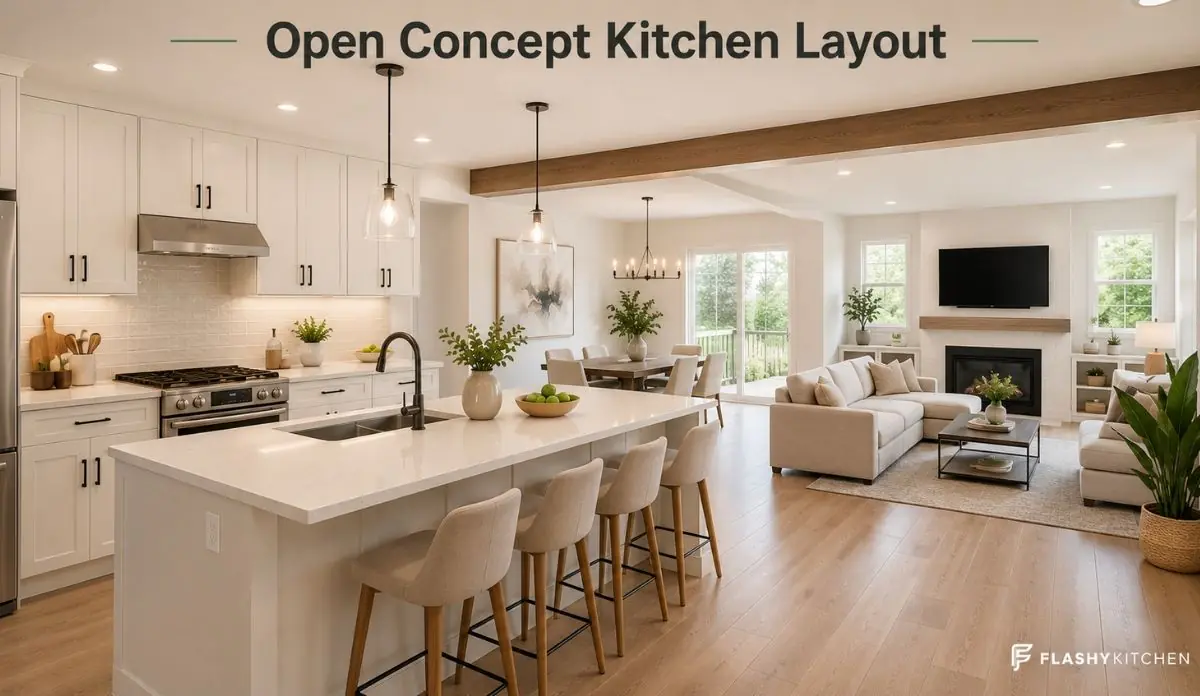
An open concept kitchen layout connects your cooking space directly to the dining room, living room, or both. Removing walls creates a brighter, more social home where family and guests interact easily. However, this design requires strict planning. When you remove a wall, you lose upper cabinets and expose the cooking area to the rest of the house. Smells, noise, and visual clutter travel further.
Proper zoning, clear traffic paths, and smart storage matter. In my experience, the biggest mistake homeowners make is tearing down a wall without a plan for where the displaced plumbing, electrical, and storage will go.
Quick Answer
An open concept kitchen layout removes dividing walls to merge the cooking area with the living and dining spaces. It relies on islands, peninsulas, flooring, and lighting to define spaces without physical barriers.
- Best for: Homes needing more natural light, better social flow, and flexible entertaining.
- Best layout pairing: L-shaped or one-wall setups that leave the center open.
- Island or peninsula rule: Use an island for large rooms and a peninsula for tight condos or small homes.
- Biggest structural issue: Removing a load-bearing wall without proper support beams and permits.
- Biggest mistake: Creating one giant room without clearly defined cooking, dining, and living zones.
What Is an Open Concept Kitchen Layout?
An open concept kitchen removes the physical walls separating the cooking space from the living and dining areas. You can build this design using L-shaped, one-wall, galley, or U-shaped layouts.
The goal is better flow, longer sightlines, and shared natural light. By taking down barriers, you blend the practical work of cooking with the comfort of your living spaces.
Open Concept Kitchen Pros and Cons
While removing walls opens up the home, it also removes the physical barriers that hide messes and block noise.
| Pros | Cons |
|---|---|
| More natural light | More noise |
| Better social interaction | Less privacy |
| Larger visual space | Cooking smells travel |
| Better entertaining | Clutter stays visible |
Before committing to this design, consider your daily habits. If you prefer to leave dirty dishes on the counter or do a lot of heavy frying, a traditional closed kitchen will hide the mess and contain the grease much better. If you prioritize hosting and shared family time, an open plan is the right choice.
Before Removing a Wall, Check Structure First
Never assume a wall is simply decorative. Load-bearing walls support the weight of the roof or the floor above. Removing one means you must install a heavy support beam or header beam to keep the house standing safely.
Plumbing pipes, electrical wires, HVAC ducts, and gas lines often hide inside the walls you want to tear down. Rerouting them adds significant time and cost to the project. Always have a contractor or structural engineer verify the wall type before swinging a hammer. Confirm your local building permit requirements. If you are doing a kitchen renovation in an older home, expect structural surprises behind the drywall.
Best Layouts for an Open Concept
Open concept is a way of connecting spaces, not a single layout. You must choose a foundational shape to organize your cabinets.
| Layout Type | Best For | Main Tip |
|---|---|---|
| L-shaped open concept | corners and small homes | add an island or dining table if space allows |
| One-wall open concept | condos and studios | use tall storage and compact appliances |
| Galley open concept | narrow homes | open one side carefully and protect the aisle |
| U-shaped open concept | storage-heavy rooms | keep the entry open to avoid a boxed-in feel |
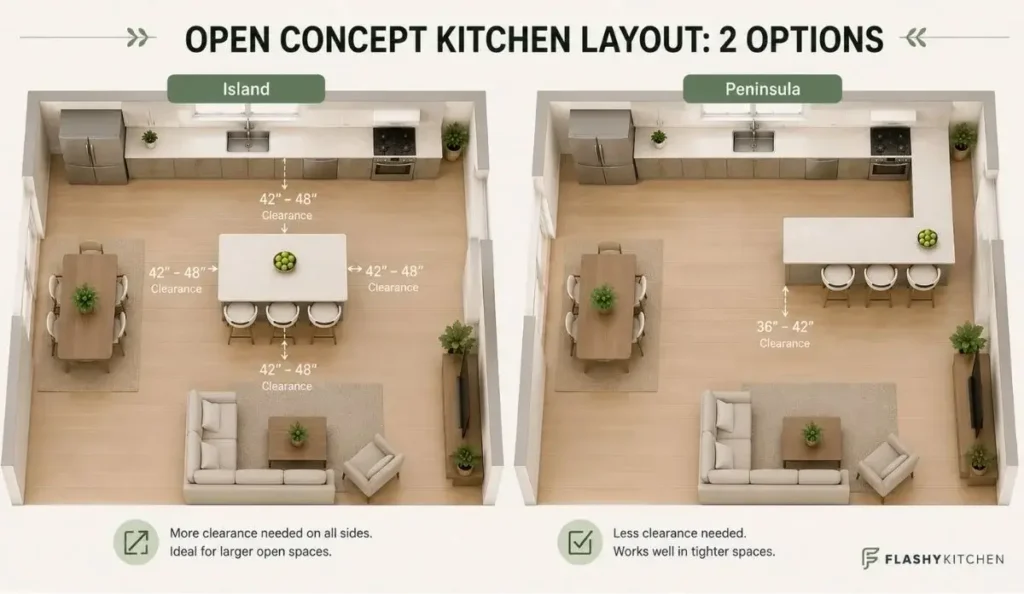
| Peninsula open concept | small/medium homes | use it as a room divider and seating zone |
| Island open concept | larger rooms | keep walkway clearance and seating flow clear |
Open Concept Kitchen With Island
An island acts as the visual anchor in a large open space. It clearly defines the kitchen area without requiring walls, adding prep space, base cabinets, and a seating area facing the living room.
If you want a sink or cooktop on the island, plan your plumbing, electrical, and ventilation before the floors go in. Keep the island size realistic. I often see homeowners try to force a massive island into a medium room, which ruins the traffic flow. Ensure the island does not block the paths to your fridge, sink, or stove.
Open Concept Kitchen With Peninsula
A peninsula attaches to the wall on one side, requiring less walking clearance than a freestanding island.
A peninsula kitchen layout works better than an island in smaller homes. It adds seating and clearly divides the kitchen from the living area without eating up the floor plan. Just make sure the peninsula does not create a narrow, one-way traffic trap for the cook.
How to Define Zones in an Open Concept
Modern kitchen design is moving toward clearly defined zones instead of one large, undefined space. Without walls, chaos spreads easily. You must create separate areas using visual cues.
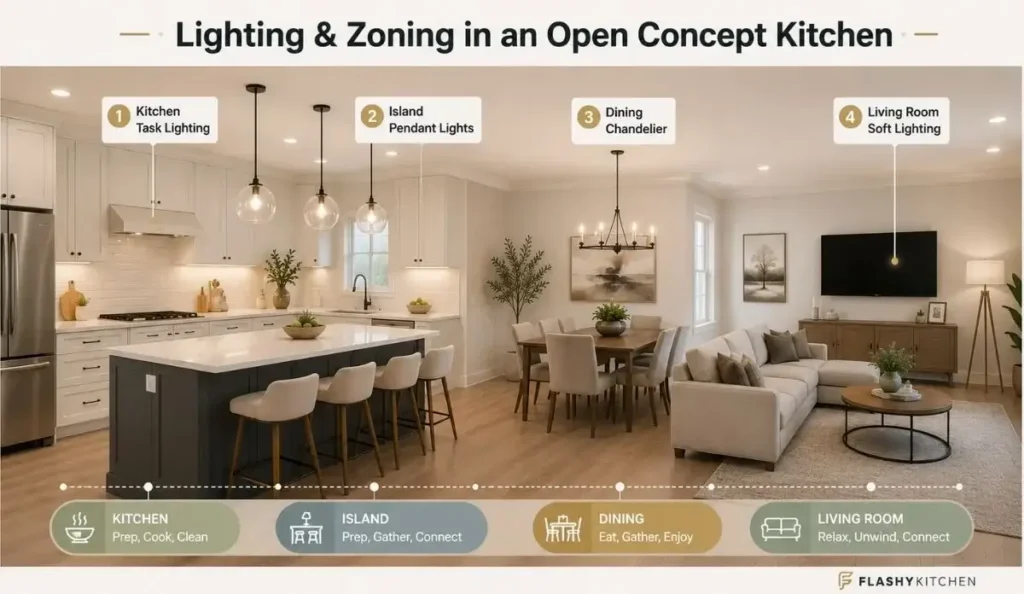
You can use a kitchen island or a peninsula to draw a hard line between the cooking space and the living room. Area rugs anchor the dining table and the living room sofa, giving each space a distinct footprint. Pendant lighting over the island and a chandelier over the dining table create visual boundaries from above.
You can also use exposed ceiling beams to subtly mark where the kitchen ends and the living room begins. Focus on zoning your furniture so the room feels organized.
Work Triangle and Traffic Flow
Your work triangle connects the fridge, sink, and range. In an open concept layout, protecting this path is critical. You want to avoid placing major foot traffic paths directly through the cooking zone.
Treat the work triangle as a helpful guideline, not a rigid rule. The goal is to keep family members from crossing through your hot prep space just to reach the living room or grab a drink from the fridge. Keep the main walkway routed around the outside of the island or peninsula.
Open Concept Living Dining Kitchen Layout
When connecting the kitchen, dining, and living rooms, face your seating toward a living room focal point, like a fireplace or window. You do not want to stare at dirty dishes from the sofa.
Keep the kitchen near the plumbing lines and exterior walls for easier ventilation. Place the dining table near the kitchen for easy serving, but do not let chairs block appliance doors. Position the living area furthest away from the cooking heat and smells. Use consistent paint colors and continuous flooring materials to smoothly connect all three spaces.
Open Concept Kitchen Layout Ideas by Room Size
Room size dictates how many zones you can fit comfortably. A small galley can open up by removing part of one wall; larger rooms can handle islands.
| Room Size / Home Type | Best Layout Choice | Main Tip |
|---|---|---|
| Small house | L-shaped or one-wall open concept | keep sightlines clear and storage vertical |
| Condo or studio | one-wall with island/cart | blend cabinets with living room style |
| 12×12 room | compact island or peninsula | protect walkways and appliance doors |
| 12×14 room | L-shaped with island | use island to define kitchen zone |
| 12×16 room | kitchen + dining connection | keep furniture paths clear |
| 12×18 room | kitchen + dining + living zones | use rugs and lighting to separate areas |
| Narrow home | open galley or one-wall | avoid blocking the main walkway |
Appliance Placement in an Open Concept Kitchen
Place the fridge on the edge of the kitchen so family members can grab drinks without entering the main cooking zone. The dishwasher door must not open into the main hallway.
The range needs powerful ventilation. If you put a cooktop on the island, you need serious hood planning to pull smoke away from the living room ceiling. Panel-ready appliances help the kitchen blend cleanly with the living areas. Keep trash and recycling near the prep and cleanup zones, entirely hidden from the living zone.
Storage Planning in an Open Concept Kitchen
Removing a wall means losing upper cabinets. You must replace that space. Tall pantry cabinets help recover lost storage efficiently. Island or peninsula base cabinets offer deep drawers for heavy pots and pans.
Appliance garages hide toasters and blenders, keeping counter clutter invisible from the dining table. During kitchen remodels, I often see homeowners forget to replace the upper cabinet storage they just demolished, leading to cluttered countertops. Planning small kitchen remodel hinges entirely on how well you organize the base cabinets. A condo kitchen benefits greatly from tall, ceiling-height pantry walls.
How to Control Noise, Smells, and Clutter
An open kitchen exposes the whole house to cooking byproducts. Install a high-quality range hood that vents directly outside. Plan for quiet appliances, especially the dishwasher, so it does not drown out the living room TV. When buying kitchen appliances, prioritize low decibel ratings.
Hide small appliances behind closed cabinet doors. Soft furniture, thick area rugs, and curtains in the living and dining zones help absorb sound and reduce echo across the hard floors.
Open Concept Kitchen With Support Beams
If you remove a load-bearing wall, your contractor will install a support beam. This beam can be hidden inside the ceiling drywall or left exposed.
Exposed beams can beautifully define the boundary between the kitchen and dining zones without needing a wall. The placement of the beam will affect your recessed lighting layout and where your island sits. A small kitchen layout remodel can work incredibly well with support beams if you use them to your visual advantage.
Open Concept Kitchen Layout Mistakes
Avoid these common errors:
- Tearing down a wall without checking for load-bearing structure or hidden plumbing.
- Creating one large room with no clear living, dining, or cooking zones.
- Losing too much storage space without adding a pantry wall.
- Adding an oversized island that chokes the walking paths.
- Ignoring ventilation, letting grease and smells reach the sofa.
- Placing the dishwasher where the open door blocks the only walkway.
- Putting a messy sink directly facing the living room seating.
- Using mismatched flooring that visually breaks the room into harsh pieces.
- Having no plan to hide daily clutter like the toaster and coffee maker.
Final Checklist Before Choosing an Open Concept Kitchen
Use this checklist before starting demolition:
- Identify exactly which wall you want to remove.
- Confirm whether the wall is load-bearing.
- Check for hidden plumbing, gas lines, HVAC, and electrical wiring.
- Verify local permit requirements.
- Plan distinct kitchen, dining, and living zones.
- Choose between an island, a peninsula, or keeping the center clear.
- Measure walkway clearance around all cabinets and furniture.
- Plan how to recover lost upper cabinet storage.
- Plan for powerful, exterior-vented ventilation.
- Map out lighting by zone (task, general, and ambient).
- Keep sightlines clean from the sofa to the kitchen.
- Decide how you will control noise, smell, and visual clutter.
A good open concept kitchen layout depends on solid structure, smooth traffic flow, smart zoning, and strong ventilation. By planning your work areas carefully and respecting clearances, you can build a bright, connected room that serves as the true center of your home.

One thought on “Open Concept Kitchen Layout: Plans, Ideas and Mistakes”