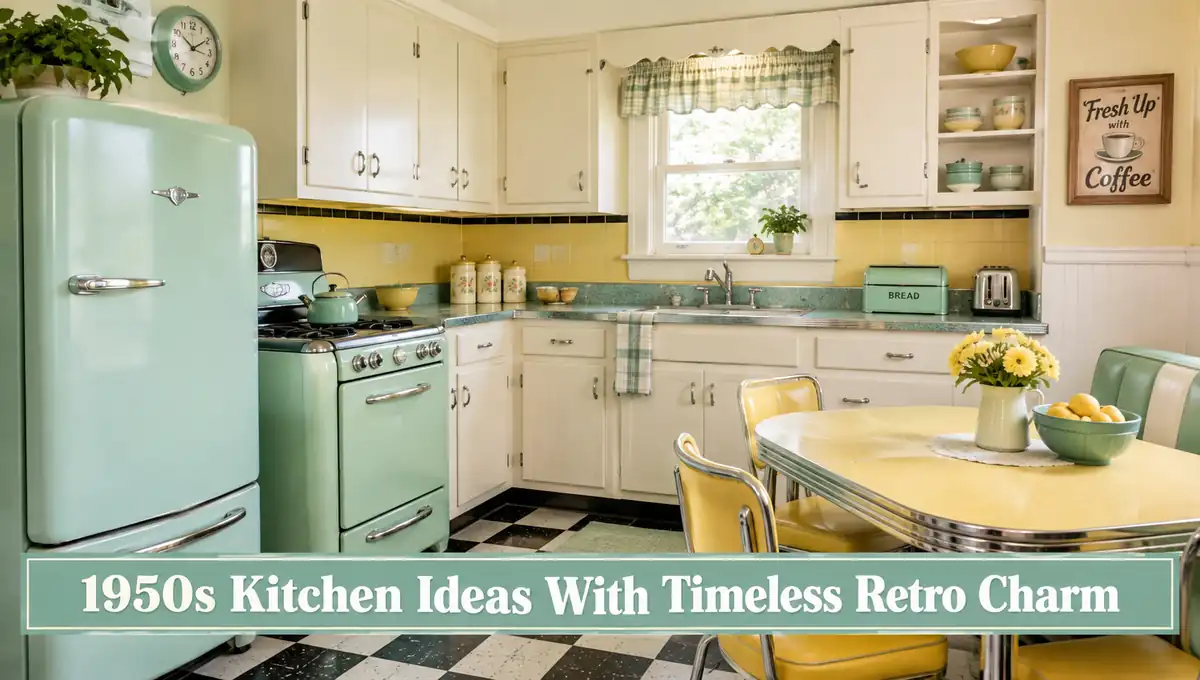
A 1950s kitchen can feel cheerful, practical, and full of character without turning into a themed diner. Real rooms from the decade used more than pastel paint and checkerboard floors. They also featured steel cabinets, warm wood, laminate countertops, compact layouts, breakfast nooks, colorful appliances, and cleaner Mid-Century lines.
The key is deciding what kind of project you want: preserve an original room, update it without losing character, or create a new retro-inspired space. By the end, you should know which period details matter, which ones are optional, and what should change for current function and safety.
Quick Answer
A 1950s kitchen works best when authentic period cues support current function rather than replace it. Start with the cabinets and layout, then add color, flooring, lighting, appliances, and decor only where they fit the room.
- Keep sound original features before replacing them for appearance alone.
- Use one strong period color instead of several competing pastels.
- Treat Mid-Century Modern as one 1950s direction, not the whole decade.
- Measure current appliances before planning decorative changes.
- Check old paint and building materials before sanding or demolition.
What Did a Real 1950s Kitchen Look Like?
A real room from the 1950s could be colorful and futuristic, but it could also be wood-heavy, restrained, or influenced by earlier American styles. Period examples show steel cabinetry, painted wood, knotty pine, birch, laminate surfaces, chrome details, compact floor plans, and growing use of built-in electric appliances.
That matters because current inspiration often narrows kitchen design of the 1950s to turquoise, pink, and black-and-white floors. Those cues are valid, but they are not required. An original kitchen from the 1950s may use cream cabinets, natural wood, yellow accents, blue tile, or metal cabinets without looking like a diner.
Mid-Century Modern was one important direction, not a synonym for the whole decade. A Mid-Century kitchen from the 1950s may use flat-front cabinets, walnut, geometric patterns, and simpler forms. Farmhouse-influenced and more traditional postwar kitchens also existed.
While comparing archival examples with current retro guides, one clear difference appeared: original rooms show more variety than stereotype-based lists. Current articles often emphasize diner cues, while period material also shows quieter wood, steel, and Early American influences.
Compared with a Victorian kitchen style, 1950s rooms usually reduced ornament; compared with Scandinavian kitchen design, they often used bolder color and more visible chrome. The broader kitchen design styles framework helps keep these neighboring looks separate.
How Retro Should You Go?
Choose the amount of retro character before choosing colors or hardware. A light retro update, a period-sensitive remodel, and a restoration have different goals and should not use the same shopping list.
| Approach | Best for | What usually changes |
|---|---|---|
| Light retro | Newer or mostly current kitchens | Color, lighting, hardware, decor |
| Period-sensitive remodel | Older homes with some original character | Cabinets, surfaces, flooring, appliances |
| Restoration | Intact period kitchens worth preserving | Repair, refinishing, careful reproduction |
A light update can use mint green, powder blue, butter yellow, chrome hardware, or a small dinette set without rebuilding the room.
A period-sensitive remodel keeps more of the original structure. It may retain cabinets, use simple laminate surfaces, and add current appliances that respect the room’s proportions.
Restoration makes sense when original materials are sound, useful, and meaningful. It is a poor choice when damage, storage problems, or layout limits would be preserved only for appearance.
Which Features Create the 1950s Look?
The strongest period look comes from cabinets, color, surfaces, appliances, lighting, and eating space working together. You do not need every retro feature in one room.
Cabinets: Wood, Painted, or Metal
1950s kitchen cabinets could be wood, painted wood, or metal. Steel cabinets create a strong period signal, while flat-front wood cabinets suit a Mid-Century look.
A reversed search phrase such as “kitchen cabinets 1950s” points to the same need: homeowners are often trying to identify what belongs in the era. Material alone does not decide authenticity.
Original metal cabinets from the 1950s may be worth saving if they are sound and the layout still works. Review metal kitchen cabinets before assuming old steel units need replacement.
Wood cabinets can also stay if their boxes are solid and useful.
Colors, Countertops, and Backsplash
Period colors included mint green, turquoise, pastel pink, butter yellow, red, powder blue, cream, and natural wood tones. A pink or yellow period kitchen works better when one color leads and quieter surfaces support it.
Laminate countertops are one of the clearest period-sensitive choices. A modernized 1950s-era room can still use a simple current countertop if the cabinet profile, palette, and lighting carry enough retro character.
For the backsplash, plain tile or a restrained geometric pattern usually works better than several nostalgic patterns together. The same approach suits blue schemes and other stronger period colors.
Flooring, Sink, and Faucet
Period flooring can draw from linoleum, vinyl, geometric patterns, or checkerboard designs. Black-and-white checkerboard is recognizable, but it is not required for period-appropriate design.
A porcelain or enameled sink, drainboard-style basin, or chrome faucet can reinforce the era. A surviving sink unit may also include cabinetry or drainboard features worth assessing before removal.
Do not replace a working sink only to strengthen the retro theme if doing so creates unnecessary countertop or plumbing work.
Appliances, Lighting, Decor, and Layout
1950s kitchen appliances helped define the period, but vintage equipment is not required. Retro-style current appliances can provide color and rounded forms while keeping present-day function.
In a Cape Cod remodel from this era, refrigerator depth, dishwasher clearance, range space, and door swing can matter more than adding an island. Small before-and-after remodels are most useful when they show circulation and storage changes, not just new colors.
A vintage-style table and chairs, globe or pendant fixtures, patterned curtains, and restrained accessories can finish the room. Use kitchen lighting ideas so vintage lighting still provides useful task light.
A breakfast nook or banquette, a built-in dining bench, can also fit a compact layout better than a center island.
How Much “Old” Should You Keep?
Keep original features when they are sound, useful, and difficult to reproduce. Replace them when damage, poor storage, appliance conflicts, or a bad layout matter more than age.
Start with cabinet construction. Some surviving period kitchens use site-built cabinetry, where parts were fitted to the room rather than installed as separate modern boxes. Removing one section can therefore affect trim, countertops, or nearby walls.
If the boxes are solid and the layout works, refinishing may be enough. Compare refinishing vs refacing before paying for full replacement.
An original cabinet does not become bad because its finish looks dated. The opposite is also true: historical character is not a reason to keep damaged, awkward, or unsafe cabinetry.
Before changing doors, check drawer action, shelf depth, sink-base damage, and room for current appliances. Keeping only the most distinctive sections can be a better compromise than preserving every cabinet or replacing everything.
Retro Without Looking Like a Diner
A retro kitchen starts to look themed when every surface tries to announce the decade. Pick two or three strong cues and let the rest of the room stay quiet.
For example, simple cabinets, one blue accent, and a chrome-edged dinette may be enough. You do not also need checkerboard flooring, novelty signs, diner stools, pink appliances, patterned curtains, and several wall accessories.
A farmhouse-influenced period kitchen can lean on warm wood, simple tile, painted cabinetry, and a vintage table instead of Atomic Age details. For a cleaner direction, use flat fronts, warm wood, geometric accents, and restrained color.
What Should You Check Before Remodeling?
A house built in the 1950s predates the 1978 federal lead-paint threshold used in US renovation guidance. Old painted surfaces may contain lead, while some older flooring, adhesives, insulation, or other materials may contain asbestos.
Do not sand, grind, or remove suspect materials just to see what is underneath. Have uncertain materials assessed before disturbing them. Electrical, plumbing, and ventilation changes may also require permits or licensed trades depending on local rules.
Check appliance circuits, exhaust, plumbing, and clearances before spending heavily on finishes. This matters because older kitchens were planned around different appliances and household electrical loads.
No defensible national average for a 1950s kitchen remodel emerged from the reviewed sources because their project scopes were not directly comparable. Cost rises most when work adds cabinet replacement, plumbing moves, electrical upgrades, wall changes, or hidden-material repairs. Prices vary by region and by what labor and repairs include.
Recreate the Character, Not Every Old Limitation
A 1950s kitchen should keep the character you value without preserving problems that make the room harder to use. Start by choosing light retro styling, a period-sensitive remodel, or true restoration.
Then inspect the cabinets, layout, old materials, and appliance clearances before choosing colors or decor. Keep the strongest original features, update what affects safety and daily function, and use a few period details to tie the room together.