
Remodeling an apartment or unit kitchen comes with unique challenges. A small condo kitchen remodel requires planning around shared walls, strict building codes, and tight footprints. You cannot just knock down walls or move pipes whenever you want.
In small kitchen projects I’ve reviewed, success depends on smart space planning and understanding your building limits. If you plan your changes carefully, you can turn a cramped cooking space into a highly functional kitchen.
Quick Answer: How to Succeed with a Condo Kitchen Remodel
A successful small condo kitchen remodel requires balancing strict building rules with smart space-saving choices. You must secure building approval before altering any plumbing, electrical systems, or walls.
- First Step: Get the homeowner association (HOA) rulebook and renovation guidelines.
- Best Space Saver: Install a counter-depth refrigerator and a slim dishwasher.
- Plumbing Rule: Keep your sink close to the main building plumbing stack to avoid high costs.
- Logistics Step: Secure an elevator reservation for material deliveries and debris removal.
- Pro Rule: Hire licensed contractors who carry proper liability insurance required by your board.
What Makes a Condo Kitchen Remodel Different?
Remodeling a condo is different from working on a detached single-family home. In a house, you own the structure and can change the layout easily. In a condo building, you share walls, floors, and utility lines with your neighbors.
Your renovation choices directly impact the people living around you. Because of this, condo boards create strict noise rules and working hours. Most buildings only allow noisy construction work between 9:00 AM and 5:00 PM on weekdays.
The logistics are also tougher. Workers cannot leave old cabinets or broken drywall by the curb. You have to arrange specific debris removal plans and protect the building corridors and elevators during the project.
Check HOA and Building Rules First
You cannot start a condo kitchen remodel without official HOA approval. Every building has a set of rules often called Covenants, Conditions, and Restrictions (CC&Rs).
Before you buy materials or hire a contractor, submit a formal renovation proposal to your condo board. This package usually requires architectural drawings, material specs, and your contractor’s proof of insurance.
Warning: Starting work without board approval can lead to heavy fines. The board can legally force you to stop construction or tear out unapproved work at your own expense.
Ask your building manager about these specific rules early:
- Liability insurance minimums for contractors (often $1 million or higher)
- Refundable security deposits for common area damage
- Approved pathways and elevator protection requirements for moving materials
- Specific days and hours when construction noise is allowed
Plan Around Plumbing and Ventilation Limits
In a single-family home, a plumber can cut through the subfloor to move a drain pipe across the room. In a concrete condo building, you cannot drill into the floor structure. Your pipes must connect to the main building plumbing stack exactly where they are.
This means your sink and dishwasher usually need to stay in their original location. Moving a sink even 12 inches can require building custom platforms to hide the sloped waste lines, which destroys your toe-kick storage space.
Ventilation is another common hurdle. Many condos use recirculating range hoods because drilling a new hole through the exterior wall for exhaust is strictly banned.
If your building has a shared ventilation shaft, you cannot hook up a high-powered professional range hood. Doing so can blow your cooking odors directly into your neighbor’s apartment. Stick to high-quality microwave hoods or under-cabinet hoods with charcoal filters.
Safety, Permits, and Shared Wall Restrictions
- Get city building permits alongside HOA approval before touching shared infrastructure.
- Never cut into a wall without a structural engineer checking for fire barriers or main electrical lines.
- Damaging shared building systems compromises the safety of the entire property.
- Hire a licensed pro for all electrical upgrades and gas line adjustments.
- Have an electrician check if your panel can handle a 240-volt circuit before buying an induction cooktop.
Best Layout Ideas for Small Condo Kitchens
If you cannot move your plumbing stack or gas lines, you can still improve your daily cooking workflow. The right small kitchen layout remodel maximizes your available counter space.
| Layout Type | Best Used For | Major Advantage |
|---|---|---|
| Galley Layout | Long, narrow kitchen spaces | Highly efficient work triangle |
| L-Shaped with Peninsula | Open-concept condo units | Adds dining space without an island |
| One-Wall Layout | Studio apartments and small lofts | Saves maximum living space |
When plotting your layout, strict clearances matter. You need a minimum aisle width of 36 inches between opposite countertops just to pass through, though 42 inches is ideal for opening appliance doors comfortably.
If your kitchen feels dark and closed off, ask a structural engineer to check the wall facing your living area. Opening up a non-load-bearing partition wall to create a peninsula or breakfast bar can bring in natural light. It also creates a casual dining spot, which boosts your property’s overall resale value for future urban buyers.
Compact Appliances That Save Space
Standard residential appliances are too bulky for a typical unit footprint. A standard 36-inch refrigerator sticks out past your cabinet line and blocks the walkway. To save valuable floor and counter space, look for compact kitchen appliances designed for urban living.
Start your planning with these space savers:
- Counter-Depth Refrigerator: These units sit flush with your 24-inch deep kitchen cabinets so your appliance door swing does not block the center aisle.
- 18-Inch Dishwasher: A slim dishwasher holds up to eight place settings but saves 6 inches of cabinet space compared to standard 24-inch models.
- Over-the-Range Microwave: Combining your microwave and hood vent clears your countertops for food preparation.
- Two-Burner Induction Cooktop: If you rarely cook with four pots at once, a 12-inch or 24-inch cooktop frees up extra counter space.
Check out our review of the best small kitchen appliances to find models that fit tight spaces without sacrificing performance.
Storage Ideas for Condo Kitchens
When floor space is limited, you have to maximize your vertical walls. Standard condo builders often install 30-inch upper cabinets that leave a useless gap at the top. During your layout remodel, swap those out for 42-inch ceiling-height cabinets. This extra foot of space is perfect for storing seasonal items, large mixing bowls, or small appliances you do not use every day.
Implement these storage features to optimize every inch:
- Deep Drawer Bases: Swap out lower cabinets with standard shelves for deep drawers. Drawers pull out fully so you can reach heavy pots in the back without kneeling.
- Tall Pantry Wall: If you have an empty wall, install a shallow 12-inch deep pantry cupboard. It holds canned goods and baking supplies perfectly without blocking walkways.
- Under-Cabinet Lighting: Install slim LED tape lights beneath your upper cabinets. Eliminating dark shadows makes your small workspace feel much larger.
Condo Remodel Budget Issues
A small condo kitchen remodel often costs more per square foot than a kitchen remodel in a standard house. The extra cost comes from logistical friction.
Contractors spend time parking far away, riding elevators, protecting hallways with building paper, and hauling trash down by hand. This labor overhead can add 15% to 20% to your overall bill.
To see how these costs break down, review our detailed small kitchen remodel cost breakdown.
If you are working with a tight budget, focus on high-impact upgrades. Keep your plumbing sink and major appliances in their exact current spots. Spend your budget on custom storage configurations, clean solid-surface countertops, and bright lighting instead.
Before and After Ideas: Real Unit Layout Transformations
In my experience, looking at how other small properties solve layout issues can help you plan your own space.
The Dark Galley Opening
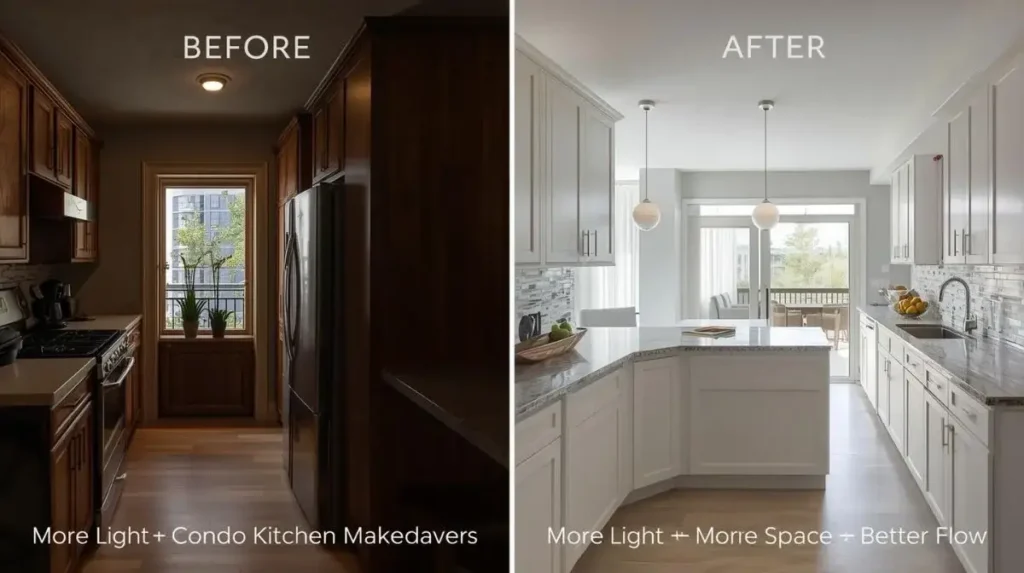
- Before: A 75-square-foot closed-off condo kitchen with dated wood cabinets and a bulky refrigerator that blocked the main entrance.
- After: The homeowner removed the top half of the partition wall to create an open breakfast bar. They installed flat-panel white overlay cabinets and a counter-depth refrigerator.
- The Result: The kitchen looks twice as wide, catches natural light from the living room windows, and gained two extra bar seats for dining.
The Studio Efficiency Wall
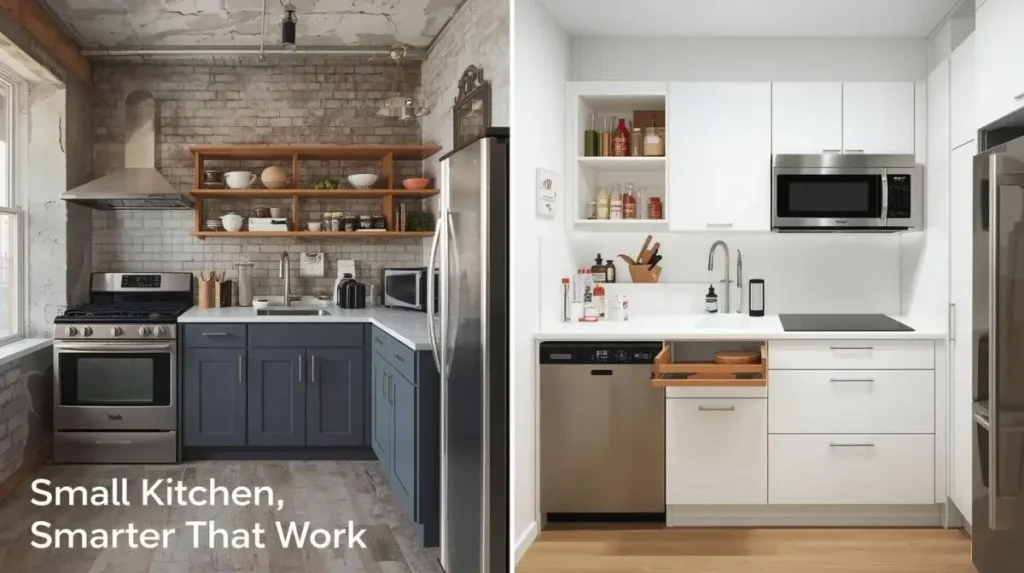
- Before: A single-wall kitchen in an urban loft with a massive 30-inch range and zero counter space for food preparation.
- After: The owner switched to a 24-inch convection microwave oven combo and a two-burner cooktop. They used the saved 6 inches of counter space to install a pull-out spice rack next to the sink.
- The Result: The cooking workflow improved dramatically simply by downsizing the appliances to match the actual scale of the apartment.
Mistakes to Avoid During Your Project
- Reserve the freight elevator before countertop and material deliveries.
- Get written HOA approval before purchasing renovation materials.
- Create a temporary kitchen setup with a microwave, coffee maker, and mini fridge.
- Plan for several weeks without access to your main kitchen.
- Match your renovation budget to comparable units in the building.
- Avoid overspending on upgrades that may not increase resale value.
- Check all building rules and restrictions before starting work.
- Budget for potential restocking fees if materials are rejected.
Getting Started on Your Project
A successful condo kitchen remodel starts with clear communication and exact planning. Before looking at tile samples or cabinet doors, read your HOA guidelines and take detailed measurements of your appliance footprints.
If you want to map out your general workflow and understand layout rules better, read our comprehensive small kitchen remodel guide to jumpstart your Kitchen renovation plans.