Remodeling a kitchen in a manufactured home requires a unique approach compared to a standard house. A small mobile home kitchen remodel means working with lightweight walls, specific plumbing structures, and structural weight limits. You cannot just buy heavy oak cabinets or thick granite countertops without thinking about the subfloor strength.
In small kitchen projects I’ve reviewed, the key is choosing materials that maximize space without overloading the chassis. If you choose your upgrades carefully, you can create a bright, functional space that boosts your home’s resale value.
Quick Answer: How to Succeed with a Mobile Home Kitchen Remodel
A successful small mobile home kitchen remodel balances smart space saving with strict weight and plumbing rules. You must use lightweight building materials and respect the existing utility locations to avoid massive costs.
- First Step: Check the condition of the subfloor for moisture before ordering materials.
- Weight Rule: Choose lightweight cabinets and thin engineered countertops over heavy solid stone.
- Plumbing Limit: Keep the sink in its current footprint to avoid complex under-chassis pipe rerouting.
- Space Upgrade: Use open shelving and compact appliances to widen tight walkways.
- Pro Step: Hire specialists who understand HUD codes for any major electrical or gas line changes.
What Makes a Mobile Home Kitchen Remodel Different?
Remodeling a kitchen in a mobile home is different because the structure is engineered to be lightweight. Standard houses use 2×4 or 2×6 wood wall studs, but many single wide and older double wide homes use thin 2×2 or 2×3 interior studs. These thin interior framing structures cannot hold heavy custom solid wood cabinetry safely without bowing or pulling away from the wall sheets.
The building regulations are also unique. Manufactured homes built after 1974 must follow federal HUD codes rather than standard local building codes. This impacts your electrical wiring, plumbing materials, and ventilation setups. Everything from the wall panels to the light fixtures is designed around portability and weight management.
Start With Weight, Plumbing, and Layout Limits
Before you change your layout footprint, you must understand your structural boundaries. In my experience, moving utilities in a mobile home gets complicated quickly. The plumbing drain lines run through a specific insulation envelope under the floor called the belly board. Rerouting a drain or gas line means cutting into this protective barrier, which can ruin your home’s weatherproofing and invite pests. It is best to keep your sink, stove, and refrigerator in their original spots.
You must also measure your home’s entry points. Mobile homes often have narrow exterior doors that measure just 28 to 30 inches wide, compared to standard 36-inch house doors. If you buy a standard large appliance, it might not even fit through the front door.
Furthermore, you should check the subfloor for hidden moisture damage. Mobile homes often use particleboard subfloors that dissolve like cardboard if an old sink or refrigerator water line leaks over time. You must cut out any soft spots and patch them with sturdy exterior-grade plywood before installing new layout features or heavy appliances.
Best Cabinet Ideas for a Small Mobile Home Kitchen
Since heavy solid hardwood cabinets put too much stress on thin wall studs, look for lightweight cabinets instead. Stock cabinets made from engineered wood or medium-density fiberboard (MDF) with laminate skins work perfectly. They look modern, clean easily, and keep your overall project on a budget.
When working with a typical mobile home ceiling height—which is often 7 feet or 7.5 feet instead of the standard 8 feet found in traditional houses—cabinet selection is critical. Standard stock upper cabinets might leave an awkward 6-inch gap at the top, or they might sit too close to your counter space.
Consider these smart alternative configurations:
- Open Shelving: Replacing some upper cabinets with sturdy, lightweight open shelves keeps the narrow space feeling open. It also takes hundreds of pounds off your wall panels.
- Pre-Assembled Cabinet Bases: Choose stock cabinets with toe-kick cutouts that match mobile home floor heat registers without blocking airflow.
- Storage Wall Concept: Group your pantry and tall cabinets on an exterior wall, which is structurally engineered to be much stronger than thin interior partition walls.
If you want to compare face frame weights, check out our guide on inset vs overlay kitchen cabinets to see which door style suits your structural limits.
Lightweight Countertop and Flooring Options
Thick granite or marble slabs can weigh over 20 pounds per square foot. Putting that much weight on a small mobile home kitchen remodel can crack your subfloor, stress the support piers underneath, or throw your entire home off-level.
Instead, stick to budget countertops made from high-pressure laminate or solid surface acrylic. Modern laminate styles mimic the look of natural stone beautifully at a fraction of the weight and cost. Another durable option is thin butcher block, which you can easily seal against moisture.
For the floor, skip heavy ceramic tile and cement backers. Tile cracks easily when a mobile home settles, shifts, or moves during seasonal ground changes. Choose luxury vinyl plank (LVP) flooring or sheet vinyl. Vinyl flooring is completely waterproof, handles subfloor shifts without cracking, and stays budget-friendly.
Compact Appliances for Mobile Home Kitchens
A standard 36-inch wide refrigerator or heavy professional range will overwhelm a single wide kitchen layout. It ruins your work triangle and blocks your walking path. In a narrow manufactured home kitchen layout, you want to maintain a minimum walkway clearance of 36 inches so you can easily pass through when appliance doors are open.
Look for space-saving compact appliances to open up the room:
- Counter-Depth Refrigerator: A 24-inch or 28-inch deep fridge aligns with your cabinet faces so you do not lose precious aisle space.
- Slim Range Hoods: Use a recirculating range hood that filters air using charcoal filters without needing complex roof venting through your ceiling panels.
- 18-Inch Dishwasher: If your home layout lacks built-in plumbing for a full-size dishwasher, a slim model saves cabinet space and uses less water.
Find the right models by browsing our list of the best small kitchen appliances.
Storage Ideas for Single-Wide Kitchens
Single wide layouts usually feature long, narrow floor plans. To keep your work triangle efficient, you have to build storage into unexpected places without adding physical weight to the structure.
- Toe-Kick Drawers: Use the empty space underneath your base cabinets to store flat baking pans or placemats.
- Slide-Out Pantries: Install a 6-inch wide rolling pantry cart into the gap between your refrigerator and the wall.
- Pegboard Accent Walls: Hang a lightweight wood or metal pegboard on an interior wall panel. It lets you hang pots, pans, and colanders vertically without adding cabinet bulk to the framing.
Budget Remodel Plan
You can achieve a high-end look without overspending if you plan your costs strategically. A complete manufactured home kitchen upgrade usually costs less than a traditional home build because the footprint is smaller.
| Budget Tier | Project Scope | Best Value Upgrade |
|---|---|---|
| $2,000 – $4,000 | Keep layout, stock cabinets, laminate tops | New vinyl flooring and LED lighting |
| $5,000 – $8,000 | New lightweight cabinets, compact appliances | Adding a built-in pantry wall |
| $9,000+ | Wall opening, new subfloors, custom layout | Removing a non-load-bearing partition |
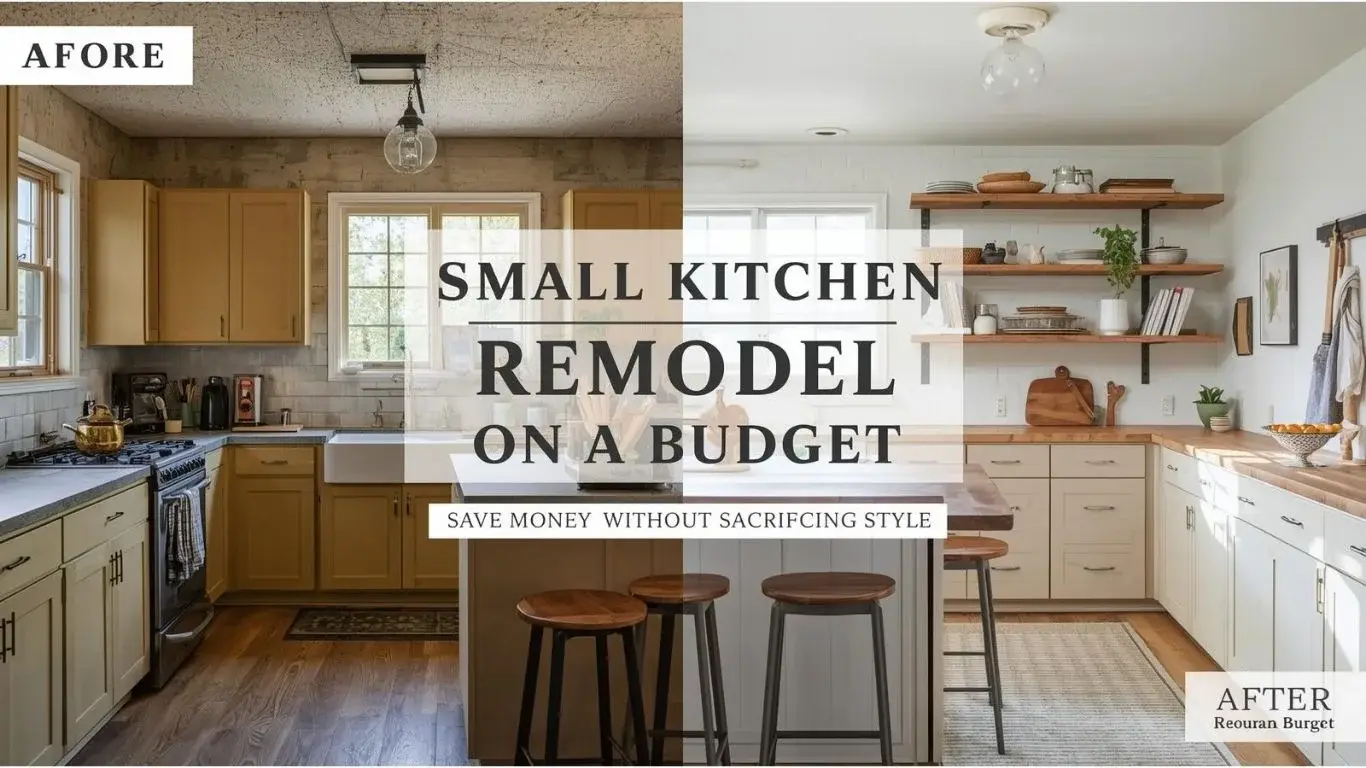
For a broader look at general pricing tiers, read through our small kitchen remodel cost breakdown. If your budget is tight, consider starting with a cosmetic refresh first by checking out our small kitchen remodel on a budget page.
What to DIY and What to Leave to Pros
- What You Can DIY: You can easily tackle demolition, paint wall panels, lay vinyl flooring, install open shelving, and screw lightweight stock cabinets into the wall studs.
- When to Hire a Pro: Always hire a licensed pro for electrical panel upgrades, gas line attachments, and structural wall checks. Mobile home plumbing utilizes specific plastic piping (like PEX or older Polybutylene lines) that requires special brass transition fittings to prevent catastrophic water leaks under the chassis.
- Safety Note: Ensure your contractor knows HUD building standards. Improper venting or incorrect electrical grounding can create fire hazards or void your mobile home insurance policy.
Before and After Ideas: Real Manufactured Home Successes
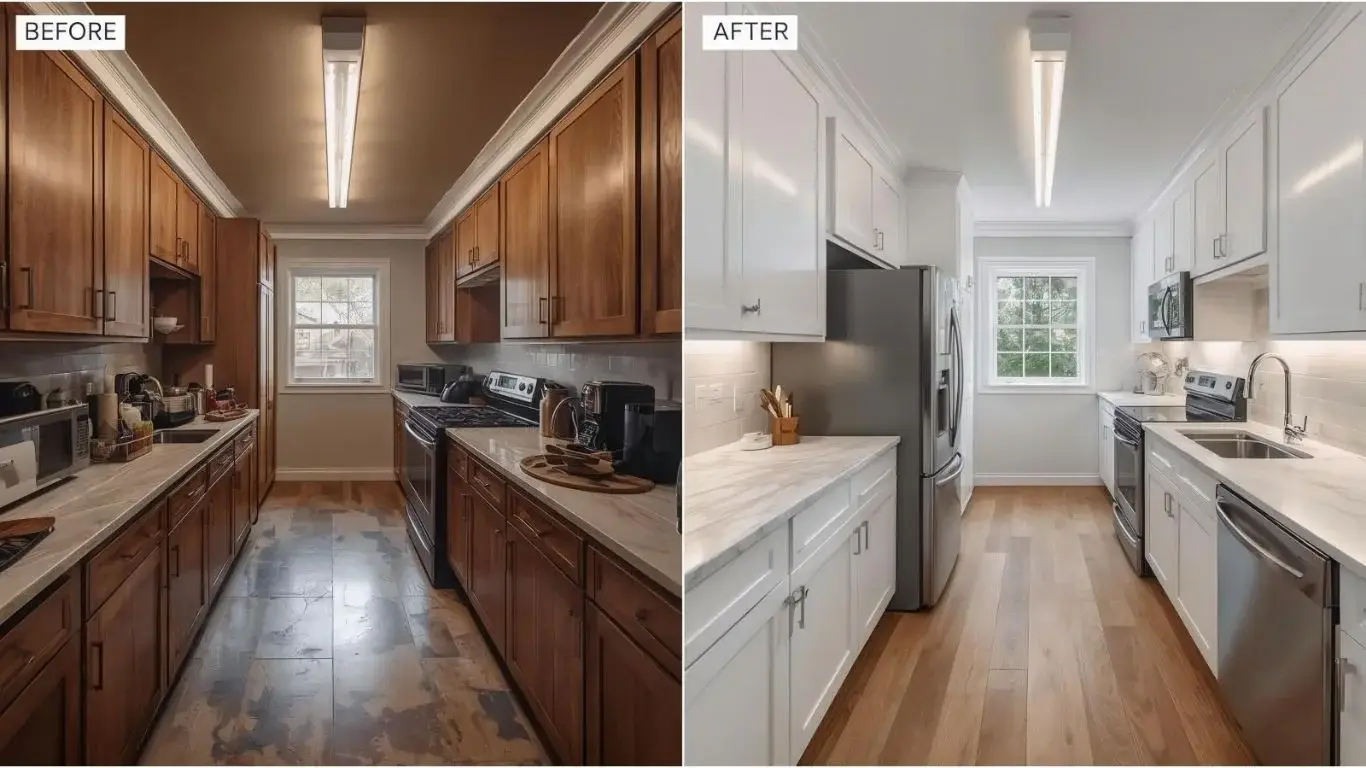
The Single Wide Galley Fix
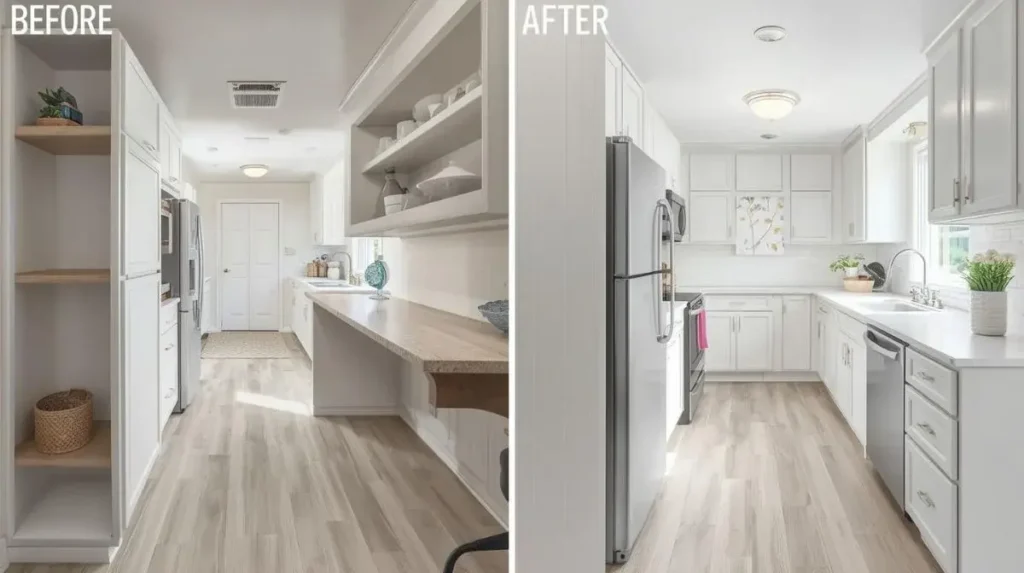
- Before: A 1990s single wide kitchen with dark wall panels, a sagging laminate countertop, and a bulky fridge that left only 30 inches of walking clearance.
- After: The owner replaced the rotten particleboard subfloor with sturdy plywood, installed white vinyl plank flooring, added open shelving on the top walls, and shifted to a counter-depth fridge.
- The Result: The walkway expanded to a comfortable 38 inches, and the white finishes made the narrow room feel bright and airy.
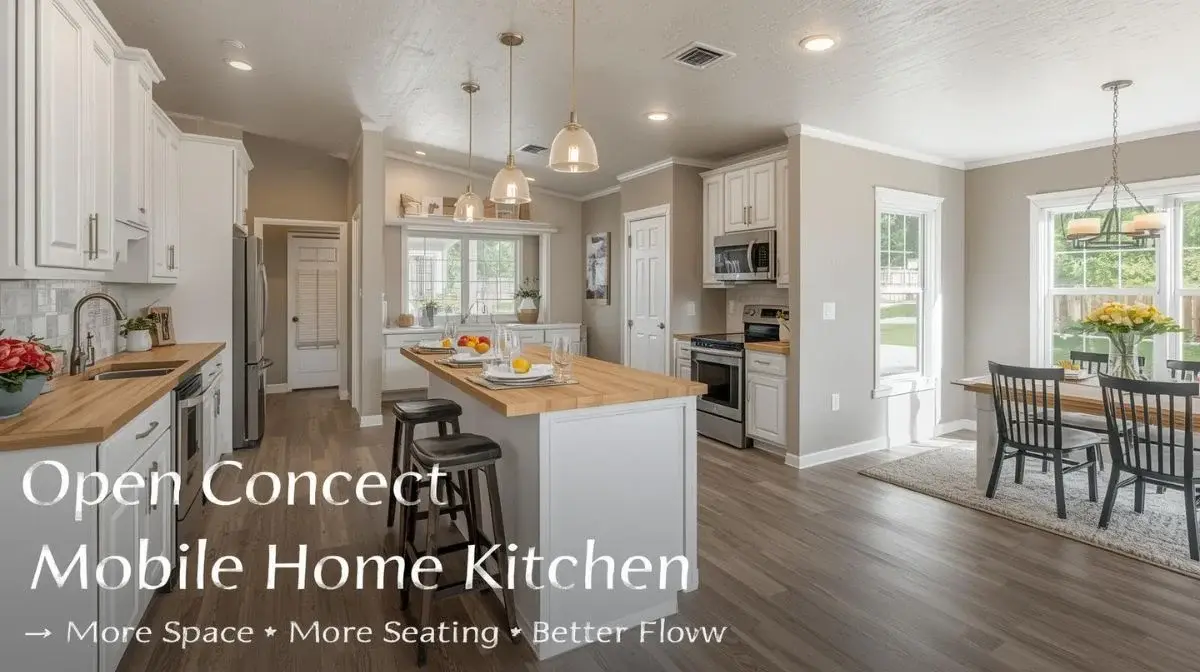
The Double Wide Open Peninsula
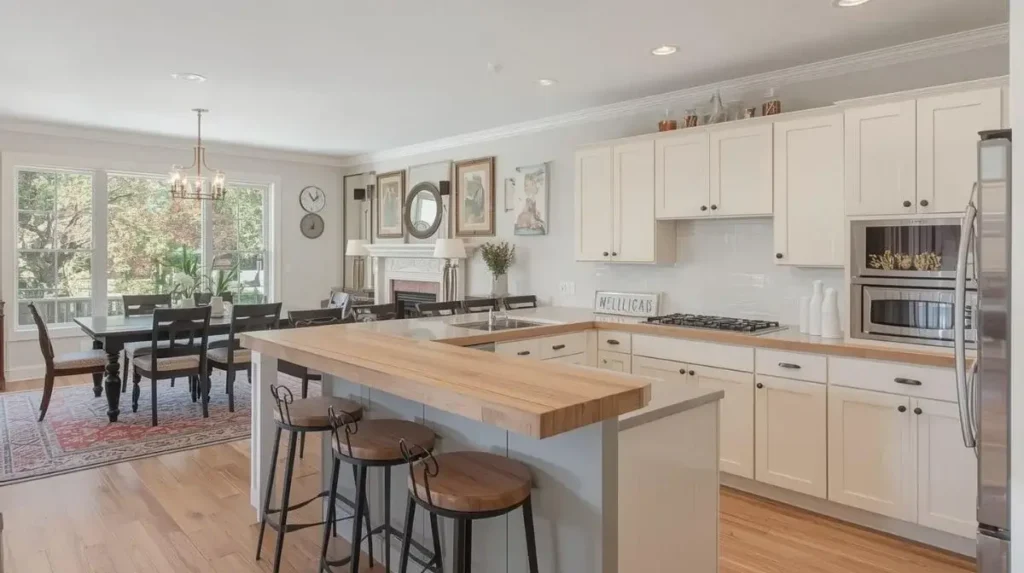
- Before: A closed-in U-shaped kitchen with a low overhead cabinet box that blocked the view into the dining area.
- After: The homeowner removed the heavy overhead cabinets, kept the base cabinets to form a clean peninsula, and installed a lightweight butcher block countertop.
- The Result: The kitchen now flows naturally into the living room, adding seating space and boosting the overall resale value of the home.
Getting Started on Your Project
Planning a small mobile home kitchen remodel takes a bit of extra patience regarding weight and material choices. Focus on protecting your subfloor, choosing lightweight storage features, and preserving your original utility lines.
Ready to explore layout designs or map out your timeline? Head over to our small kitchen remodel guide to plan your next steps.