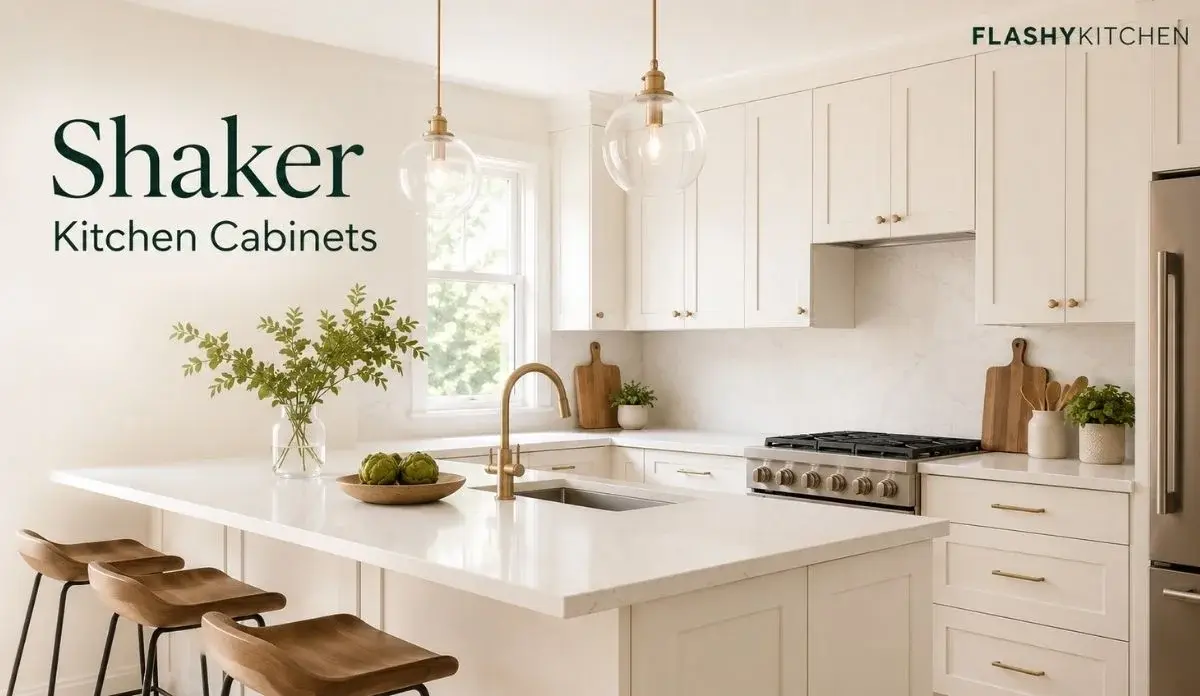
Shaker kitchen cabinets are popular because they look clean, simple, and easy to style in almost any home. Having overseen hundreds of kitchen redesigns, we consistently find that this specific style is the safest choice for long-term satisfaction. Whether you are mapping out a historic renovation or planning a clean, transitional space, these doors adapt to their surroundings better than any other style.
Because the frames lack heavy, ornate molding, they keep small spaces from feeling overcrowded. They act as a design chameleon, allowing your choice of backsplash, countertops, and decorative lighting to pull focus without visual clutter.
Quick Answer: Are Shaker Kitchen Cabinets Worth It?
Yes, shaker kitchen cabinets are highly worth the investment. They offer an enduring aesthetic that protects home resale value by appealing to a wide range of buyers. The classic five-piece construction is easy to maintain, structurally sound, and easily updated with a fresh coat of paint or new hardware down the line. While an ultra-modern design might demand flat slab profiles, this style provides the ultimate balance of utility and classic appeal for most residential remodels.
Shaker Kitchen Cabinets at a Glance
| Feature | Details / Expert Benchmark |
|---|---|
| Best For | Transitional, modern farmhouse, open-concept spaces |
| Typical Look | Flat, recessed center panel with crisp square edges |
| Main Advantage | High resale appeal; never looks dated |
| Main Drawback | The horizontal lip on the lower frame collects dust |
| Best Wood Species | Maple, birch, cherry, white oak |
| Average Box Lifespan | 15 to 25 years depending on construction quality |
What Are Shaker Kitchen Cabinets?
The traditional look relies on a five-piece frame assembly: two vertical pieces (stiles), two horizontal pieces (rails), and a flat center panel. This utilitarian design originated with the Shaker religious community in the 19th century, prioritizing functional honesty over elaborate craftsmanship.
When drafting your layout using a complete kitchen cabinet guide, you quickly realize how much this door style anchors a space. It allows you to experiment elsewhere without the room feeling chaotic. When analyzing the overarching types of kitchen cabinets for durability, the tongue-and-groove or dowelled joints of a standard frame offer superior resistance to warping. According to historic design references like The Spruce, this focus on clean lines is why the style remains dominant today.
Pros and Cons of Shaker Kitchen Cabinets
Understanding the practical realities of living with these cabinets helps avoid surprises after installation.
| Pros | Cons |
|---|---|
| Highly versatile; matches almost any architectural style. | The inner ledge requires regular wiping to clear dust. |
| Retains maximum resale value compared to trendy styles. | Extremely cheap particle-board doors look thin and hollow. |
| Flat center panels are easy to sand, repaint, or re-stain. | White finishes can feel generic if the hardware is basic. |
| Readily available across stock, RTA, and custom lines. | Shadows inside the recessed panel can show paint flaws. |
How Much Do Shaker Kitchen Cabinets Cost?
The cost of your cabinetry depends almost entirely on box construction, door materials, and ordering tiers. For a standard 10×10 kitchen layout, materials typically range between $3,500 and $8,500.
- Stock Options: These are factory-built in fixed sizes. They offer the lowest entry price but often use lower-grade fiberboard cores.
- Ready-to-Assemble (RTA): These ship flat-packed, cutting shipping fees. By assembling them yourself, you can secure high-grade plywood boxes for the price of stock particle board.
- Custom Projects: Locally built solid wood units provide exact sizing but can easily double your overall cabinetry budget.
We always caution homeowners to evaluate the finish application when pricing units. Factory-applied, baked-on polyurethane coatings offer significantly better chip resistance than a quick spray job on site.
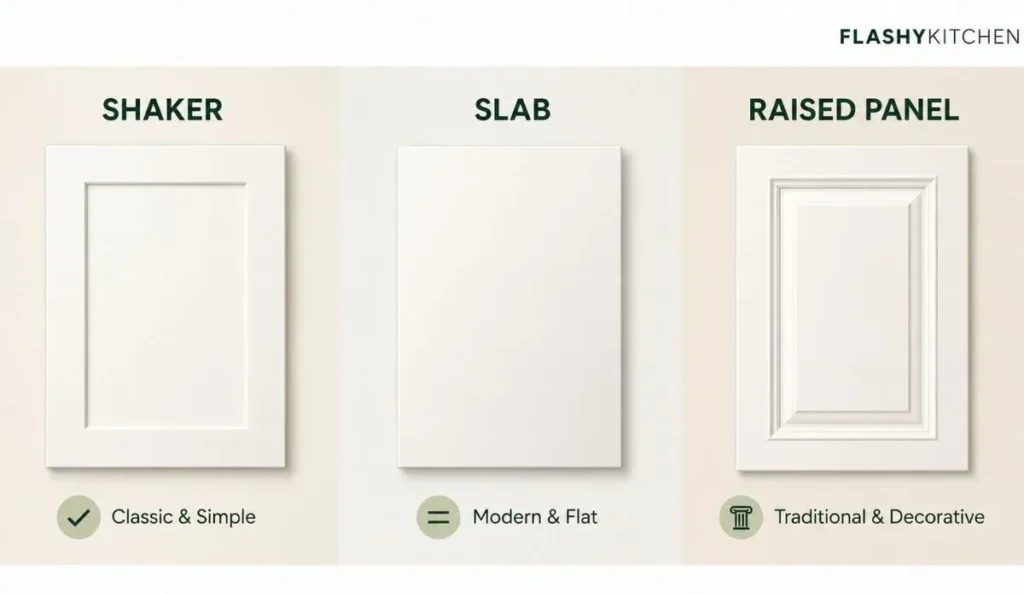
Shaker vs Slab vs Raised Panel Cabinets
Choosing between these three profiles determines the foundation of your kitchen’s style.
- Slab Cabinets: Completely flat with zero crevices, these dominate minimalist, mid-century, and European designs. They are the absolute easiest to clean but can feel cold or institutional without rich wood grain.
- Raised Panel Cabinets: These feature a center panel that rises up flush with the outer frame, often accented by decorative ogee profiling. They look stunning in formal, traditional spaces but require intense cleaning due to multiple grooves.
For standard residential properties, combining traditional elements like raised panel and glass-front cabinets with simple surrounding frames creates a balanced look that keeps the room from feeling outdated.
Best Colors for Shaker Kitchen Cabinets
Because the lines are so simple, your choice of color dictates the entire mood of the kitchen. Crisp white remains a massive favorite for its ability to reflect light, while deep charcoals and navy blues offer a dramatic anchoring effect on base units.
When analyzing current market shifts and the latest kitchen cabinet color trends 2026, there is a strong movement toward earthy, organic hues. Soft sages, warm taupes, and sophisticated olive shades are quickly challenging basic white. In fact, custom tones like the rich, grounding Jaclyn Smith kitchen cabinet color demonstrate how an elegant, mid-toned neutral can elevate a standard five-piece door into a bespoke designer feature. If you prefer natural timber, rift-sawn white oak and walnut offer stunning grain patterns that soften the crisp lines of the frame.
Slim Shaker, Skinny Shaker and Micro Shaker Cabinets
If you love modern design but find slab doors a bit too stark, the slim shaker profile—often referred to as micro or skinny shaker—is the perfect compromise. Instead of the standard 2.5-inch to 3-inch outer frame, these variations reduce the rail and stile width to a delicate 0.5 to 0.75 inches.
This modification delivers a sharper, more linear shadow detail. It gives the kitchen a contemporary edge while retaining the classic architectural depth of a framed panel. We find this style works beautifully when executed in natural wood stains, as the thin perimeter frame acts as a neat border for the natural wood grain.
What Hardware Looks Best on Shaker Cabinets?
Your hardware choice is what tips these flexible doors toward a specific design era.
- For a Farmhouse or Traditional Feel: Choose classic bin pulls on drawers paired with simple mushroom knobs on doors. Antiqued brass, oil-rubbed bronze, or polished nickel finishes ground the room in historic charm.
- For a Modern or Transitional Look: Select elongated bar pulls or slender square foot T-bars. Installing matte black or brushed champagne gold pulls instantly modernizes the flat paneling.
Pro-tip based on years of installations: always ensure your pulls are long enough to maintain visual scale with the door size. A pull that is too small will look lost inside a large recessed panel.
What Materials Are Used in Shaker Cabinets?
The material inside your cabinet door determines how well it handles daily kitchen abuse. Premium wood finishes rely on solid hardwoods like maple or oak for the outer frame, with a wood-veneered plywood center panel to prevent expansion cracks.
For painted finishes, high-quality manufacturers use an all-MDF (medium-density fiberboard) door or a solid wood frame with an MDF center core. We actually recommend MDF for painted panels because it does not expand and contract with humidity changes. This stability prevents the paint film from cracking at the joints, a common issue that causes unsightly dark lines on solid wood doors over time.
Where Can You Buy Shaker Kitchen Cabinets?
Because this style is an industry standard, you can purchase it at every price tier. Big-box retailers like Home Depot or Lowe’s offer basic stock styles for rapid pickup, while IKEA provides modular frameless systems with excellent internal storage accessories.
For the highest quality-to-cost ratio, sourcing through online wholesale RTA suppliers allows you to bypass retail markups. If you prefer hands-on assistance, searching for custom suppliers near me helps connect you with local showrooms where you can evaluate physical construction displays before committing.
Best Uses for Shaker Kitchen Cabinets
This profile shines when used strategically to anchor large wall layouts. For instance, pairing a deep navy finish on a central kitchen island and floor-to-ceiling cabinets creates a premium focal point while keeping the perimeter cooking zones clean and bright. They are also incredibly smart options for utility-heavy spaces like walk-in pantries and laundry rooms because their flat profiles are remarkably easy to wipe down.
Common Mistakes to Avoid
- Ignoring the Structural Overlay: Not checking whether you are purchasing inset vs overlay kitchen cabinets can derail your design. Inset options offer a premium, flush-fitting historic look but cut into your usable interior depth and cost significantly more.
- Overlooking Dust Collection: Failing to realize that grease and kitchen dust settle directly on the horizontal bottom rail will result in extra maintenance if you cook frequently.
- Skimping on the Finish: Buying cheap doors with a thin, single-coat paint finish can lead to premature peeling near high-moisture zones like the sink or dishwasher.
Final Verdict
Shaker kitchen cabinets are worth it for homeowners who want a durable, flexible, and resale-friendly option. They offer a clean aesthetic that evolves effortlessly alongside your changing decor style over the decades.
They are not the absolute best choice if you crave a seamless ultra-modern space or a heavily carved Old-World aesthetic. But for a kitchen meant to look beautiful and function reliably for twenty years, they remain an unbeatable standard.