
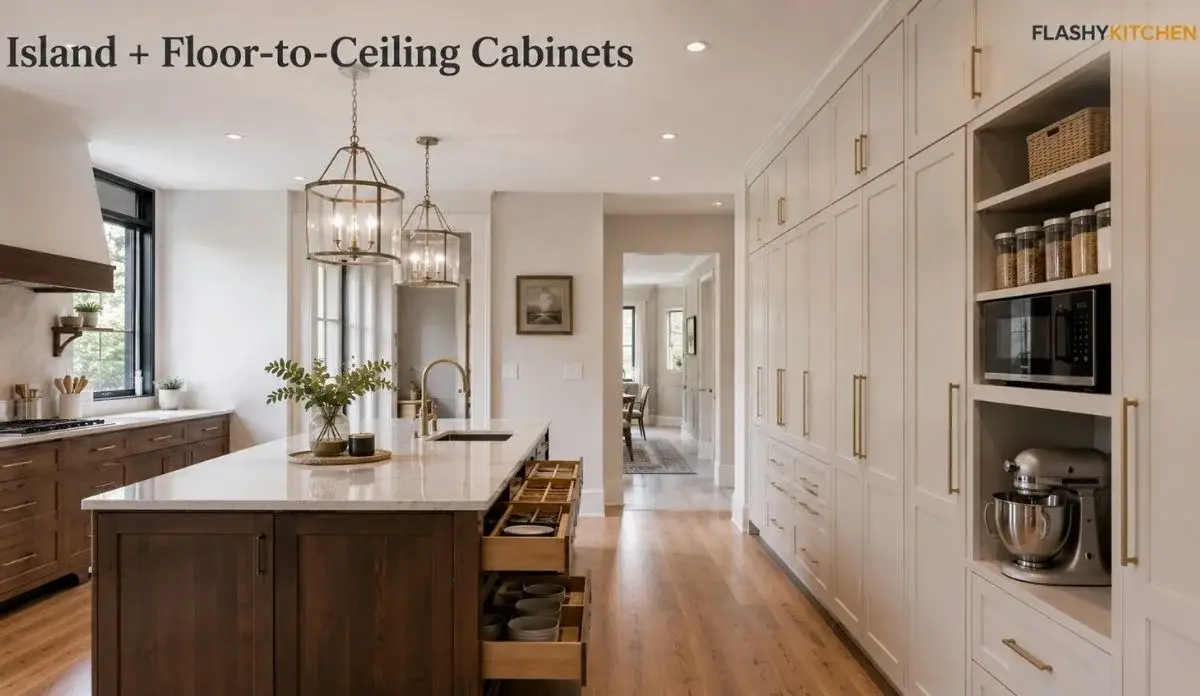
Adding a kitchen island and floor-to-ceiling cabinets to your remodel plan can solve your worst storage and workspace problems at the same time. These two large cabinet features act as the heavy lifters in a modern home, providing massive room for food prep, seating, and vertical storage.
When you coordinate your island space with full-height wall cabinets, you can remove clutter from your perimeter counters completely. This design combination balances the room by opening up your walls for windows while keeping your bulk pantry items and heavy pots perfectly organized.
Quick Answer: Kitchen Island and Floor-to-Ceiling Cabinets
A kitchen island and floor-to-ceiling cabinets work together to maximize storage, workflow, and style in large or medium rooms. Island cabinets sit in the center of the room to provide lower storage, deep drawers, trash pull-outs, and a wide countertop for food prep or bar seating.
Floor-to-ceiling cabinets stand vertically against a wall to act as a deep pantry, appliance garage, or utility closet. An island focuses on horizontal prep space and social seating, while full-height cabinets focus on massive vertical storage. Using both features together gives you a balanced kitchen layout with clean, open sightlines.
Kitchen Island and Floor-to-Ceiling Cabinets at a Glance
| Cabinet Type | Best For | Main Advantage | Main Drawback | Best Kitchen Size | Best Use Case |
|---|---|---|---|---|---|
| Kitchen Island | Prep space & casual seating | Adds a central work area | Needs lots of floor space | Medium to large rooms | Placing deep pot drawers and trash bins |
| Floor-to-Ceiling | Bulk storage & vertical space | Uses wall space to the ceiling | Eliminates counter workspace | Small to large rooms | Creating a large built-in pantry wall |
What Are Kitchen Island Cabinets?
Kitchen island cabinets are specialized storage units that sit directly under an island countertop in the center of the room. Instead of attaching to a wall, these boxes secure directly to the subfloor.
These units can use standard base cabinets, deep drawer cabinets, trash cabinets, or open bookshelf inserts. By placing them in the center of your layout, you add significant prep space, lower storage, and structural support for heavy stone countertops.
According to design guidelines from the National Kitchen and Bath Association (NKBA), island cabinets function best when your room has enough walking clearance on all four sides. Without proper spacing, a central island can block your walking paths and ruin your workflow.
When looking into a complete kitchen cabinet guide, you will find that island units can face one direction or feature back-to-back boxes for double the storage capacity.
What Are Floor-to-Ceiling Kitchen Cabinets?
Floor-to-ceiling cabinets extend all the way from the floor to your upper ceiling or crown molding line.
Homeowners often use these units as tall pantry cabinets or full-height storage walls. Because they take advantage of empty vertical space, they allow you to pack an incredible amount of storage into a single wall footprint.
These tall units create a built-in, seamless look that makes a home feel high-end. They can be incredibly helpful in small kitchens when planned carefully, as they let you trade unused wall space for deep shelving. When studying different types of kitchen cabinets, full-height models offer the best storage density per square foot.
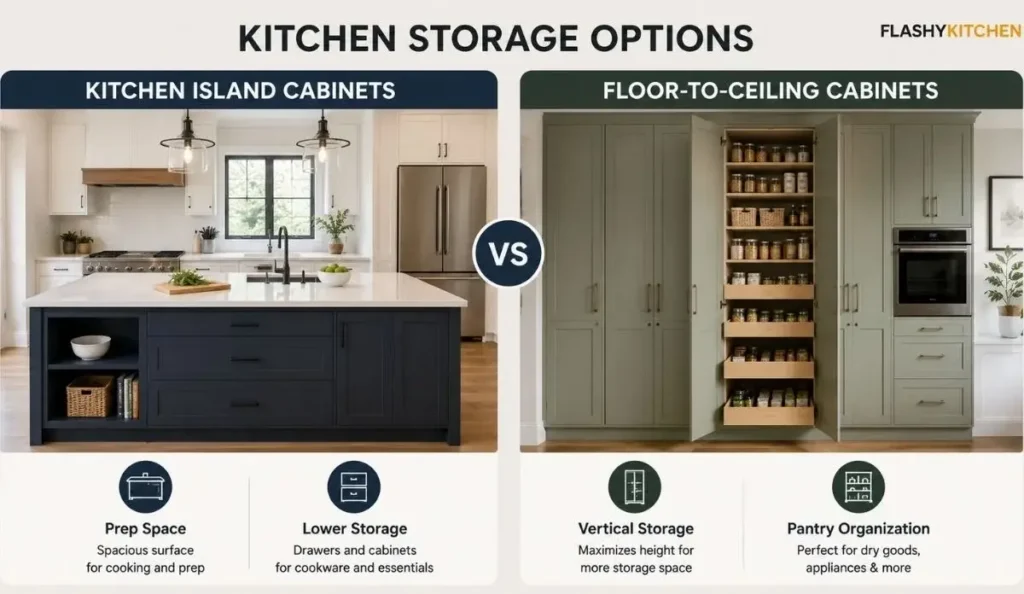
Kitchen Island Cabinets vs Floor-to-Ceiling Cabinets
| Feature | Kitchen Island Cabinets | Floor-to-Ceiling Cabinets |
|---|---|---|
| Main Purpose | Horizontal prep space and seating | Vertical storage and pantry space |
| Best Storage Type | Deep drawers, pull-out trash bins | Adjustable shelves, utility storage |
| Best Kitchen Size | Medium to large open rooms | Small, medium, or large rooms |
| Visual Impact | Creates a central social focal point | Creates a clean, built-in accent wall |
| Cost Factors | Requires side, back, and countertop finishes | Requires tall side panels and molding |
| Clearance Needs | Needs 36 to 48 inches of walking space | Needs door swing and ceiling clearance |
| Best Use Case | Chopping vegetables and hiding trash | Storing small appliances and dry goods |
Best Uses for Kitchen Island Cabinets
An island is the perfect spot to place specialized storage items that you need while cooking or prepping meals.
Core Prep and Seating Setup
- Prep space: Gives you a massive, unobstructed countertop area for rolling out dough or chopping vegetables.
- Seating: A countertop overhang supports bar stools for casual family breakfasts or party guests.
Smart Internal Storage Layouts
- Deep drawers: Heavy pots, frying pans, and mixing bowls fit perfectly inside wide lower drawers.
- Trash and recycling pull-outs: Keeps smelly garbage cans hidden right next to your primary chopping zone.
- Small appliance storage: Hides bulky items like blenders, air fryers, and stand mixers off your main counters.
Specialized Custom Additions
- Cookbooks and open shelves: Placing open shelving on the outer end caps provides a nice decorative spot for books.
- Sink or cooktop island: If your plumbing or ventilation is planned early, an island can house your primary sink or gas range.
- Cabinets on both sides: Shallow 12-inch cabinets can face your bar stools to hold seasonal items like holiday platters.
Using these base units wisely allows you to keep your main walls completely free of clutter. For more clever setup ideas, check out our guide on kitchen cabinet storage ideas.
Best Uses for Floor-to-Ceiling Cabinets
Tall cabinets are best used to handle bulk storage that would normally clutter your smaller upper wall cabinets.
High-Volume Grocery Management
- Pantry storage: Provides deep shelves or roll-out trays to hold hundreds of soup cans, cereal boxes, and baking ingredients.
- Seasonal and overflow storage: The highest shelves are ideal for storing lightweight paper towels, coolers, or picnic baskets.
Integrated Appliance Walls
- Built-in microwave or oven wall: Allows you to mount double wall ovens and microwaves at a comfortable eye level.
- Appliance garage: A section with a roll-up door hides your toaster, coffee maker, and espresso machine out of sight.
Layout Fixes for Difficult Spaces
- Broom and utility storage: Leaving a tall section open without shelves creates a great closet for mops, brooms, and stick vacuums.
- Small kitchen full-height walls: Running a full wall of tall cabinets along a narrow room can triple your storage capacity instantly.
To see how these full-height units line up with smaller boxes, you can read our comparison of base, wall, and tall cabinets.
Can You Build a Kitchen Island From Stock Cabinets?
Yes, you can absolutely use standard stock cabinets to build a gorgeous DIY kitchen island.
Instead of ordering a custom multi-thousand dollar piece, many DIY renovators buy standard 24-inch deep base cabinets and line them up side-by-side. You can attach these boxes together, secure them to a wood cleat on your floor, and cover the raw back walls with a finished skin panel.
Important Structural Requirements for DIY Islands
However, you must plan for proper countertop support, side panels, back panels, and toe kicks before ordering. Heavy granite or quartz countertops require a sturdy base, and if you want a seating overhang, you must install metal support brackets inside the cabinets. Using affordable stock kitchen cabinets is an excellent way to save money while getting a fully custom layout size.
Kitchen Island Storage Ideas
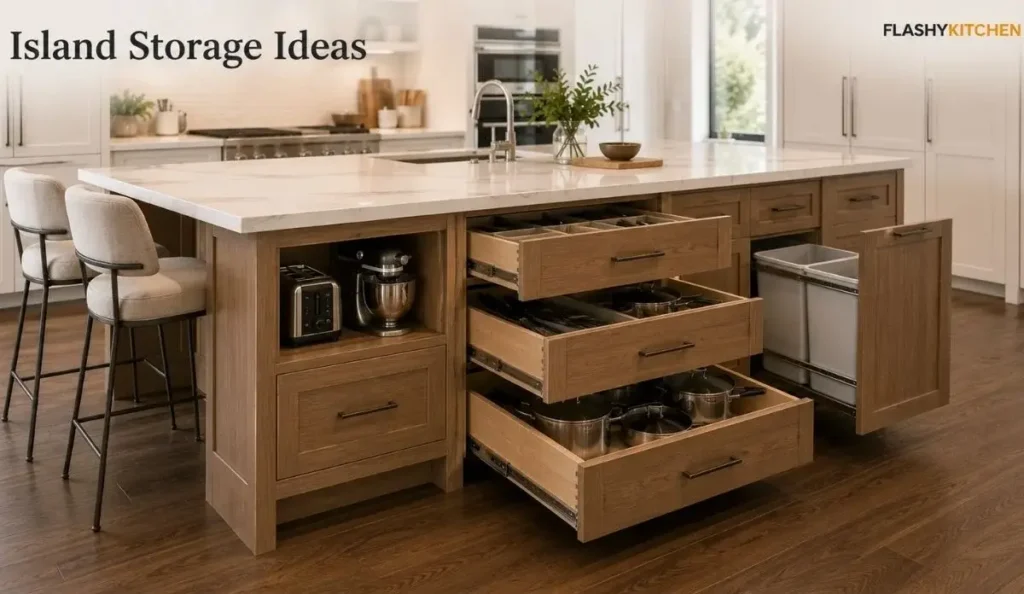
Maximizing your kitchen island cabinet storage requires choosing the right mix of doors and drawers. Standard doors are fine, but a kitchen island storage cabinet with deep drawers is much more practical for heavy items.
Popular Built-In Island Accessories
A kitchen island with trash cabinet inserts keeps your kitchen looking clean. You can also build a kitchen island bar cabinet that features built-in wine cubbies or a small beverage cooler.
Double-Sided and Mobile Layout Options
If you have a wide room, a kitchen island with cabinets on both sides maximizes your footprint. For homes with tight or changing spaces, a rolling kitchen island cabinet offers excellent flexibility because you can push it against a wall when guests arrive. A kitchen island with cabinets and seating remains the top layout choice for modern, open-concept floor plans.
Floor-to-Ceiling Kitchen Cabinet Ideas
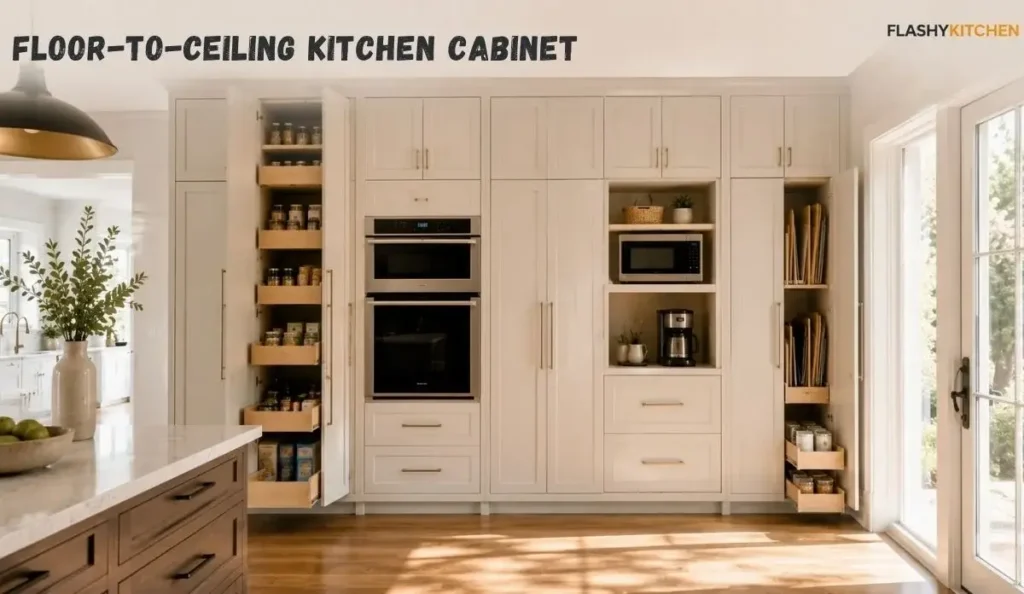
A modern floor-to-ceiling kitchen cabinets layout uses flat, slab-style doors without handles to look like a clean architectural wall.
Modern Finishes and Visual Accents
White floor-to-ceiling kitchen cabinets keep large, tall walls from feeling too dark or imposing. If you want a classic look, floor-to-ceiling glass kitchen cabinets allow you to display your neatest glassware with built-in LED puck lighting.
Heavy-Duty Mechanical Organizers
A dedicated floor-to-ceiling kitchen pantry cabinet can feature industrial metal pull-out racks that slide forward automatically when you open the door. If you have an awkward corner, a corner floor-to-ceiling kitchen cabinet utilizes a blind corner setup to capture space that would normally go to waste. Using floor-to-ceiling kitchen storage cabinets from brands like IKEA allows you to mix and match internal drawers and wire baskets on a budget.
Small Kitchen Advice
A massive fixed island will not work well in a narrow or small kitchen. It will block your walkways and make it impossible to open your oven or dishwasher doors completely.
Alternatives to Fixed Center Islands
In tight spaces, a narrow rolling cart or a peninsula attached to a side wall is a much better choice. However, small kitchen floor-to-ceiling cabinets can be a complete lifesaver. By turning one blank wall into a full-height cabinet wall, you can fit an entire kitchen’s worth of storage into a tiny footprint.
Overcoming the Visual “Heavy” Effect
Too many tall cabinets can feel heavy and block light. To avoid this, use light cabinet finishes, flat door fronts, and keep your other walls completely open without upper cabinets. Always prioritize a minimum of 36 inches of walking clearance and check your refrigerator door swing before mounting any tall boxes.
Kitchen Island Colors and Two-Tone Ideas
Using a different color for your central island is a major trend that adds instant personality to a home.
Classic High-Contrast Schemes
- White kitchen cabinets with black island: A high-contrast look that feels timeless and sophisticated.
- White kitchen cabinets with gray island: A softer, neutral contrast that works beautifully with marble countertops.
Modern Moody and Textured Duos
- Navy kitchen island with white cabinets: Adds a gorgeous pop of coastal or traditional color to an open room.
- Two-tone kitchen island setups: Painting your perimeter cabinets a light wood tone and your island a dark charcoal creates a rich look.
Matching your kitchen island color with white cabinets helps ground the center of the room. Be sure to check out the latest kitchen cabinet color trends to see which hardware finishes work best with these contrasting styles.
Clearance, Seating and Layout Planning
Walking clearance is the most important calculation during a kitchen remodel.
Standard Walkway Clearances
You need a minimum of 36 inches of walkway space around your island, but 42 to 48 inches is highly recommended if two people cook at the same time. If your island cabinets sit too close to your dishwasher or refrigerator, the doors will smash into each other.
Ergonomic Seating and Height Limits
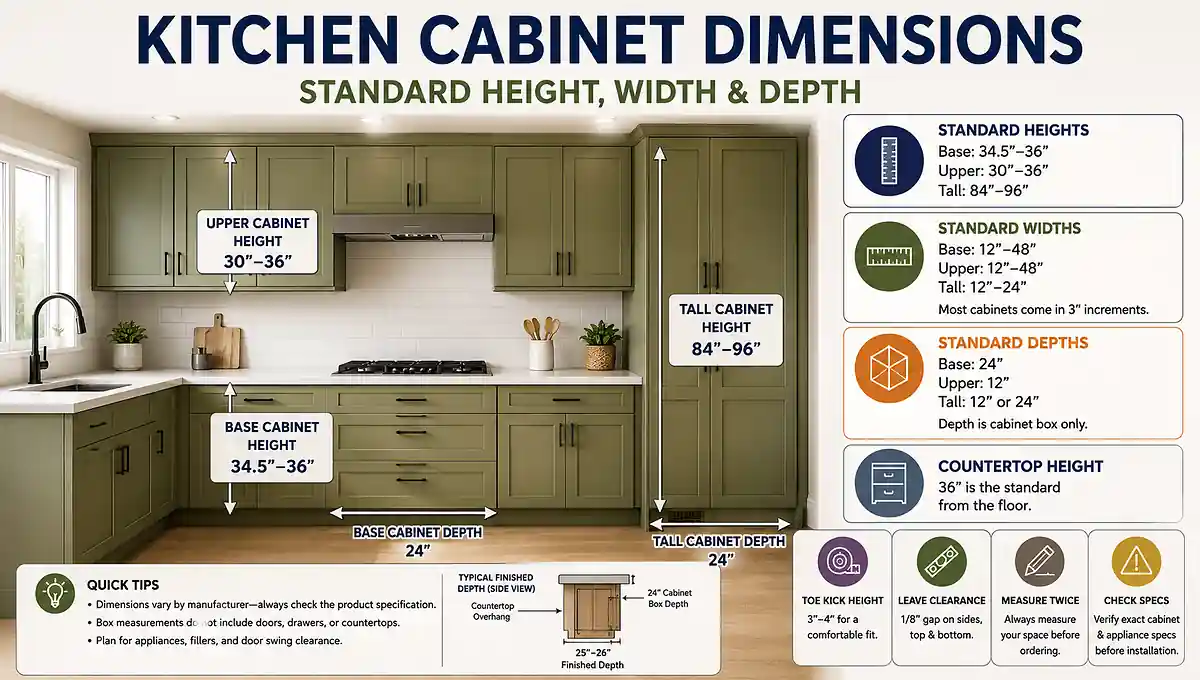
For island seating, your countertop needs a minimum overhang of 12 inches, though 15 inches is much more comfortable for knee space.
Your floor-to-ceiling cabinets must be placed where they will not block natural light from windows. Make sure to measure your exact ceiling height and account for crown molding before buying tall pantry units, as a cabinet that is even a quarter-inch too tall cannot be stood upright in the room.
Materials and Construction Quality
Because island cabinets stand alone and hold up heavy stone countertops, they require exceptionally sturdy boxes. Look for boxes made with thick plywood side panels rather than flimsy particle board.
Hardware Performance Expectations
Your drawer slides and hinges take a beating on an island, so choose heavy-duty, soft-close hardware that can handle the weight of heavy cast-iron skillets.
Preventing Large Panel Warping
Tall floor-to-ceiling units are prone to warping if the cabinet box materials are thin. Ensure your tall pantry has solid bracing along the back wall so it can be anchored firmly into your wall studs. Spending a little extra on quality kitchen cabinet materials ensures your tall doors will stay perfectly straight and aligned for decades.
Where Can You Buy Kitchen Island and Floor-to-Ceiling Cabinets?
Finding these cabinet configurations is simple whether you want to shop locally or online.
Big-Box Retailers and Flat-Pack Giants
For quick, budget-friendly options, you can browse Home Depot kitchen island cabinets or look up a Lowe’s kitchen island from stock cabinets guide to assemble your own. IKEA kitchen islands and carts are perfect for modern homes, and you can buy matching IKEA floor-to-ceiling kitchen cabinets to build a cohesive pantry system.
Online Retailers and RTA Options
If you prefer a fast option delivered to your door, an Amazon kitchen island cabinet or an Amazon floor-to-ceiling cabinet with doors can work well for smaller secondary spaces.
For a complete home renovation, ordering flat-packed RTA kitchen cabinets from online suppliers provides custom-looking quality at wholesale prices. Searching for kitchen island cabinets near me will help you find local design showrooms where you can test the drawer slides in person before spending your money.
Common Mistakes to Avoid
- Tight walkways: Squeezing an island into a small kitchen where walkways drop below 36 inches.
- No knee room: Forgetting to add a countertop overhang for your bar stool seating.
- Weak island bases: Putting a massive quartz countertop on top of unbraced, cheap cabinet boxes.
- Skipping finish panels: Forgetting to buy matching back and side panels to cover the raw wood on your island.
- Not anchoring: Failing to secure a fixed island to the floor, causing it to slide when leaned on.
- Dark spaces: Grouping too many floor-to-ceiling cabinets together until they block window light.
- Ceiling math errors: Ordering 96-inch tall cabinets for a room with exactly 96-inch ceilings, leaving zero room to stand the cabinet upright.
- Unreachable storage: Putting heavy daily items on the top shelves of a full-height pantry wall.
- Door battles: Placing your island drawers directly opposite a dishwasher door so they collide when open.
- Pinterest traps: Relying on pretty online pictures without drawing a real, measured floor plan for your specific room dimensions.
FAQs About Kitchen Island and Floor-to-Ceiling Cabinets
Are kitchen island cabinets worth it?
Yes, island cabinets are highly worth it if you have a medium or large kitchen. They provide an excellent central workspace, add useful lower storage drawers, hide your trash cans, and create a great social seating area for family and guests.
Can I build a kitchen island from stock cabinets?
Yes, you can build an affordable island using standard base stock cabinets. You simply secure the boxes together, anchor them to the floor, and finish the exposed backs and sides with matching plywood skin panels or decorative shiplap.
Are floor-to-ceiling kitchen cabinets good for small kitchens?
Yes, they are excellent because they utilize vertical wall space that normally goes completely to waste. Running a single wall of tall cabinets allows you to maximize your storage while keeping the other walls open and airy.
Do floor-to-ceiling cabinets make a kitchen look bigger?
Yes, full-height cabinets can make a room look taller because they draw your eyes upward toward the ceiling. Using light colors like white or light gray keeps the large tall cabinets from making the room feel cramped.
How much clearance do you need around a kitchen island?
You need at least 36 inches of walking clearance on all sides of an island. For the most comfortable layout where multiple people can walk past open appliance doors, aim for 42 to 48 inches of space.
What should I store in kitchen island cabinets?
Island cabinets are perfect for heavy pots, frying pans, baking sheets, and trash bins. You can also use them to store small daily appliances like blenders, toasters, and food processors to keep your main countertops empty.
Are floor-to-ceiling pantry cabinets better than regular wall cabinets?
Yes, tall pantry units offer much deeper storage (usually 24 inches) compared to standard wall cabinets (12 inches). This extra depth allows you to hold bulk groceries and large items that would never fit inside an upper cabinet.
Final Verdict
Planning a kitchen island and floor-to-ceiling cabinets together ensures you create a highly efficient remodel layout. An island works best for adding social seating and horizontal prep space, while floor-to-ceiling cabinets excel at handling your heavy vertical pantry storage.
By balancing these two large layout elements, you can design a beautiful, clutter-free kitchen that works perfectly for your home.


One thought on “Kitchen Island and Floor-to-Ceiling Cabinets: Ideas and Uses”