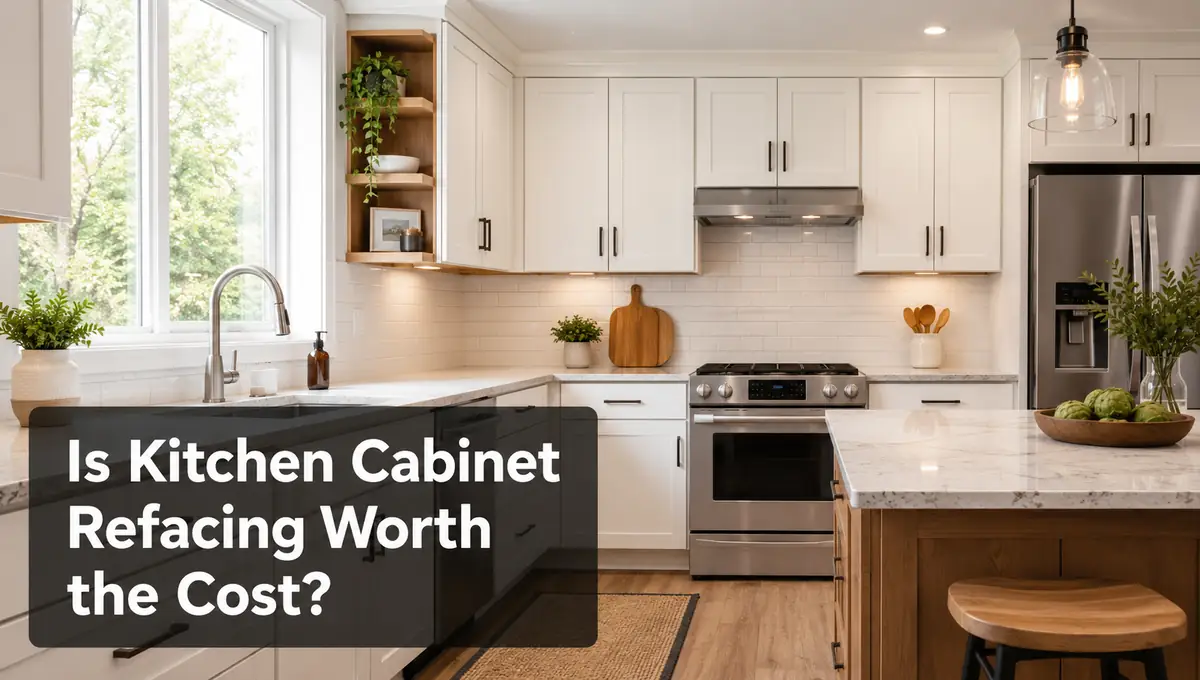
Kitchen cabinet refacing can make worn cabinets look new without replacing every cabinet box, but it only makes financial sense when the boxes are worth saving. The real decision is not just color or door style. You need to know what refacing replaces, what a complete quote includes, how much current projects cost, and what can fail later.
You also need to decide whether the old layout and storage still work. By the end, you should know whether refacing fits your cabinets, when painting or refinishing is the cheaper move, and when full replacement is the better use of your budget.
Quick Answer
Kitchen cabinet refacing keeps the existing cabinet boxes, covers their visible exterior surfaces, and usually adds new doors and drawer fronts. It makes the most sense when the boxes are sound, the layout already works, and the complete refacing quote stays clearly below a comparable replacement quote.
- Check for swelling, warping, loose joints, and water damage.
- Compare complete scopes, not headline savings claims.
- Confirm doors, veneer, hardware, trim, and repairs in writing.
- Ask how heat and moisture risks are handled.
- Replace instead if layout or storage is the real problem.
What Is Kitchen Cabinet Refacing, Exactly?
Refacing means keeping the existing cabinet boxes while changing most of the visible exterior. A typical project covers exposed box surfaces with veneer or laminate, then installs new cabinet doors, drawer fronts, hinges, and selected hardware.
That is different from painting or refinishing. Painting keeps the existing doors and changes the coating, while refacing normally changes the door fronts and the visible skin on the boxes.
The terminology can still vary between contractors. Before comparing prices, make sure each quote defines what “refacing” includes instead of assuming every company uses the word the same way.
What stays and what changes
The cabinet boxes, basic dimensions, interior shelves, and kitchen footprint usually stay. The doors, drawer fronts, visible face frames, exposed sides, and hardware may change.
A face frame is the front structure around the cabinet opening on framed cabinets. Its vertical pieces are stiles and its horizontal pieces are rails. These visible surfaces need a finish that matches the new doors.
Refacing can change the look dramatically, but it does not automatically create deeper drawers, move an appliance, or fix an awkward corner. If your main question is about keeping the same doors and changing only the finish, compare refinishing versus refacing.
How Much Does Cabinet Refacing Cost in 2026?
Current kitchen cabinet refacing cost figures vary widely because published guides do not all describe the same project scope. Across four current U.S. project ranges reviewed for this article, the combined published span runs from $4,234 to $23,310.
The midpoint of that outer span is $13,772, but that number is not a national average or a typical-project estimate. It is only the midpoint between the lowest and highest published endpoints.
Prices vary by region, cabinet count, door style, material, labor, repairs, and what the quote includes. Figures published as of August 2026.
| Published measure | Range | Midpoint | Source count |
|---|---|---|---|
| Whole-project figures | $4,234 to $23,310 | $13,772* | 4 |
*Midpoint of the full published span, not a national average.
While comparing those current cost guides, I found the lower two published ranges cluster around $4,200 to $10,600, while broader full-service estimates extend much higher. That spread is useful because it shows why a single online cost figure can mislead a homeowner.
Another current editorial source prices professional laminate refacing at about $100 to $200 per linear foot and real wood veneer as high as about $455 per linear foot. Prices vary by region, material, labor, and project scope.
A kitchen cabinet refacing cost calculator can therefore give only a rough starting point. Two kitchens with the same floor area may have very different numbers of doors, drawers, exposed ends, tall cabinets, and decorative trim.
The biggest price drivers are cabinet quantity, door and drawer count, door style, veneer choice, labor cost, repairs, and upgrades. Soft-close hinges, new pulls, crown molding, extra end panels, and storage accessories can push the quote higher.
This is also why refacing can come surprisingly close to replacement. New fronts, exterior skins, labor, repairs, and hardware already make up a large share of the visible cabinet project. If the old boxes offer little value, a small price gap deserves close scrutiny.
If your existing doors are still sound and the main problem is color, check cabinet painting cost before assuming refacing is the affordable route. Painting can deliver much of the visual change for less when you do not need new fronts.
What Should a Refacing Quote Actually Include?
A useful refacing quote should describe the scope line by line. “Reface the kitchen” is too vague because one quote may include doors, hardware, exposed sides, and repairs while another leaves several of those items out.
Before comparing prices, confirm these items:
- New cabinet doors and drawer fronts, including material and door style.
- Veneer or laminate for face frames, exposed sides, and end panels.
- Hinges, drawer hardware, knobs, pulls, and any soft-close upgrades.
- Toe-kick skins, fillers, trim, and crown molding where needed.
- Repairs to loose, damaged, or uneven cabinet boxes before covering them.
- Cleanup, final alignment, disposal, and written warranty terms.
The toe kick is the recessed strip at floor level beneath base cabinets. An end panel is the visible side of a cabinet run. Both can look unfinished if they do not match the new doors.
Ask whether interior organizers are included or priced separately. Pull-outs and other cabinet storage ideas improve function, but they are not automatically part of refacing.
A lower quote is not a better quote if it excludes work you will need later. Compare identical scopes before comparing totals.
Use the same door count, material, hardware level, trim, repairs, and cleanup assumptions for every bid. If one contractor quotes 24 new doors but another excludes four glass fronts or two finished side panels, the totals are not directly comparable.
Also ask what happens if hidden damage appears after the old fronts come off. The quote should explain how extra repair work is approved and priced before it is performed. That protects you from accepting a low starting figure that grows once the kitchen is already apart.
Are Your Cabinet Boxes Good Enough to Reface?
Cabinet boxes should be structurally sound before you spend money covering them. Refacing can improve the exterior, but it cannot restore a swollen sink cabinet, badly warped side panel, or crumbling screw area to new condition.
Check these six areas before moving ahead:
- Look below the sink for swelling, stains, soft material, or delamination.
- Push gently on cabinet sides and face frames to find loose joints or movement.
- Check shelves for sagging and openings for obvious out-of-square distortion.
- Inspect hinge screw areas for stripped holes or crumbling particleboard.
- Look for warped panels, lifted surface layers, and persistent moisture damage.
- Decide whether the cabinet interiors and storage still meet your needs.
Plywood, MDF, and particleboard are not automatically good or bad candidates. Their present condition matters more than the label. MDF is medium-density fiberboard, a dense engineered wood panel; particleboard uses larger wood particles and can suffer badly after repeated moisture exposure.
Understanding the existing cabinet materials helps you judge what is underneath the new surface.
Metal cabinets need a different restoration approach because wood-veneer and laminate methods do not always transfer directly to steel or other metal surfaces. Owners of metal kitchen cabinets should evaluate finish repair and corrosion separately.
Do not spend heavily to hide structural damage. If several boxes are swollen, loose, badly warped, or no longer hold fasteners, replacement deserves serious consideration.
The second test is function. Open every drawer and cabinet and notice what frustrates you now. Refacing does not make a shallow drawer deeper, turn a door base into a drawer stack, or move a cabinet that pinches an appliance opening.
The third test is future work. If you already plan to change countertops, move appliances, alter plumbing, or change the layout, keeping the old boxes may save less than it first appears. Refacing works best when the existing footprint is already the one you want to keep.
What Happens During the Refacing Process?
The cabinet refacing process usually starts with measuring and ordering the new fronts, then moves to removal, surface preparation, refacing, and final alignment. The physical installation may take only a few days even though the full calendar schedule can take several weeks.
A simple homeowner-level sequence is:
- Measure the cabinets and choose the doors, finish, veneer, and hardware.
- Order or fabricate replacement doors and drawer fronts.
- Remove the old fronts, hinges, and visible hardware.
- Clean, repair, and prepare the face frames and exposed box surfaces.
- Apply the new veneer, laminate, or chosen exterior skin.
- Install the new fronts and hardware, then align doors and drawers.
Preparation matters because adhesive does not correct grease, dust, loose coatings, or damaged substrate. The substrate is simply the cabinet surface underneath the new veneer or laminate.
Countertops can often stay when the cabinet footprint is unchanged and the boxes do not need major structural work. If damaged cabinets must be rebuilt or the layout changes, keeping the countertop may no longer be practical.
Published installation windows commonly run from about two days to within one week. A separate project guide reports that the full process