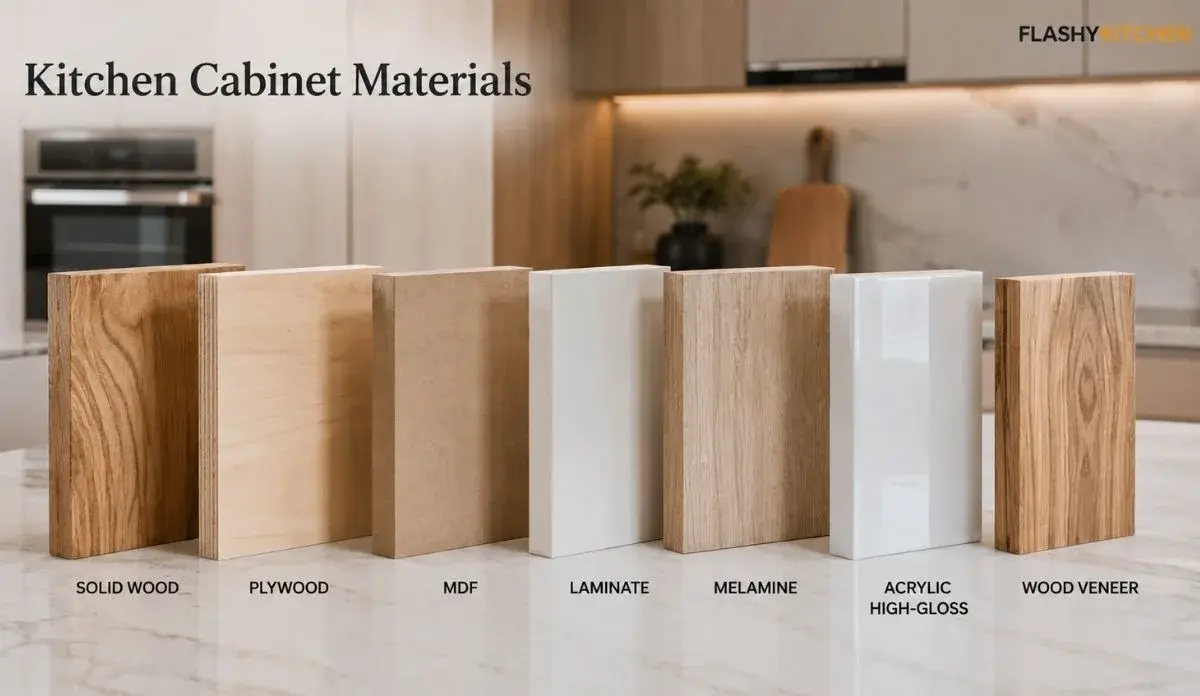
When planning a kitchen remodel, choosing your kitchen cabinet materials is one of the most important decisions you will make. The type of wood or engineered board you select affects the overall durability, total cost, and moisture resistance of your layout.
Investing in high-quality cabinet construction prevents common structural failures down the road, such as sagging shelves or loose hinges. By understanding the distinct differences between solid wood, plywood, and various engineered wood options, you can build a highly functional space that adds long-term value to your home.
Quick Answer: Best Kitchen Cabinet Materials
The best kitchen cabinet materials depend entirely on your specific budget, design goals, and storage needs. For structural strength and high moisture resistance, plywood is the superior choice for building heavy-duty cabinet boxes and sink bases.
For a perfectly smooth painted finish on cabinet doors, Medium-Density Fiberboard (MDF) is highly recommended because it does not expand or contract. Solid wood remains the premium standard for stained, natural wood grain doors and classic face frames.
If you are working on a strict budget, melamine and laminate surfaces over a particle board core provide excellent scratch resistance and easy cleaning.
Kitchen Cabinet Materials at a Glance
| Material | Best For | Main Advantage | Main Drawback | Budget Level | Best Use Case |
|---|---|---|---|---|---|
| Solid Wood | Premium stained doors | Natural wood grain beauty | Can warp with humidity | High / Premium | Traditional or rustic doors |
| Plywood | Sturdy cabinet boxes | High structural strength | More expensive than MDF | Mid to High | Sink bases & heavy shelves |
| MDF | Smooth painted doors | Flat surface, no grain lines | Swells quickly if water leaks | Budget to Mid | Modern painted cabinet doors |
| Particle Board | Low-cost projects | Very flat and affordable | Poor screw-holding strength | Economy / Low | Budget rentals or dry pantries |
| Melamine | Modern flat-panel style | Easy to clean, scratch-proof | Edges can chip if impacted | Budget / Mid | Affordable contemporary kitchens |
| Laminate | High-traffic households | Highly durable outer surface | Difficult to repair if damaged | Mid-Range | Busy family kitchens |
What Are Kitchen Cabinet Materials?
Kitchen cabinet materials are the raw structural components used to manufacture cabinet boxes, doors, shelves, drawer fronts, and face frames. When looking over a complete kitchen cabinet guide, you will quickly notice that a single cabinet is rarely made from just one material.
Instead, manufacturers combine different options to balance weight, cost, and structural performance. The chosen material impacts how well the cabinet frame holds screws, resists daily water exposure, and stands up to heavy plates. Choosing the cheapest available option can backfire, as low-grade boards can sag or crack within a few years of installation.
Cabinet Boxes vs Cabinet Doors: Why the Difference Matters
A common mistake is assuming that the entire cabinet structure is made of the same material as the front door. In reality, the cabinet box (or carcass) and the cabinet door have completely different functional jobs to do.
The cabinet box requires structural strength, load-bearing stability, and exceptional screw-holding power. It has to hold up heavy stone countertops and support stacks of iron cookware without bending. Plywood is often the preferred premium choice here, though particle board is common in economy builds. Your choice of box material also depends on your preferred cabinet construction style, as frameless cabinets rely heavily on thick, rigid side panels.
Cabinet doors and drawer fronts focus on visual appearance, finish stability, and warp resistance. Because wide panels of solid wood can shift as humidity changes, engineered materials like MDF are frequently used for painted doors to keep the paint from cracking at the joints.
Solid Wood Cabinets
Solid wood refers to natural timber logs that are cut, dried, and planed into lumber. Hardwood kitchen cabinets made from oak, maple, cherry, walnut, or hickory are highly valued for their authentic wood grain patterns and long-lasting strength.
- Pros: Exceptional natural beauty, high durability, easily repairable through sanding, and excellent long-term home resale value.
- Cons: Very expensive, prone to expanding and contracting with seasonal climate changes, and can split or warp if exposed to high humidity.
- Best Uses: High-end custom cabinets, traditional or rustic designs, and stained wood finishes that showcase the natural grain.
Plywood Cabinets
Plywood kitchen cabinets are constructed by gluing thin layers of wood veneer together in a cross-grain pattern. This manufacturing process creates an incredibly rigid board that resists cracking and splitting.
- Pros: Outstanding structural strength, excellent resistance to moisture sagging, lightweight, and superior screw-holding capability.
- Cons: Higher cost than engineered alternatives, and can occasionally feature internal wood gaps in low-grade versions.
- Best Uses: High-quality cabinet boxes, structural shelves, and heavy-use base units. Is plywood good for kitchen cabinets? Yes, it is widely considered the safest investment for an active kitchen.
MDF Cabinets
Medium-Density Fiberboard (MDF) is an engineered wood product made by breaking down hardwood or softwood residuals into fine wood fibers. These fibers are combined with a wax resin binder and pressed into flat sheets under high heat.
- Pros: Perfectly smooth surface with no natural grain texture, highly stable in changing humidity, and budget-friendly compared to solid wood.
- Cons: Very heavy, susceptible to severe water swelling if the outer finish cracks, and cannot be easily sanded down or repaired once water damage occurs.
- Best Uses: Premium painted cabinet doors, flat-panel modern styles, and interior drawer fronts in dry zones.
Particle Board Cabinets
Particle board is a low-density engineered wood product made by mixing wood chips, sawmill shavings, and sawdust with synthetic resin, which is then pressed into sheets.
- Pros: Extremely affordable, perfectly flat, and provides a uniform surface for attaching thin plastic laminates.
- Cons: Low structural strength, poor resistance to moisture, prone to sagging under heavy weight, and fails to hold screws securely if put under stress.
- Best Uses: Ultra-low-budget remodels, temporary rental housing, or dry storage areas that do not hold heavy items.
Melamine Cabinets
Melamine cabinets consist of a particle board or MDF core covered with a plastic-like paper layer that is infused with melamine resin. This creates a completely sealed outer shell.
- Pros: Wipes clean easily, highly resistant to daily stains and scratches, affordable, and requires no painting or staining.
- Cons: Core remains vulnerable to moisture if water breaks through the outer shell, and the edges can chip if hit hard by heavy pots.
- Best Uses: Modern budget kitchens, clean slab-style contemporary looks, and utility room storage.
Laminate Cabinets
Laminate cabinets use a heavy-duty layer of plastic resins and paper pressed onto an engineered wood base under extreme pressure. High-Pressure Laminate (HPL) is significantly tougher and thicker than standard melamine.
- Pros: Incredible durability, highly resistant to heat and impacts, easy to clean, and available in thousands of colors and faux wood patterns.
- Cons: Expensive premium grades, difficult to repair if deep scratches occur, and can show noticeable seam lines around the edge banding.
- Best Uses: Busy, high-traffic family kitchens, contemporary commercial spaces, and low-maintenance modern designs.
Thermofoil Cabinets
Thermofoil cabinets feature a thin vinyl plastic layer that is vacuum-sealed and heat-wrapped over a shaped MDF core. This creates a seamless outer face on the door panel.
- Pros: Smooth, easy-to-wipe exterior surface, affordable, and provides a clean painted look without visible wood joints.
- Cons: Highly vulnerable to heat damage, meaning the vinyl layer can melt, peel, or turn yellow if placed next to a hot oven or toaster.
- Best Uses: Budget-friendly white kitchens, laundry rooms, or secondary bathrooms away from intense heat sources.
Wood Veneer Cabinets
Wood veneer cabinets use a paper-thin slice of real hardwood glued onto a stable core material like MDF or plywood. This gives you the exact look and texture of natural wood without using solid planks.
- Pros: Delivers a high-end natural wood appearance, more stable than solid wood planks, and allows for continuous grain patterns across multiple doors.
- Cons: Can peel or delaminate if exposed to excessive moisture, and the thin wood layer can scratch down to the core material if mishandled.
- Best Uses: Modern flat-panel kitchens, high-end custom cabinetry, and mid-century modern home designs.
Acrylic and High-Gloss Cabinet Materials
Acrylic cabinets feature a non-toxic solid synthetic plastic layer laminated onto an MDF core, creating a highly reflective, mirror-like gloss finish.
- Pros: Sleek contemporary appearance, completely waterproof outer surface, retains deep color without fading, and resists UV light damage.
- Cons: Easily shows oily fingerprints, smudges, and dust particles, requiring daily wiping with a soft microfiber cloth.
- Best Uses: High-end modern kitchens, minimalist urban apartments, and bold accent walls.
Eco-Friendly and Sustainable Cabinet Materials
For homeowners looking to minimize environmental impact, sustainable kitchen cabinet manufacturers utilize eco-friendly materials to reduce waste and chemical exposure. True sustainability involves buying long-lasting kitchen cabinet materials that will not need to be replaced for decades, keeping debris out of landfills. Look for certified responsibly sourced woods, boards manufactured with zero added formaldehyde, and low-VOC finishes. Some eco-friendly kitchen cabinets utilize rapidly renewable bamboo or recycled agricultural wood fibers to create sturdy, low-emission cabinet boxes.
Outdoor Kitchen Cabinet Materials
Standard indoor materials like MDF or particle board should never be used outdoors, as weather exposure will ruin them within a single season. The best material for outdoor kitchen cabinets includes commercial stainless steel, marine-grade polymer plastics (HDPE), or weather-treated teak wood. These specialized outdoor kitchen cabinet materials are designed to resist rain, snow, insect damage, and constant direct sunlight without rotting or cracking.
Which Material Is Best for Each Part of the Cabinet?
| Cabinet Location / Use | Recommended Best Material | Alternative Option | Material to Avoid |
|---|---|---|---|
| Cabinet Boxes | Plywood | Heavy-duty MDF | Low-grade particle board |
| Painted Doors | MDF | Paint-grade solid wood | Raw particle board |
| Stained Doors | Solid Hardwood | Wood Veneer over MDF | Thermofoil |
| Sink Base Cabinets | Marine-grade Plywood | Sealed Plywood | Unsealed MDF / Particle board |
| Heavy Shelves | 3/4-inch Plywood | Solid Wood | Thin Particle board |
| Budget Remodels | Melamine | Thermofoil | Cheap unsealed wood |
| Premium Kitchens | Solid Wood / Acrylic | Wood Veneer | Thermofoil |
| Rental Properties | Durable Laminate | Melamine | High-maintenance wood |
| Small Kitchens | Light-color MDF | Plywood | Dark, bulky solid logs |
| Outdoor Kitchens | Stainless Steel | Marine Polymer (HDPE) | Any indoor wood product |
Best Kitchen Cabinet Materials by Budget
The quality of construction and engineering often matters just as much as the specific material name. High-grade particle board with premium edge banding will perform better than poorly glued, ultra-thin plywood.
Economy Budget Level
If you are trying to keep costs low, look for well-constructed stock cabinet options that utilize melamine or thermofoil doors. These give you a clean, modern aesthetic that is very easy to maintain without a high upfront price tag.
Mid-Range Budget Level
The absolute sweet spot for value and durability is choosing RTA cabinet options made with plywood boxes and painted MDF doors. This combination gives you maximum structural longevity where it counts while keeping your door finishes completely smooth and warp-free.
Premium Custom Level
For a high-end luxury project, custom kitchen cabinet materials like premium walnut veneers, solid maple face frames, or reflective acrylic panels provide unmatched beauty and an incredibly long kitchen cabinet lifespan.
Best Materials for Moisture-Prone Areas
I would be careful with unsealed MDF or particle board near a kitchen sink because plumbing leaks can quickly damage weak edges. A sink base cabinet takes the brunt of household water exposure, from dripping pipes to wet sponges. Plywood cabinet boxes are a much safer choice for these wet zones because plywood can get wet, dry out, and still maintain its original structural shape. Always check that the edge banding around your plumbing pipes is completely sealed to prevent water vapor from creeping into the core of your cabinet panels.
Best Materials for Painted Cabinets
For painted cabinet doors, MDF makes perfect sense when the finish quality is good and the area is not constantly exposed to standing water. Unlike solid wood, which has natural pores and joints that expand and shift with weather changes, MDF remains completely flat. This stability ensures that your paint coat will not develop fine hairline cracks along the door joints over time. If you choose solid wood for a painted kitchen, select a tight-grained species like maple or birch to avoid a rough, textured look.
How to Choose Materials for Custom Kitchen Cabinets
When figuring out how to select materials for custom kitchen cabinets, you should start by examining exactly how your family uses the space. Before signing a contract, consult a professional cabinet buying checklist to ensure you cover every structural detail. Ask the shop exactly what the boxes, drawer glides, and shelves are made of, rather than focusing only on the door style. Ensure your custom order includes thick plywood box construction, durable wood veneers or solid wood doors, and heavy-duty soft-close cabinet hardware that can withstand decades of daily opening and closing.
Best Materials for Small Kitchens
When planning a base, wall, and tall cabinet layout in a compact room, avoid heavy, dark solid woods that make a small kitchen feel like a dark cave. Instead, opt for lightweight plywood boxes paired with light-colored laminate or painted white MDF doors. These materials support sleek, flat-panel styles that reflect natural light, making your small floor plan feel open, bright, and highly efficient.
Common Mistakes to Avoid
- Ignoring Cabinet Box Materials: Choosing a cabinet based solely on door style or color while ignoring a weak particle board box carcass underneath.
- Using Cheap Particle Board Near Wet Zones: Putting unsealed engineered wood directly under structural plumbing risks like the sink base or dishwasher.
- Assuming All MDF is Low Quality: Failing to realize that high-density MDF is actually the industry-preferred choice over solid wood for smooth, crack-free painted doors.
- Forgetting Edge Banding Inspections: Overlooking the seal quality on the edges, which allows environmental moisture to seep in and delaminate the core.
- Neglecting Hardware Quality: Pairing premium, expensive wood cabinet boards with low-grade, cheap hinges that cause doors to sag under daily use.
Final Verdict
Your final selection of kitchen cabinet materials should be guided by practical everyday use rather than just appearance alone. Plywood remains the smartest investment for sturdy, moisture-resistant cabinet boxes, while MDF provides the ultimate canvas for a clean, crack-free painted door finish.
Solid wood is unmatched for classic stained wood grain designs, and premium melamine or laminate options offer excellent durability for busy households on a budget. Balancing these materials based on their placement in your layout will ensure you build a beautiful, resilient kitchen that lasts.