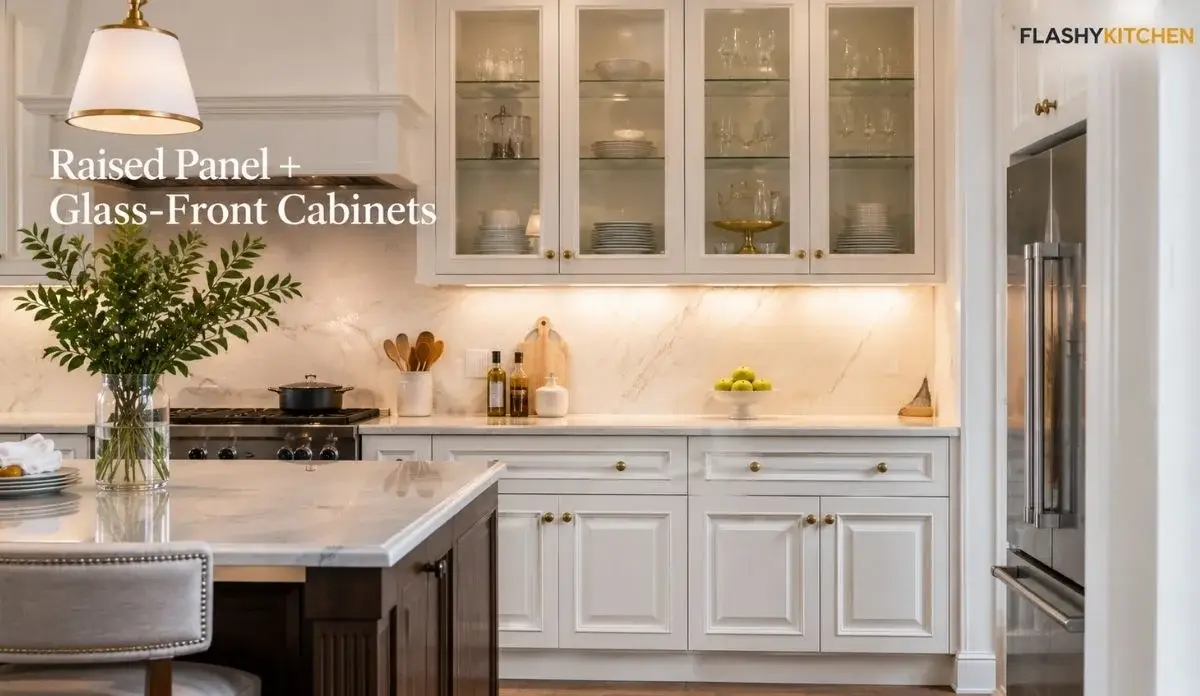
Raised panel and glass-front kitchen cabinets are two of the most decorative choices you can make during a remodel. They serve different design needs but often work beautifully together in traditional and transitional spaces.
If you want to break up a heavy wall of solid wood, adding clear or frosted glass doors creates immediate visual relief. Meanwhile, raised panel doors bring classic architectural depth to your base units, making the room feel established and formal.
Quick Answer: Are Raised Panel and Glass-Front Kitchen Cabinets Worth It?
Yes, raised panel and glass-front kitchen cabinets are highly worth it if you want a classic, decorative, or display-friendly kitchen layout. They provide excellent visual interest and break up the monotony of standard flat doors.
While they require a bit more cleaning than smooth doors, they add a custom, high-end feel to your home. However, if you prefer an ultra-modern, minimalist space, these ornate profiles will likely clash with your design goals.
Raised Panel and Glass-Front Kitchen Cabinets at a Glance
| Feature | Raised Panel Cabinets | Glass-Front Cabinets |
|---|---|---|
| Best For | Traditional and formal kitchens | Display storage and breaking up heavy walls |
| Typical Look | Center wood panel that rises to meet the outer frame | Clear, frosted, or seeded glass in a wood frame |
| Main Advantage | Adds classic depth and architectural detail | Makes tight kitchen spaces feel lighter and brighter |
| Main Drawback | Grooves and carved details collect cooking dust | Items inside must be kept neat to avoid a cluttered look |
| Best Kitchen Type | Large, formal, or historic homes | Any kitchen needing open visual space |
What Are Raised Panel Kitchen Cabinets?
A raised panel door features a center section that is elevated, or raised, to match the thickness of the outer frame. The frame consists of horizontal rails and vertical stiles. The center panel usually features a sloped or carved decorative edge that blends gracefully into the frame.
When planning your layout using a complete kitchen cabinet guide, you will find that this profile is the foundation of classic American cabinetry. It looks heavy, solid, and incredibly durable.
According to custom woodworking experts like Conestoga Wood, the floating center panel allows the solid wood to expand and contract without cracking the outer frame. This makes them highly reliable for varying climates.
What Are Glass-Front Kitchen Cabinets?
Glass-front cabinets feature a standard wood frame where the solid center panel is replaced by a pane of glass. You will see these used mostly on upper wall units to showcase dishes or glassware.
When comparing different types of kitchen cabinets, glass doors offer a happy medium between open shelving and closed storage. You get the airy feel of open shelves, but your dishes remain protected from grease and dust. Options range from totally clear glass to frosted, seeded, or mullion doors (which have wooden grid patterns across the glass).
Pros and Cons of Raised Panel Kitchen Cabinets
Understanding the daily reality of these detailed doors helps you decide if they fit your cleaning habits.
| Pros | Cons |
|---|---|
| Adds beautiful classic depth to any kitchen design. | Grooves catch dust and require regular wiping. |
| Looks incredibly high-end in stained oak or maple. | Can feel physically heavy in a very small kitchen. |
| Fits perfectly into traditional and formal homes. | Detailed profiles cost more than simple flat doors. |
| Easily upgraded with fresh paint and new hardware. | Paired with old hardware, they can look dated quickly. |
Pros and Cons of Glass-Front Kitchen Cabinets
Adding glass changes how your kitchen feels, but it also changes how you organize.
| Pros | Cons |
|---|---|
| Makes heavy upper cabinets feel lighter and brighter. | Everything inside is visible to guests. |
| Perfect for displaying nice dishes and glassware. | Glass is fragile and can scratch or break. |
| Protects display items from sticky cooking grease. | Requires frequent glass cleaning to remove fingerprints. |
| Frosted options hide messy plates while reflecting light. | Upgrading to tempered or seeded glass is expensive. |
Raised Panel vs Glass-Front vs Shaker vs Slab Cabinets
Mixing and matching door profiles is common. Here is how they stack up against each other.
| Feature | Raised Panel | Glass-Front | Shaker | Slab |
|---|---|---|---|---|
| Door Look | Elevated center | See-through panel | Recessed center | Completely flat |
| Best Style | Traditional | Display/Transitional | Classic/Flexible | Modern/Minimalist |
| Cleaning | Hard (many grooves) | Medium (needs Windex) | Medium (dusts lower ledge) | Very easy |
If you want a simpler look that still feels classic, looking into a Shaker cabinet style provides clean lines without the heavy decorative carving.
On the other hand, if you want zero grooves and the easiest possible cleaning routine, flat slab cabinet doors are the best choice for modern spaces.
Are Raised Panel Cabinets Outdated?
Raised panel cabinets are not automatically outdated. The profile itself is a timeless architectural feature. However, what makes them look old is usually the finish. Shiny orange oak finishes and heavy brass hardware from the 1990s will make the kitchen feel stuck in the past.
When you paint these doors crisp white, soft gray, or deep navy, they instantly look fresh. Pairing them with modern bar pulls or sleek cup handles brings the traditional shape right into the current design era.
How to Style Glass-Front Kitchen Cabinets
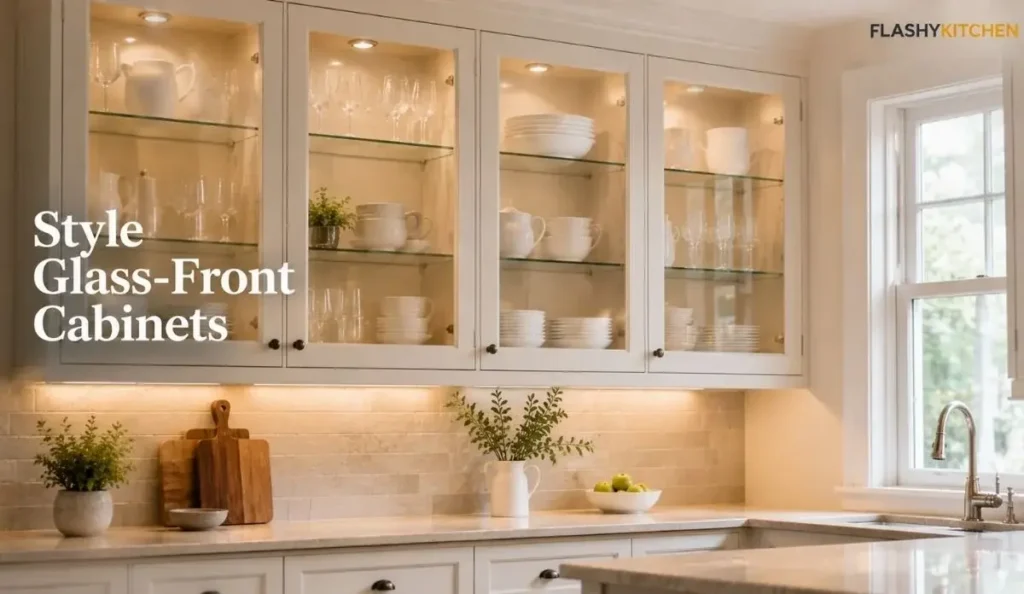
Styling the inside of your cabinets is critical because clear doors put your habits on display. Interior design resources like The Spruce recommend sticking to a consistent color palette.
Use matching white dishware or group your items by color to avoid a chaotic look. Keep everyday plastic cups and mismatched mugs behind solid doors. If you want to bounce light around the room, install small interior LED puck lights to highlight your wine glasses or vintage bowls.
Best Colors and Finishes
White raised panel kitchen cabinets are incredibly popular because the bright color softens the heavy traditional carving. Gray raised panel kitchen cabinets offer a nice transitional look, while solid oak or maple choices bring immense warmth to a formal dining space.
For your display units, white glass-front kitchen cabinets help dishes pop. If you want a vintage farmhouse feel, seeded glass adds a lovely bubbly texture. If you hate keeping things neat, frosted glass front kitchen cabinets obscure the shapes inside while still making the room feel airy.
What Materials Are Used?
The materials you choose dictate the lifespan of your doors. Most decorative doors use solid wood frames.
- Solid Wood: Oak, maple, and cherry are standard for stained finishes.
- MDF: Medium-density fiberboard is excellent for painted doors because it prevents the paint from cracking at the joints.
- Glass Types: Tempered clear glass is standard for safety.
Checking your cabinet door materials before buying ensures your detailed frames will not warp from kitchen humidity.
Where Can You Buy Raised Panel and Glass-Front Cabinets?
Finding these profiles is easy because they are industry staples. Home Depot and Lowe’s carry raised panel styles in stock and offer glass-front cabinet doors through their custom ordering desks.
IKEA sells excellent, budget-friendly glass-front kitchen cabinets that fit their modular systems. If you just want to update your current look, ordering replacement kitchen cabinet doors online or searching for local suppliers near me is a highly cost-effective upgrade. You can even find single upper kitchen cabinets with glass doors on Amazon for quick coffee bar additions.
Best Uses for These Cabinet Styles
- Formal Kitchens: Raised base units anchor the room with heavy, classic styling.
- Coffee Bars: A glass door unit above your coffee maker looks incredibly charming.
- China Storage: Keep your holiday plates dust-free but visible.
Mixing styles is highly effective. You can use solid decorative bases while placing glass on your upper wall cabinets to make the room feel taller.
Common Mistakes to Avoid
- Too Much Glass: Using glass for every upper door will expose all your messy cereal boxes and plastic containers.
- Ignoring the Overlay: Not understanding your inset and overlay cabinet styles before ordering replacement doors will result in hinges that do not fit.
- Bad Hardware: Heavy, ornate knobs on an already detailed door make the kitchen look overly busy.
- Skipping the Dusting: Carved wood profiles catch flour and grease; you must wipe them down weekly.
- Cluttered Displays: Throwing random mail and keys into a see-through unit ruins the aesthetic of the whole room.
Final Verdict
Raised panel and glass-front kitchen cabinets are worth it if you want a decorative, classic, or display-friendly kitchen design. They offer beautiful craftsmanship and give you a space to show off your favorite dishware. They are not the best choice if you want a fully flat, minimalist, or low-maintenance cabinet look, but for traditional and transitional homes, they remain a gorgeous investment.