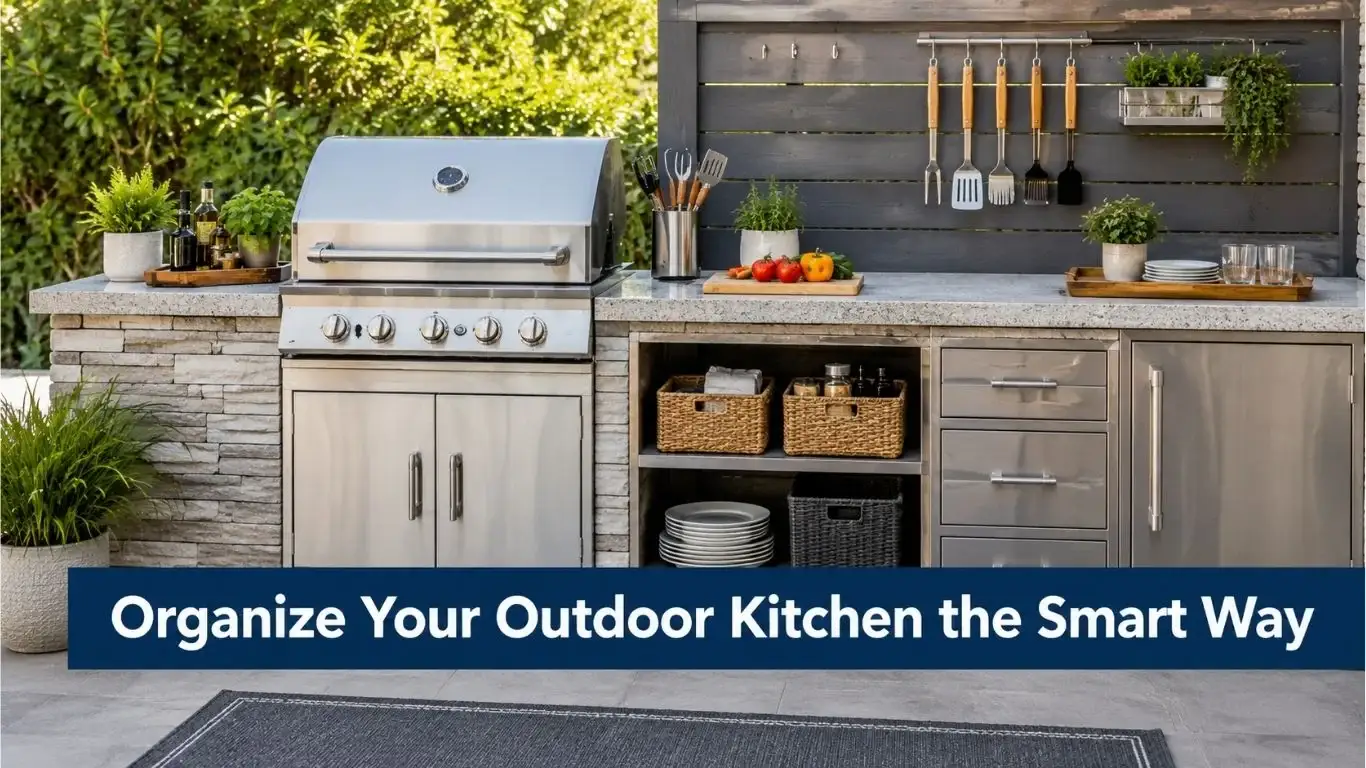
If you are deciding how to organize outdoor kitchen storage, start with the cooking routine, not the empty cabinets. A drawer can look tidy and still fail if the tongs sit across the patio, paper towels get wet, or every ingredient requires a trip indoors.
A useful outdoor kitchen organization system keeps frequently used tools near the task, protects stored items from weather, and leaves heat-sensitive food inside. By the end, you will know what can stay outdoors, where each item belongs, how to use drawers and cabinets, and what to bring inside after cooking or before winter.
Quick Answer
How do you organize an outdoor kitchen? Divide it into cooking, prep, serving, and cleanup zones, then store each item where you use it. This is the simplest way to decide how to organize outdoor kitchen storage without filling cabinets with indoor-only items. Good outdoor kitchen organization ideas are task-based.
- Keep grill tools beside the cooking zone.
- Put knives and boards in the prep zone.
- Store serving pieces near the dining side.
- Protect dry goods from heat and humidity.
- Give cleaning supplies and trash a separate area.
What Should Actually Stay Outside?
Outdoor kitchen storage should hold things that support outdoor cooking, not everything that fits. If you are deciding how to organize outdoor kitchen cabinets, start by grouping what you already own, much like pantry organization, then ask one outdoor-only question: can this item tolerate the temperature, moisture, dirt, and pests it may face?
Grill tongs, spatulas, skewers, heat-resistant gloves, sturdy serving pieces, and appliance accessories are logical outdoor candidates. Rarely used cookware, bulk food, backup dishes, and specialty appliances usually earn their space indoors.
Use a Keep Outside, Protect, Refrigerate, or Bring Inside Rule
A good rule for anyone asking what should I store in my outdoor kitchen is to sort everything into four groups: leave outside, protect outside, refrigerate, or bring inside.
While checking USDA storage guidance, one practical distinction stands out: shelf-stable does not mean suitable for a hot outdoor cabinet. The U.S. Department of Agriculture recommends a cool, dry location for shelf-stable products and says temperatures below 85°F are best.
Perishable food needs tighter control. FoodSafety.gov says refrigerators should remain at 40°F or below. Perishables should generally be refrigerated within two hours, or within one hour when temperatures are above 90°F.
That answers another common question: can you keep spices in an outdoor kitchen? Shelf-stable ingredients can stay outside only when their storage conditions meet label directions and remain cool and dry. In a hot or humid setup, bringing seasonings out for each cook is a better default.
| Item | Best location | Leave outside? | Protection needed |
|---|---|---|---|
| Grill tools | Drawer by grill | Usually | Dry enclosed drawer |
| Outdoor dishes | Serving cabinet | Usually | Enclosed storage |
| Spices | Prep area | Climate-dependent | Cool, dry container |
| Paper goods | Enclosed cabinet | Only if dry | Sealed container |
| Cleaning supplies | Sink area | Usually | Separate from food |
| Appliance parts | Deep cabinet | Usually | Keep dry |
| Perishable food | Refrigerator | Only chilled | 40°F or below |
If you are asking what should you not store in an outdoor kitchen, start with anything damaged by heat or moisture, plus food requiring refrigeration.
Keep overflow supplies in an indoor pantry storage cabinet rather than filling outdoor cabinets just because space exists.
Arrange Storage by Work Zone
The easiest way to make outdoor kitchen zones work is to let each zone own its tools. Good grill station organization means the cook should not cross the patio for tongs while someone setting the table reaches through the cooking area for plates.
Cooking and Grill Zone
The cooking zone should hold grilling tool storage, heat-resistant gloves, a thermometer, skewers, and tools used at the grill.
Where should grill tools be stored? Put them in a shallow drawer or protected holder close enough to reach without standing over the heat source.
Shallow pull-out drawers make small tools easier to see than one deep cabinet. Do not waste valuable grill-side space on backup dishes or cleaning bottles.
Prep Zone
The prep zone should hold the cutting board, knives, mixing bowls, and ingredients brought outside for that meal. Keep each item close to the hand that uses it.
That same point-of-use logic works with practical cabinet storage ideas. Organize around the task instead of trying to make every cabinet hold an equal amount.
Serving and Cleanup Zones
Keep plates, cups, serving trays, napkins, and bottle openers toward the dining side. Cleaning supplies belong near the sink, but keep them separate from food, cooking utensils, and serving pieces.
Place trash where scraps can move from prep to disposal without crossing the entire kitchen. A short, clear route matters more than matching every drawer organizer.
Drawers, Cabinets, Shelves, or a Cart?
Choose storage by item size and frequency, not appearance. The most useful outdoor kitchen storage ideas solve a specific access problem.
Outdoor kitchen drawer organization works best for small tools. Cabinets suit bulky items, shelves suit low-risk items you do not mind cleaning, and a movable cart can serve a simple grill station.
If you are wondering how should outdoor kitchen storage be organized by frequency of use, give the easiest locations to daily tools. Occasional accessories can sit lower, deeper, or indoors.
Open outdoor kitchen shelving ideas have a real limitation: exposed items need more cleaning. A row of glasses is a poor system if pollen, grease, or blowing dust makes you wash them before every meal.
Outdoor kitchen cabinets are better for enclosed storage, but one large cabinet can still become a pile. Use dividers or shallow bins only when they solve a specific problem.
If you cannot see an item without unloading the cabinet first, move it to a drawer, shelf, or indoor storage.
Do not buy organizers first. If you already have usable storage, the first reorganization can cost $0 because you are changing placement rather than adding hardware.
New cabinets, carts, and inserts are optional upgrades. Their prices vary by material, size, region, and installation.
A rolling cart can be enough for a basic grill station. If the indoor kitchen is only a few steps away, extra built-in cabinets may solve a problem you do not actually have.
If you have only a freestanding grill and prep table, use one protected tote or cart for cooking tools, then move sensitive contents indoors. You do not need permanent cabinetry to create a working system.
How Do I Keep Outdoor Cabinets From Getting Filthy?
If you are asking how do I keep outdoor kitchen cabinets dry, start by reducing exposure before adding organizers. A roof or covered patio helps, but covered storage can still collect grease, pollen, insects, dust, and wind-driven moisture.
Weather-Resistant Does Not Always Mean Watertight
Do not assume an outdoor-rated cabinet forms a sealed box.
While checking outdoor-cabinet manufacturer guidance, I found an important distinction. One maker of high-density polyethylene (HDPE) cabinets states that its cabinetry withstands weather but is not watertight because moisture can enter through door and drawer gaps.
That does not mean every outdoor cabinet leaks the same way. It means you should check the construction you actually own instead of assuming the outdoor label protects everything inside.
Use sealed outdoor kitchen storage containers for paper goods and other moisture-sensitive supplies. Do not use a sealed container as an excuse to keep food in a cabinet that regularly gets hot.
Heat, Humidity, and Pests Change the Plan
Hot and humid locations should keep fewer dry goods outdoors. Fully uncovered kitchens also need a stricter storage system than kitchens protected by a roof.
How do you keep pests out of outdoor kitchen cabinets? Remove crumbs and food residue, close trash, seal any food legitimately stored outdoors, and inspect corners and drawer tracks.
A regular deep-cleaning routine helps reveal leaks, residue, insects, and forgotten food before the cabinet becomes difficult to clean.
The mistake to avoid is solving every weather problem with another container. Sometimes the better answer is simply to keep the item indoors.
How Do You Organize a Small Outdoor Kitchen?
Small outdoor kitchen storage works best when every permanent item earns its space. Keep tools that support grilling and prep outdoors while the nearby indoor kitchen holds backups, bulk supplies, and rarely used equipment.
Use vertical storage for lightweight tools where exposure is controlled. Hooks can free drawer space, but exposed tools may need cleaning more often than tools kept inside drawers.
A narrow drawer stack often works better than one deep cabinet because small objects stay separated and visible. A rolling cart is another option if you need prep and storage space without adding built-in cabinetry.
The common mistake is trying to duplicate the indoor kitchen. If the back door is close, a second set of every appliance, platter, and cooking tool can create clutter instead of saving time.
Safe Storage Around the Grill and Sink
Safe grill station organization keeps combustible items away from heat and leaves shutoffs, vents, and service points accessible. Paper towels, cloths, cardboard, and similar materials should not sit where flames or high heat can reach them.
The National Fire Protection Association advises keeping grills away from homes, deck railings, eaves, and overhanging branches. The grill manufacturer’s clearance instructions still control the specific installation.
Use the same practical thinking behind good kitchen safety tips. Do not let organizers, trash cans, or stored equipment block shutoffs, ventilation openings, outlets, or service access.
Keep cleaning products near the sink only if the area stays dry, and separate them from food and utensils. Fix a leak instead of hiding it behind a storage bin.
After messy cooking, clean the sink and nearby surfaces before closing cabinets. Food residue and grease make the next cooking session harder and give pests something to find.
Moving gas lines, electrical wiring, or plumbing is not an organization task. Licensing and permit rules vary by jurisdiction, so use a qualified professional where local rules require one.
Reset the Kitchen After Cooking and Before Winter
Resetting the outdoor kitchen after each cook prevents a good storage plan from turning into mixed drawers again. Return tools to their zones, remove vulnerable food, clean residue, and make sure stored items are dry before closing cabinet doors.
After cooking:
- Return grill and prep tools to their assigned places.
- Refrigerate or bring temperature-sensitive food indoors.
- Wipe food and grease from counters and handles.
- Empty trash that can attract pests.
- Let wet tools dry before enclosed storage.
If the question is how do you organize outdoor kitchen storage for winter, start by removing food, paper goods, loose textiles, and anything that should not sit unused in damp or freezing conditions.
Bring portable accessories indoors if the kitchen will be closed for months.
Winterizing plumbing, refrigerators, ice makers, gas equipment, or other appliances is separate from cabinet organization. Follow the equipment manufacturer’s instructions, and use qualified trades where local rules require licensed work.
Conclusion
Good outdoor organization is mostly about keeping less outside and giving every remaining item a job-based home. If you need to decide how to organize outdoor kitchen storage today, empty one cabinet, sort its contents into cooking, prep, serving, cleanup, and indoor-only groups, then rebuild from there.
The right system reduces trips indoors without turning outdoor cabinets into a hot, damp pantry or a place where rarely used gear collects dirt.