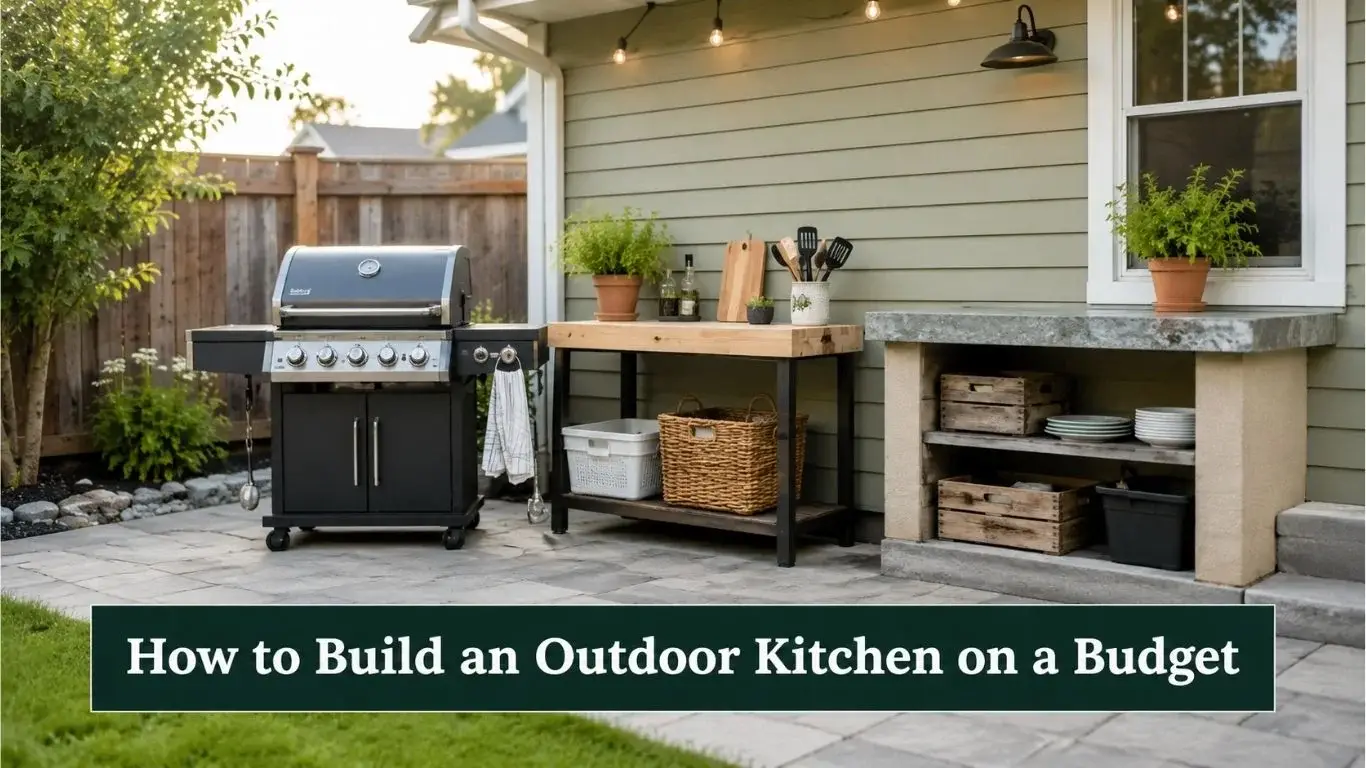
If you want to know how to build an outdoor kitchen on a budget, start by cutting the project down to what you actually use. A grill, stable prep surface, safe location, and basic storage can handle most backyard cooking without a sink, refrigerator, custom island, or new utility lines.
The lowest-cost plan usually reuses the patio and grill you already own. Spend on weather exposure, safe grill placement, and a solid work surface before decorative finishes. This guide shows what to build first, what can wait, which jobs are realistic DIY work, and which hidden costs can turn a simple project into an expensive one.
Quick Answer
If you are asking how to build an outdoor kitchen on a budget, reuse your existing grill and patio, keep the setup close to the house, and avoid permanent utilities until you truly need them. Build the smallest version that supports your cooking routine, then add features later.
- Reuse a safe grill you already own.
- Add prep space before extra appliances.
- Keep utility runs short or avoid them.
- Choose materials for outdoor exposure.
- DIY low-risk work, not gas or electrical connections.
What Do I Actually Need?
The practical answer to how to build an outdoor kitchen on a budget is to limit the first version to four things: safe cooking, a stable landing surface, prep space, and basic storage. A sink, refrigerator, ice maker, pizza oven, and long cabinet run are upgrades.
Each extra appliance can consume counter space and may trigger power, plumbing, drainage, or fuel work. Use a spend-save-skip rule: spend on the base and safe work surfaces, save by reusing working equipment, and skip convenience features until repeated use proves you need them.
Keep storage modest at first. Apply the same point-of-use logic used in cabinet storage ideas: grill tools near the grill, prep tools near the work surface, and rarely used items indoors.
How to Build an Outdoor Kitchen on a Budget: Cheapest Path
What is the cheapest way to build an outdoor kitchen? For many homeowners, it is an existing freestanding grill plus a weather-resistant prep cart on a suitable patio. Most cheap outdoor kitchen ideas save the most money when they reduce fixed construction, countertop fabrication, cabinet installation, and utility work.
How much does a budget outdoor kitchen cost? There is no honest single figure because a cart-based setup and a fixed cabinet run are different projects.
Current U.S. retailer examples reviewed on August 9, 2026 list one movable prep cabinet at $249, a sink/storage cart at $329.99, and a three-piece outdoor cabinet set with countertop at $2,634.80. These are product prices, not installed project averages; prices vary by seller and region, while delivery, labor, utilities, and other components can add to the project.
| Build path | Current example price | Best for | Main limitation |
|---|---|---|---|
| Existing grill + prep cart | $249 | Basic prep and storage | No sink or built-in look |
| Existing grill + sink cart | $329.99 | Prep, storage, and water station | Plumbing may add cost |
| Three-piece cabinet set | $2,634.80 | Fixed storage and countertop | Grill and utilities cost extra |
Build Around the Grill You Already Own
How do I build an outdoor kitchen around an existing grill? Treat a freestanding grill as a separate appliance unless its manufacturer specifically permits another installation. Put prep space beside it, follow the required clearances, and place storage away from direct heat.
A DIY grill station can be just a grill, prep cart, and weather-safe storage. This inexpensive outdoor kitchen avoids fixed construction while you test how the patio works.
A portable outdoor kitchen suits renters or homeowners still testing the layout. A modular outdoor kitchen makes more sense once the final layout is clear.
Keep the Expensive Utility Work Short
How can I reduce outdoor kitchen utility costs? Avoid moving water, drainage, gas, or power farther than needed. Longer runs can bring trenching, wall penetrations, circuits, piping, permits, and surface repairs into the job.
A rough-in is the plumbing, gas, or electrical connection installed before finished surfaces cover the area. Price required utility hookups before ordering cabinets or countertops.
For a simple setup, a propane grill can avoid a permanent gas line, while a nearby indoor sink may remove the need for outdoor plumbing. Do not treat utility connections as casual DIY work; licensing and permit rules vary by jurisdiction.
What Materials Are Cheapest for an Outdoor Kitchen?
The cheapest outdoor kitchen materials are the ones that meet the exposure and safety needs without early replacement. A low-priced indoor cabinet that swells, corrodes, or breaks down outdoors is not a budget win.
For an outdoor kitchen frame, follow the grill manufacturer’s requirements for any built-in enclosure. Galvanized steel framing, masonry systems, and properly detailed exterior-rated wood are common approaches, but local pricing and climate determine which is economical.
For cabinets, compare actual outdoor ratings. A cabinet materials comparison can explain common material behavior, but indoor-rated panels should not be assumed suitable for rain, humidity, and direct sun.
The same warning applies to RTA kitchen cabinets. Ready-to-assemble construction can reduce indoor costs, yet only products rated by their manufacturers for outdoor exposure belong in an exposed outdoor kitchen.
For an outdoor kitchen countertop, reducing custom fabrication may save more than chasing the cheapest slab. A stainless prep cart, properly built concrete surface, or suitable exterior tile may fit a DIY plan.
Reclaimed materials can lower finish costs, but inspect them for rot, corrosion, old coatings, and water damage. Salvaged cabinets made for indoor rooms are not automatically outdoor cabinets.
How do I protect a budget outdoor kitchen from weather? Start with outdoor-suitable materials, drainage, protective covers where appropriate, and a layout that limits direct exposure.
What Can I Build Instead of Buy?
Can I build an outdoor kitchen myself? A simple DIY outdoor kitchen can include assembly, shelving, painting, movable carts, and non-structural carpentry within your skill level. Stop where mistakes could create a fire, shock, gas leak, water leak, or structural problem.
What parts of an outdoor kitchen can I DIY? Focus on work that does not involve permanent gas, new electrical circuits, regulated plumbing, or structural changes unless you are legally qualified to perform it.
Do I need a permit for an outdoor kitchen? That depends on the city, county, structure, and utilities involved. Check the local authority having jurisdiction before permanent construction, and use licensed trades where local rules require them.
While checking current fire-safety guidance, one rule is especially useful for layout planning. The National Fire Protection Association says grills belong outdoors and should sit well away from homes, railings, eaves, and overhanging branches; children and pets should stay at least 3 feet from the grilling area.
Use basic kitchen safety tips as a planning reminder, but follow the grill manufacturer’s installation and clearance instructions for the appliance itself.
Do I Need a Sink in an Outdoor Kitchen?
Do I need a sink in an outdoor kitchen? Only if it saves enough washing or food-prep trips to justify the water supply, drainage, installation, and seasonal maintenance. If the indoor sink is through a nearby door, skipping outdoor plumbing can protect the budget.
A refrigerator deserves the same test. A cooler may handle occasional drinks, while the indoor refrigerator handles food.
This is one place where the cheaper option can perform the same practical job. A sink and refrigerator are convenient, but convenience alone does not justify permanent utility work.
What Makes a Cheap Outdoor Kitchen Expensive?
Outdoor kitchen cost often rises because of work the first shopping list does not show. Patio leveling, utility rough-ins, countertop cutouts, delivery, appliance connections, permits, weather protection, and repairs after trenching can all sit outside the advertised product price.
While comparing current retailer listings with budget guides, the recurring problem is scope. A cabinet price does not tell you the finished project cost if the patio needs correction or new services must reach the site.
Feature creep compounds the problem. One sink may add water, drainage, countertop fabrication, and winter maintenance. One refrigerator may add an appliance and electrical requirements.
Before buying, confirm that the patio suits the load, the grill clearances work, and service points remain accessible. Price utilities and countertop work before decorative finishes.
Build in Phases Instead of Buying Everything Now
A budget outdoor kitchen is easier to control when you build in phases. Start with cooking and prep, then let real use show what deserves permanent space.
Phase one can be the grill and work surface. Phase two adds weather-safe storage. Later phases can add lighting, power, a sink, or refrigeration if repeated use justifies them.
Leaving room for a future upgrade is often cheaper than locking the wrong feature into concrete, stone, or utility lines now.
A Budget Outdoor Kitchen Should Stay Simple
A successful budget build is not the outdoor kitchen with the most features. It is the one that gives you safe cooking, useful prep space, and enough storage without paying for plumbing, refrigeration, or cabinetry you barely use.
If you are deciding how to build an outdoor kitchen on a budget, mark out the smallest useful setup first. Build that version, cook with it, and let real use decide which upgrades deserve your money.