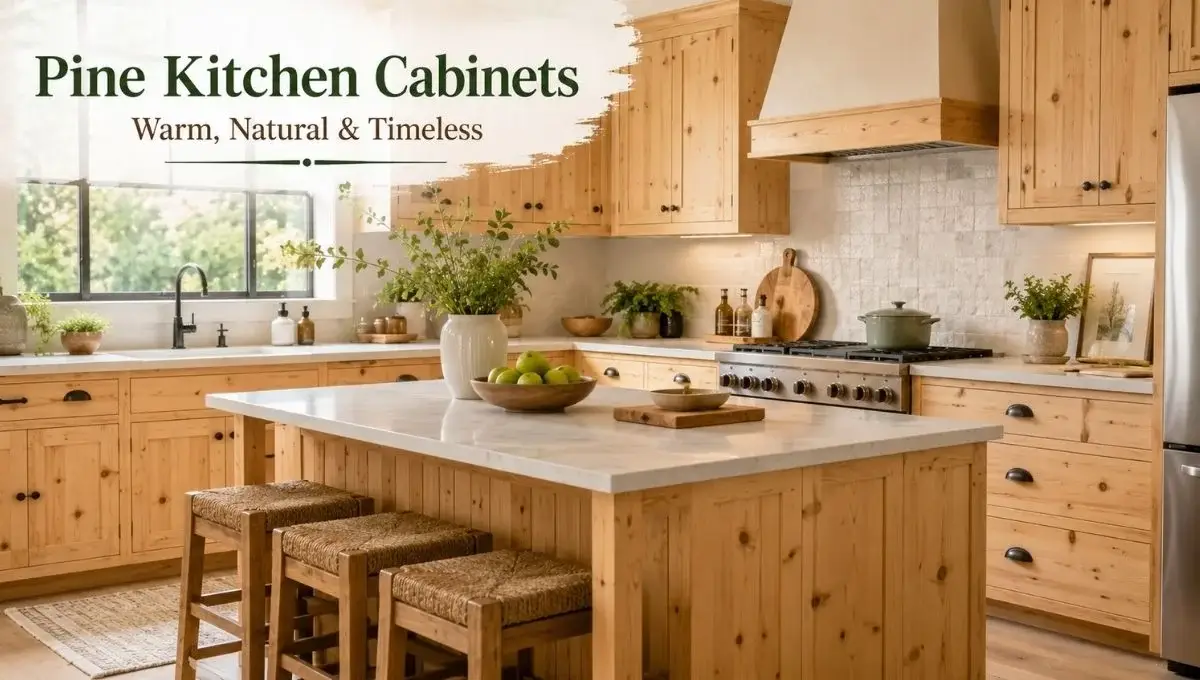
If you want to bring natural warmth and historic charm into your home, pine kitchen cabinets are a highly popular choice. They have a distinct look that sets them apart from typical hardwoods.
Are pine kitchen cabinets a good choice?
Yes, they are a great option if you want a budget-friendly, highly textured wood and appreciate natural aging. However, because pine is a softwood, it dents and scratches easily under daily wear. If you want a perfectly uniform, dent-resistant finish, harder woods are a better fit.
For homes with high traffic, busy kitchens, or active pets, the soft surface of pine can gather wear marks quickly. Many homeowners enjoy this natural wear as a beautiful aging process, while others prefer a tougher wood. If you fall into the latter group, you might want to look into harder light wood cabinets to keep your surfaces looking pristine for much longer.
The Wood Science: Understanding Pine Properties
Pine is classified as a softwood, but that does not mean all pine is weak. Softwood comes from conifer trees that have needles and cones. Hardwood comes from flowering trees that drop their leaves. This category is about how the trees reproduce, not the actual hardness of the lumber.
Different pine species have unique properties:
- Eastern White Pine: A very soft wood with a pale cream color and a straight, simple grain. It has a low Janka hardness rating of around 380 lbf (pounds-force), making it highly prone to dents.
- Ponderosa Pine: Often used for interior trim and rustic doors. It features warm, light yellow tones and a uniform texture.
- Southern Yellow Pine: A much denser option with a Janka rating between 690 and 870 lbf. It offers better dent resistance and showcases prominent, dark growth rings.
- Heart Pine: Cut from the center of old-growth trees. It is dense, heavy, and features rich reddish-brown tones.
According to research from the USDA Forest Products Laboratory, pine contains natural resin canals. These canals carry pitch and sap through the wood. If the wood is not kiln-dried correctly before building, this sap can seep through the finish.
The visible grain patterns are created by the difference between earlywood (the lighter, softer wood grown in spring) and latewood (the darker, harder wood grown in summer). This natural grain variation gives pine its signature appearance.
Clear Pine vs. Knotty Pine vs. Rustic Pine
When choosing your wood grade, the level of natural markings changes the entire look of your kitchen.
Clear Pine
Clear pine (often sold as select pine) is sorted to ensure a knot-free appearance. While it is not always completely free from every tiny blemish, it offers a calmer, more uniform wood pattern. It is the best choice for clean, modern designs or painted finishes.
Knotty Pine
This grade is selected specifically to showcase natural knots. These knots are places where tree branches once grew. They can be sound knots (tight, solid knots that are flush with the wood) or loose knots (open knots that may fall out or require acrylic filler). Standard knotty pine kitchen cabinets provide a highly textured, classic country look.
Rustic Pine
Rustic pine allows for high color variation, mineral streaks, pitch pockets, and natural wood weathering. The size and number of knots can vary wildly from board to board. Because manufacturer grading terms differ, you should always request physical sample doors and review the supplier’s knot policy to see what is allowed in their rustic grade.
Durability, Denting, and Daily Wear
Because pine is softer than oak or maple, it responds differently to daily kitchen use.
- Surface Compression: Heavy impact from pots, pans, or toys will cause surface compression. This leads to visible dents.
- Scratch Resistance: Sharp objects, keys, and fingernails can leave shallow scratch marks.
- Edge Damage: The edges of drawer fronts and door frames are the most sensitive to impact.
Applying a hard, protective cabinet finish can shield the wood from moisture, but it does not make the pine beneath it dent-proof. Over time, these wear marks gather to form a natural patina. For a log cabin, mountain cottage, or old farmhouse design, this worn look is highly desirable. If you prefer a highly uniform, flawless finish, birch kitchen cabinets offer a much smoother light wood alternative that handles impact better.
Cabinet Construction: Solid Doors vs. Box Materials
Our specification research at FlashyKitchen shows that cabinets sold as “pine” are rarely made of solid pine throughout. Complete cabinet units combine different materials for structural stability.
Doors and Frames
Solid pine is excellent for building the door frame, which consists of vertical stiles and horizontal rails. The center panel can be a solid pine center panel or a veneered center panel. Using wood veneer over a medium-density fiberboard (MDF) core prevents the center panel from expanding, contracting, or warping when kitchen humidity changes.
Cabinet Boxes
The main cabinet box needs to support heavy stone countertops. High-quality manufacturers use furniture-grade plywood or Baltic birch plywood for the cabinet box, while cheaper lines may use particleboard.
The exposed finished cabinet sides are rarely solid wood. They usually require matching veneer skins or decorative end panels that cost extra. When reviewing specifications, look for durable drawer-box construction with dovetail drawers, soft-close hinges, and full-extension drawer glides.
Finishing Pine: Natural, Stained, or Painted
Pine reacts strongly to finishes, meaning you must choose your application method with care.
Unfinished Pine
Buying unfinished pine kitchen cabinets allows you to finish them yourself to match your exact home colors. However, raw pine requires intense sanding and wood preparation before coating.
Stained Pine
Pine absorbs liquid stains unevenly. The soft earlywood absorbs a lot of stain, while the dense latewood repels it. This causes “grain reversal,” where the light parts of the wood become dark and the dark parts stay light. It can also cause blotching. To prevent this, professional finishers apply a wood conditioner or clear washcoat before staining to ensure even absorption.
Painted Pine
Can pine cabinets be painted? Yes, but knotty pine presents a major challenge. The resin inside the knots will seep through standard latex paint, leaving yellow or brown stains. To prevent knot bleed, you must apply a shellac-based primer directly over the knots to seal them. Even with a primer, natural wood movement can cause tiny hairline cracks in the paint at the joints over time.
Natural Aging
Fresh pine starts as a pale cream or light yellow wood. Over time, sunlight exposure causes the wood to change color. It slowly darkens into rich golden pine tones or warm, honey-colored pine. Because of this natural aging, replacement doors ordered years later will not match your older cabinets exactly.
Design Styles: Making Pine Look Modern or Rustic
Are knotty pine cabinets outdated? Not necessarily. The final look depends on how you style the rest of the room. A traditional kitchen with dark, orange-toned honey pine, raised-panel doors, heavy glazes, and matching wood walls can feel outdated.
However, designing modern pine kitchen cabinets relies on clean lines and simple finishes. You can achieve this with a few smart choices:
- Door Profile: Choose simple Shaker doors or flat-panel slab fronts.
- Finish: Use a matte clear coat, a bleached finish, or a soft whitewash to keep the wood bright and airy.
- Layout: Keep a clean, frameless look with full-overlay doors.
- Small Kitchen Tactics: In a small kitchen, a large number of dark knots can create visual noise and make the room feel cluttered. Balance the space by using clear pine, or use a two-tone design with painted warm white upper cabinets and pine lower cabinets. You can also build a pine kitchen island as a focal point, paired with solid painted perimeter cabinets.
Smart Design Pairings: Countertops, Paint, and Hardware
To make your pine cabinets kitchen design feel cohesive, pair them with complementary materials.
Countertops
Light countertops balance the busy grain of pine. Warm white quartz, cream quartz, light granite, or selected quartzite work beautifully. For contrast, black countertops, charcoal granite, or soapstone create a striking, modern look.
Paint Colors
Keep your walls neutral to prevent the wood from looking too orange. Warm white wall paint, soft cream, light greige, or warm beige work best. If you want color, muted sage green or dusty blue creates a soft, natural contrast.
Backsplash
A warm white backsplash, simple subway tile, or a handmade-look ceramic tile with slight texture brings a clean feel. Avoid busy mosaic patterns that compete with the wood grain.
Flooring
Avoid matching your wood floor exactly to your cabinet tone. Create contrast by pairing light pine cabinets with medium wood flooring, dark wood flooring, or neutral stone-look tile flooring. If you want a stronger, rustic grain pattern with superior hardness, hickory kitchen cabinets offer an excellent alternative.
Hardware
- Matte Black: Offers a bold contrast that works well in modern organic and farmhouse styles.
- Brushed Brass or Aged Brass: Adds a soft, traditional warmth.
- Brushed Nickel: Provides a clean, neutral finish that coordinates with stainless steel appliances.
How to Clean and Care for Pine Cabinets
To keep your pine wood looking its best, follow a simple maintenance routine:
- Dust Regularly: Wipe cabinet fronts with a dry, soft microfiber cloth to remove dust and cooking grease.
- Clean Gently: Mix a few drops of mild dish soap with warm water. Wipe the surfaces with a damp cloth. Never use harsh chemical cleaners, bleach, or abrasive scrubbing pads, which can scratch the protective finish.
- Dry Immediately: Wipe away any leftover water with a clean towel. Standing water can soak into the soft wood joints and cause warping.
- Manage Sunlight: Use blinds or curtains to keep intense sunlight from hitting only one section of your kitchen. This ensures the wood ambers evenly over time.
The Complete Cabinet Quote Checklist
Before purchasing, compare your estimates carefully. A low box price can quickly skyrocket once you add finishing pieces. Use this step-by-step procedure to review your written cabinet quote:
1.Verify Wood Species and Grade:
Confirm if the quote lists Eastern White, Southern Yellow, or Ponderosa pine. Ensure the wood grade (clear, knotty, or rustic) matches your design expectations.
2.Check the Door Construction:
Verify if the doors are solid pine, or if they feature a veneered center panel with solid stiles and rails to prevent warping.
3.Review the Cabinet-Box Material:
Make sure the cabinet boxes are made from furniture-grade plywood or Baltic birch plywood, rather than low-density particleboard.
4.Check the Drawer Boxes and Glides:
Verify that the drawers feature dovetail joints, soft-close hinges, and full-extension drawer glides.
5.Add Finish and Trim Specifications:
Ensure the quote includes matching finished end panels, toe kicks, fillers, moldings, and shipping/delivery costs.
Is buying pine cabinets worth it?
If you appreciate organic wood textures, want a warm, inviting aesthetic, and are comfortable with a wood that develops character over time, then choosing pine kitchen cabinets is a highly rewarding investment.
By selecting the right wood grade, pairing it with durable cabinet box materials, and finishing it with a proper sealant, you can enjoy a gorgeous, character-rich kitchen that feels like the heart of your home.