Quick Answer
A successful small kitchen renovation maximizes every square inch by optimizing the layout, improving storage, and using smart design tricks. Upgrading your floor plan and choosing the right cabinets turns a tight cooking space into an efficient room.
The project requires careful planning, a realistic budget, and a clear understanding of your needs before construction begins.
- Average Costs: Typically ranges from $12,000 to over $25,000 in 2026. This depends on whether you choose cosmetic updates or full structural overhauls.
- Best Structural Layouts: Galley, L-shaped, U-shaped, and one-wall configurations maintain efficient workflow.
- Top Storage Solutions: Use vertical space with ceiling-height cabinets, pull-out pantries, appliance garages, and toe-kick drawers.
- Project Timeline: Expect a standard timeline of 3 to 8 weeks from demolition to final painting.
- Value-Adding Features: Focus your budget on durable quartz countertops, high-quality shaker cabinets, and modern energy-efficient appliances.
- Space-Expanding Visuals: Use monochromatic color schemes, light cabinet colors, under-cabinet lighting, and reflective backsplashes.
What Is a Small Kitchen Renovation?
A small kitchen renovation means redesigning and upgrading a kitchen space that is 100 square feet or less. This type of project focuses on maximizing efficiency, improving traffic flow, and using every available inch of storage.
Unlike larger kitchens where design mistakes can easily be hidden, a compact space demands absolute precision. Every cabinet line, appliance dimension, and lighting placement must serve a real purpose.
A good renovation should not only look nice. It should also make cooking, cleaning, and storage easier every day. It turns a cramped, dark space into a comfortable room that makes meal prep, cooking, and cleanup simple and enjoyable.
- Cosmetic Changes: Painting existing cabinets, swapping handles, and installing a new tile backsplash.
- Structural Changes: Moving non-load-bearing walls, changing plumbing lines, upgrading electrical circuits, and replacing subfloors.
- Functional Changes: Altering the overall footprint to fix awkward traffic patterns, adding integrated appliances, and expanding counter space.
Small Kitchen Renovation vs Small Kitchen Remodel
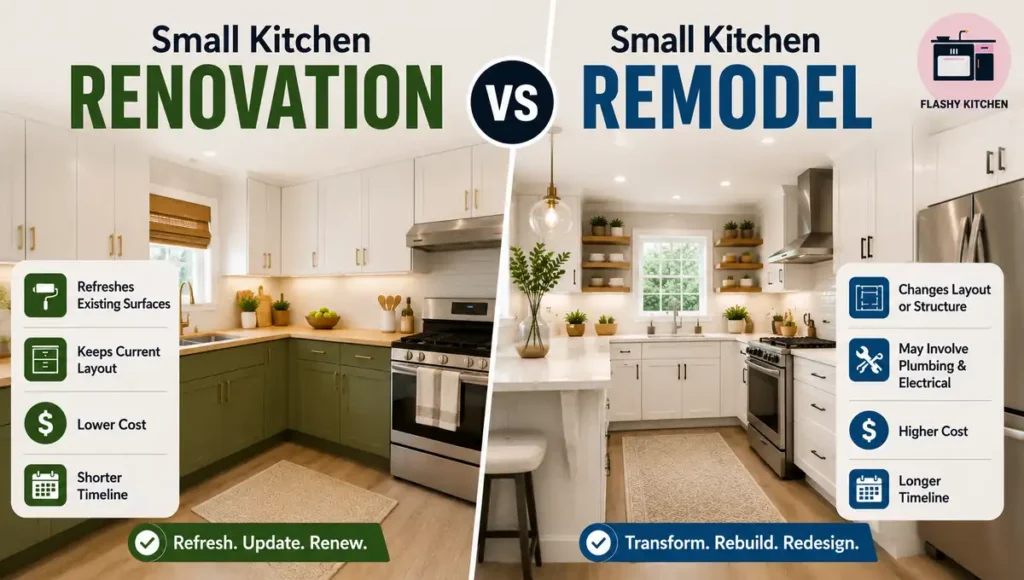
Many homeowners use these terms interchangeably, but they mean different things. Knowing the difference helps you plan your budget and talk to contractors clearly.
A renovation fixes up what is already there by updating materials and repairing old surfaces. A remodel changes the actual form or purpose of the room, often by tearing down walls or moving plumbing and gas lines.
Quick Comparison Matrix
The table below shows how these two project types compare based on data from the National Kitchen & Bath Association (NKBA).
| Feature | Small Kitchen Renovation | Small Kitchen Remodel |
|---|---|---|
| Main Goal | Refresh look and repair surfaces | Change structural layout and footprint |
| Permits Needed | Rarely for simple cosmetic swaps | Yes, usually for electrical, plumbing, or walls |
| DIY Friendly | High (painting, flooring, hardware) | Low (requires licensed pros) |
| Average Cost (2026) | Lower ($5,000 – $15,000) | Higher ($20,000 – $45,000+) |
| Timeline | Short (1 to 3 weeks) | Long (4 to 8+ weeks) |
Which Option Costs More and Takes Longer?
A small kitchen remodel costs significantly more than a renovation. Moving a sink or stove means hiring licensed plumbers and electricians to open walls and reroute lines, which quickly increases labor fees.
Remodels also take much longer to finish. You have to wait for city permits, structural inspections, and complex drywall work before you can even install your new cabinets.
When Should You Renovate?
- Your current cabinet boxes and layout work fine, but the doors look dated or worn out.
- You want to update the room quickly without living without a kitchen for months.
- You are on a tight budget and want to get a fresh look for under $10,000.
When Should You Remodel?
- The current floor plan is unsafe, and appliance doors hit each other when opened.
- You want to knock down a wall to open the kitchen into your living area.
- The plumbing, electrical wiring, or subfloors are old and rotting out behind the walls.
Why Renovate a Small Kitchen?
Renovating a small kitchen provides several immediate benefits that extend well beyond visual upgrades. Upgrading a cramped or outdated layout fixes day-to-day problems while protecting your property investment.
- Better Everyday Cooking: Fixes intersecting appliance doors, tight walkways, and a lack of open counter space. It organizes your workflow according to the classic kitchen work triangle rules.
- Massive Storage Expansion: Uses specialized cabinets like slide-out vertical pantries, deep pot drawers, and hidden toe-kick storage containers. These tools help you store twice as many kitchen items.
- Increased Home Resale Value: High-quality kitchen upgrades offer an excellent return when you sell. Recent reports from the National Association of Realtors (NAR) show that updated kitchens are a top priority for modern home buyers.
- Lower Utility Costs: Replacing old equipment with energy-efficient appliances, low-flow faucets, and modern LED under-cabinet lighting creates an eco-friendly cooking space. This lowers your monthly bills. Before moving forward, it is smart to review exactly how much a small kitchen renovation costs so you can set a realistic budget for your project.
How Much Does a Small Kitchen Renovation Cost?
The total investment for a small kitchen renovation varies based on the materials you choose, your location, and if you hire contractors. Managing your expenses properly requires breaking down where your money goes during construction. For practical advice on keeping costs down, you can follow this guide on a small kitchen renovation on a budget to learn how to save by handling certain tasks yourself and making smarter material choices.
⚠️ E-E-A-T Safety Alert from a Licensed General Contractor:
Whenever you plan your project budget, always set aside a dedicated 15% to 20% cash contingency fund. In small homes, opening up old walls often reveals hidden structural problems. These can include outdated aluminum wiring, corroded iron drain lines, mold from slow plumbing leaks, or unlevel subfloors. Fixing these issues properly before installing new cabinets ensures your home remains safe and meets local building codes.
The chart and matrix below outline the typical financial commitments required across various construction phases and material tiers in 2026.
Budget Distribution Breakdown
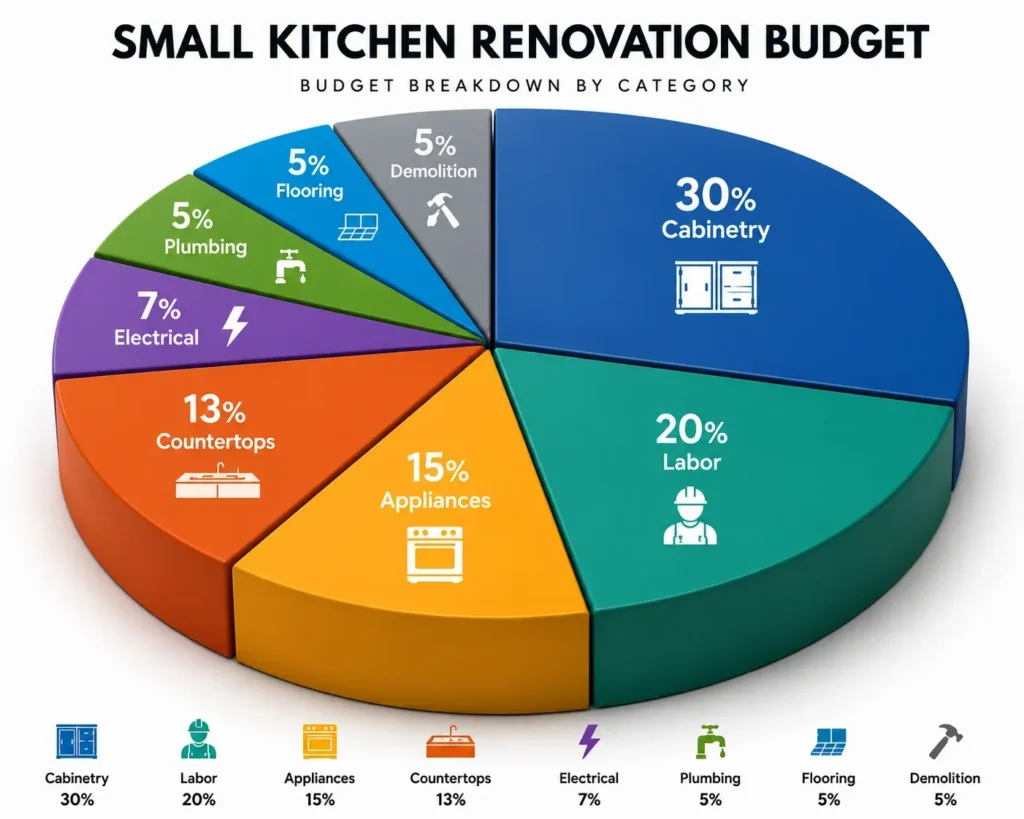
The following data table illustrates how funds are distributed across a standard small kitchen makeover project according to current Home Depot Cost Guides.
| Expense Category | Percentage of Total Budget | Estimated Cost Range (Mid-Tier Project) |
|---|---|---|
| Cabinetry & Structural Millwork | 30% | $4,500 – $6,600 |
| Labor, Framing & Installation | 20% | $3,000 – $4,400 |
| Major Cooking Appliances | 15% | $2,250 – $3,300 |
| Countertop Materials & Edging | 13% | $1,950 – $2,860 |
| Electrical, Lighting & Codes | 7% | $1,050 – $1,540 |
| Plumbing & Mechanical Updates | 5% | $750 – $1,100 |
| Flooring Surfaces & Backsplash | 5% | $750 – $1,100 |
| Demolition & Site Waste Disposal | 5% | $750 – $1,100 |
Realistic Renovation Project Tiers
To align your expectations with your financial plan, consider which tier of renovation fits your target budget.
- Cosmetic / Budget ($5,000 – $9,000): Focuses on painting existing cabinets, installing DIY butcher block or laminate counters, replacing hardware, and keeping all plumbing lines in their exact original locations.
- Mid-Range Mixed ($12,000 – $25,000): Includes stock shaker cabinets, mid-tier quartz countertops, new energy-efficient appliances, professional tile installation, and minor electrical circuit upgrades.
- High-End Custom ($25,000 – $45,000+): Features fully custom floor-to-ceiling cabinets, premium quartz surfaces, top-tier integrated appliances, premium plumbing fixtures, and extensive structural layout alterations.
How to Plan a Small Kitchen Renovation
A beautiful and functional kitchen relies on careful planning. Use these steps to prevent delays, control your budget, and create a kitchen that works for your daily routine. To begin your planning process, you can explore our collection of small kitchen renovation ideas to find smart layouts and space-saving designs that perfectly suit a compact footprint.
Define Design Goals
Assess how you use your kitchen every day. Decide whether your main goal is better storage, more prep space, improved lighting, or easier movement.
Take Accurate Measurements
Use a steel tape measure to map the room footprint, window frames, doorways, plumbing center lines, outlet positions, and appliance clearances.
Set Layout Boundaries
Choose a layout that fits within your existing walls. Keeping plumbing and gas lines in place can save thousands in labor and permit costs.
Hire Trade Professionals
Decide what you can safely DIY. Hire licensed contractors, plumbers, and electricians for code-regulated work such as wiring, plumbing, gas, and ventilation.
Small Kitchen Renovation Checklist
Use this step-by-step checklist to guide your project from initial planning through final construction:
Phase 1: Planning and Pre-Construction
- Take detailed, precise measurements of the room’s entire footprint.
- Set your final project budget and secure a 15% emergency contingency fund.
- Choose and order appliances to confirm their exact dimensions before ordering cabinets.
- Finalize your kitchen layout and complete your cabinet ordering paperwork.
- Secure all necessary local building, plumbing, and electrical permits.
- Set up a temporary kitchen space in another room to use during construction.
Phase 2: Demolition and Rough Construction Work
- Safely shut off the main water valves, gas lines, and electrical circuits.
- Remove old appliances, wall cabinets, base units, and countertops.
- Tear out old flooring materials and check the subfloor for any water damage or rot.
- Run upgraded electrical lines, add dedicated appliance circuits, and update plumbing lines inside the open walls.
- Install modern LED recessed ceiling lights and under-cabinet accent lighting wires.
- Hang new moisture-resistant drywall, apply tape and joint compound, and sand smooth.
Phase 3: Finish Installation and Styling
- Install your new base and wall cabinets, ensuring everything is perfectly level and plumb.
- Have your countertop fabricator take precise templates of the installed cabinet bases.
- Lay down your new flooring material and run trim molding along the baseboards.
- Install your custom countertops and mount the undermount sink bowl.
- Hook up the kitchen faucet plumbing, garbage disposal, and major appliances.
- Install your tile backsplash, fill joints with durable grout, and seal edges with silicone caulk.
- Apply premium washable interior paint to the walls and ceiling, attach hardware handles, and complete final clean-up.
15 Best Small Kitchen Renovation Ideas
Smart design choices can make a small kitchen feel open, bright, and highly efficient. These proven strategies improve storage, workflow, light, and style in a limited footprint.
Run Cabinets to the Ceiling
Remove dusty dead space above standard cabinets and add storage for seasonal dishes, serving pieces, and rarely used tools.
Install Integrated Appliances
Choose counter-depth refrigerators and compact panel-ready dishwashers that sit flush with cabinetry to keep tight walkways open.
Add Pull-Out Pantry Inserts
Use a vertical pull-out pantry tower with slim baskets for clear visibility and easy access to canned goods, oils, and spices.
Build Toe-Kick Drawers
Turn the hollow space below base cabinets into touch-latch drawers for flat items like baking pans, trays, and cutting boards.
Design an Appliance Garage
Hide small appliances behind a roll-up or lift-up door so counters stay clear while tools remain plugged in and easy to reach.
Use Open Shelving Near Windows
Replace heavy upper cabinets beside windows with floating shelves to open sightlines and let natural light move through the room.
Layer Natural and LED Light
Combine recessed ceiling fixtures, under-cabinet LED strips, and a focused pendant over the sink for bright task lighting.
Use Light Monochromatic Colors
Warm white, soft cream, and light neutral tones reflect light and make walls, cabinets, and counters feel more connected.
Add Sage Green Accents
Sage green cabinets or accents bring modern personality while staying soft enough for a peaceful, compact kitchen.
Install a Reflective Backsplash
Glossy ceramic tile, polished glass, or a reflective slab surface can bounce light and create depth in a small room.
Choose Light Quartz Countertops
Light quartz with subtle veining gives a durable, non-porous surface that feels polished without overwhelming the space.
Mount an Under-Mount Sink
An under-mount sink creates a smooth counter line and lets you wipe crumbs and scraps directly into the bowl.
Install a Pull-Down Faucet
A single-handle gooseneck faucet gives enough clearance to wash large pots while using little space on the sink deck.
Use Slide-Out Trash Bins
Hide trash and recycling inside a pull-out base cabinet with sturdy glides to save floor space and reduce visual clutter.
Add a Compact Rolling Island
Use a rolling cart with a butcher-block top for extra prep space, then move it against a wall when the kitchen is busy.
Best Layouts for Small Kitchens
Choosing the right floor plan is the most important step in making a small kitchen functional. The right layout creates open walkways, maximizes counter space, and ensures your appliances don’t bump into each other.
| Kitchen Layout Type | Best Suited For | Key Spatial Requirement |
|---|---|---|
| Galley Layout | Narrow, elongated spaces | Minimum 36 to 42 inches of central walkway clearance |
| U-Shaped Layout | Maximum storage needs | Requires specialized corner pull-out systems |
| L-Shaped Layout | Open-concept small homes | Ideal for integrating small mobile rolling carts |
| One-Wall Layout | Studio apartments & condos | Relies heavily on compact 24-inch micro appliance |
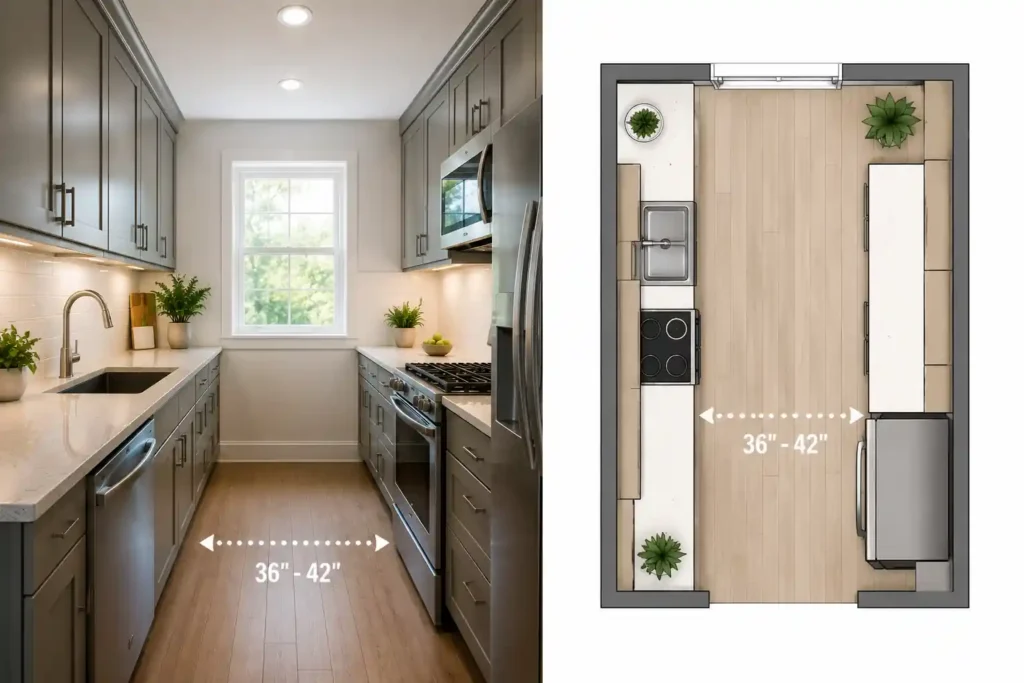
The Galley Kitchen Layout: Features two parallel walls of cabinets and appliances facing each other. When you Renovate Galley Kitchen Make sure you have at least 36 to 42 inches of open walkway space between opposing cabinets. Place your sink and cooking range on one side, and position the refrigerator on the opposite wall to create a smooth workflow triangle.
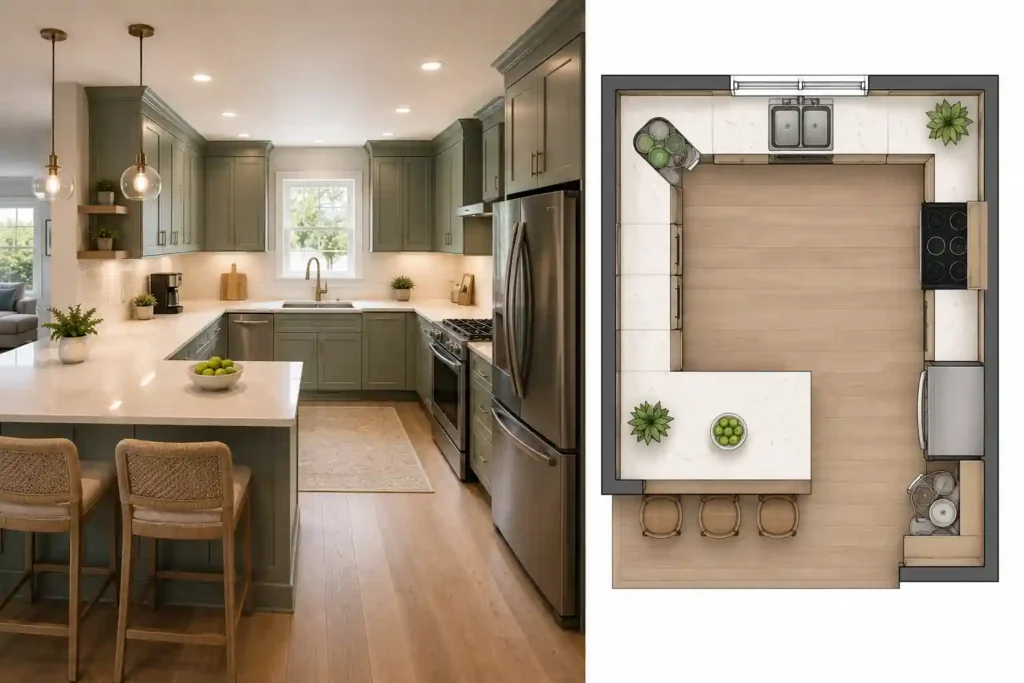
The U-Shaped Kitchen Layout: Uses three connected walls of cabinetry to maximize counter space and storage options. Install specialized corner inserts like a Lazy Susan or a Magic Corner pull-out shelf system to keep deep corners organized. Consider turning one side of the “U” into an open peninsula bar with stool seating to connect with adjacent living spaces.
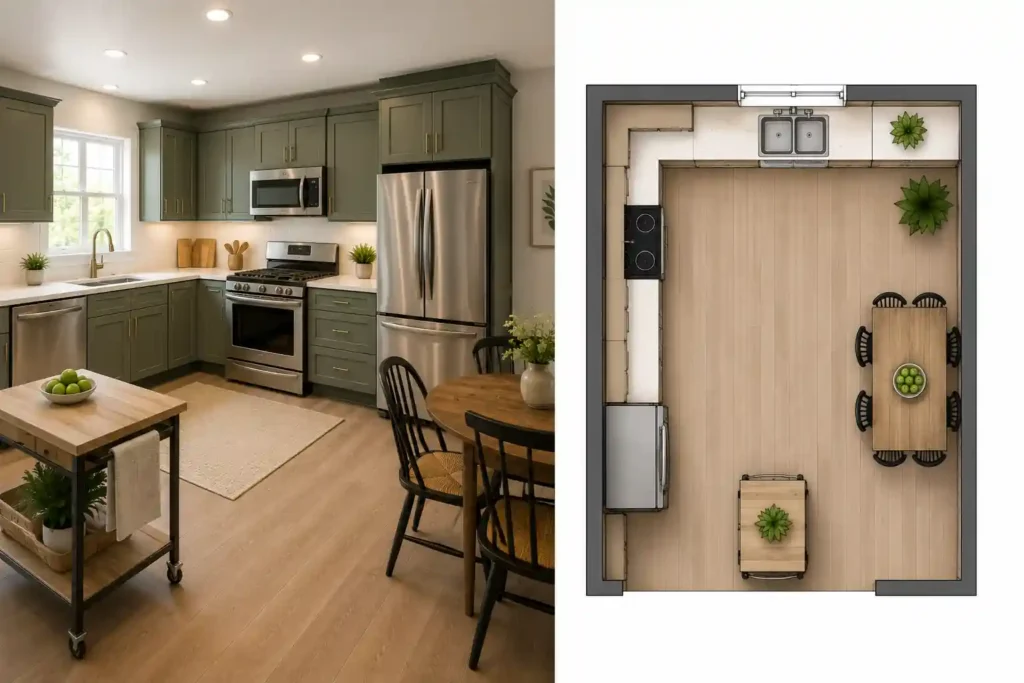
The L-Shaped Kitchen Layout: Places all your cabinets and appliances along two perpendicular walls, leaving the rest of the floor area open. This is an ideal solution for small open-concept homes or corner kitchen spaces. You can easily add a small dining table or a mobile, rolling kitchen cart along the open wall for extra flexibility.
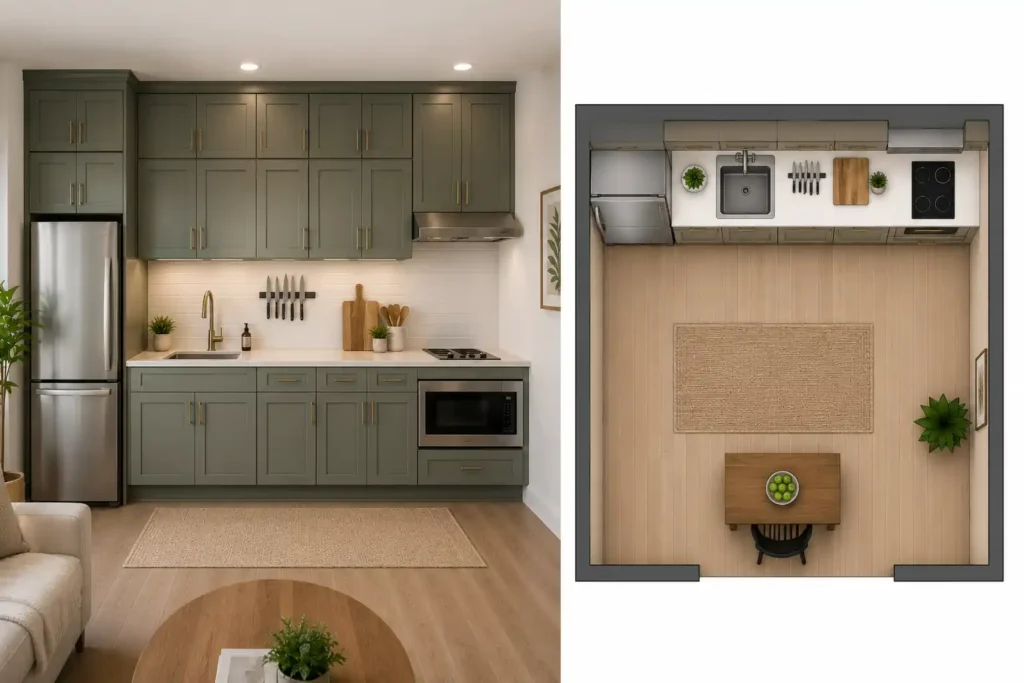
The One-Wall Kitchen Layout: Lines up all your cabinets, countertops, and appliances along a single wall, which is common in studio apartments and small condos. Choose compact appliances, like a sleek 24-inch wide refrigerator and a two-burner cooktop. Extend your cabinets all the way to the ceiling, and mount magnetic knife strips to keep your countertops clear.
Best Kitchen Cabinets for Small Kitchens
Because your cabinets take up most of the visual and physical space in a small kitchen, choosing the right style is a key decision. Your choice sets the tone for the entire room’s design and determines how effectively you can store your kitchen gear.
When shopping for new setups, you should understand the primary types of kitchen cabinets available in the market. Frameless or European-style cabinet boxes work best for narrow, compressed residential kitchens.
Frameless construction removes the extra wood face frame completely, giving you wider openings that make it easy to store large dinner plates. Clean and simple door patterns work best to avoid visual clutter.
Classic shaker cabinet doors feature a simple recessed center panel that looks timeless and works beautifully with both traditional and modern designs. Data from the annual Houzz Kitchen Trends Study shows that medium to light natural wood cabinets are also surging in popularity alongside classic painted options.
Make sure your cabinet boxes are built from high-quality materials. Look for structural cabinets made with 3/4-inch furniture-grade plywood boxes rather than cheap particleboard, which can sag under heavy plates.
For high-moisture kitchen environments, premium Medium-Density Fiberboard (MDF) doors finished with baked-on lacquer are excellent choices because they won’t warp or expand over time. To ensure you make a smart investment, check out our comprehensive kitchen cabinets complete guide 2026 before buying.
Best Appliances for Small Kitchens
Choosing the right equipment is just as important as planning your cabinet layout. Heavy, full-sized stoves and oversized refrigerators can quickly crowd narrow walkways and ruin your workflow.
Modern manufacturers now build high-tech, compact appliances specifically designed to save space in micro-homes. These space-saving models give you premium cooking power without sacrificing your limited countertop workspace.
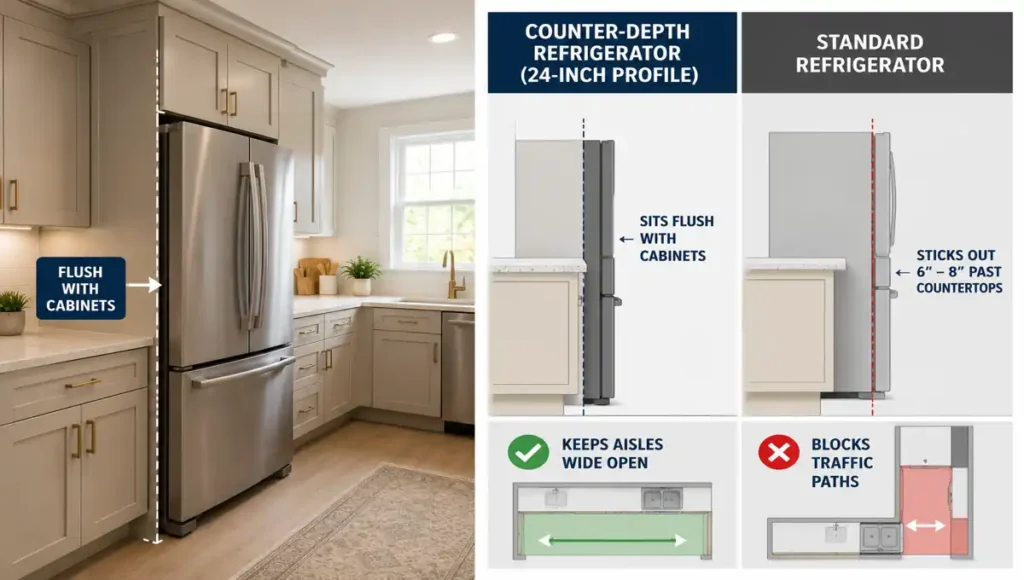
Counter-Depth Refrigerators (24-Inch Profile): Standard refrigerators stick out 6 to 8 inches past your countertops, blocking tight kitchen traffic paths. Counter-depth models sit completely flush with your standard 24-inch base cabinets, keeping your center aisles wide open.
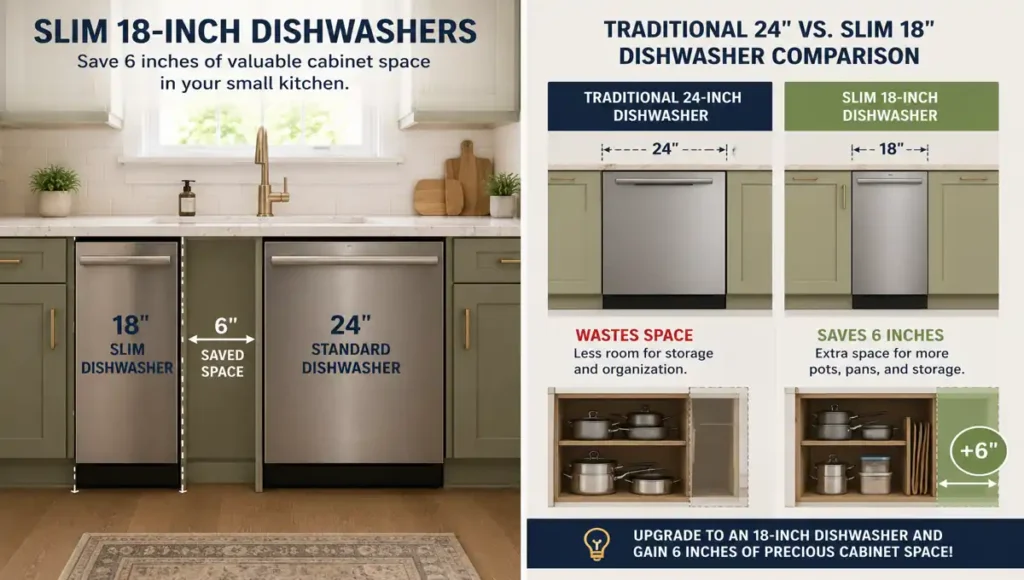
Slim 18-Inch Dishwashers: Traditional dishwashers are 24 inches wide, which wastes valuable cabinet storage space in a tight kitchen setup. Switching to an 18-inch slim model saves a massive 6 inches of structural space for extra pots and pans.
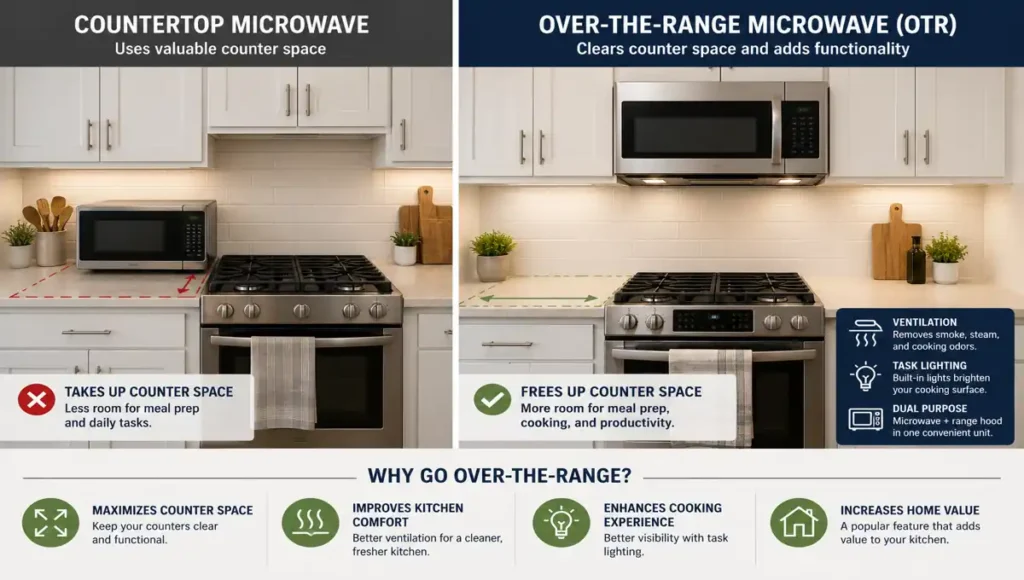
Over-the-Range Microwaves (OTR Units): Placing a bulky microwave on your countertop destroys precious meal preparation space where you need it most. Mounting a dual-purpose OTR microwave directly above your stove clears the counter and provides built-in ventilation and task lighting.
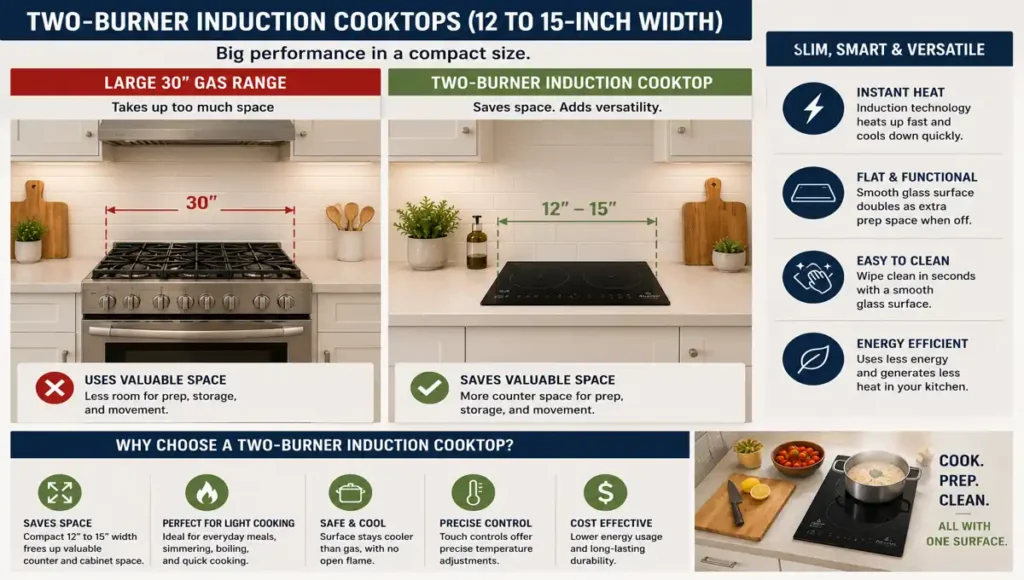
Two-Burner Induction Cooktops (12 to 15-Inch Width): Large 30-inch gas ranges take up too much physical space if you only cook light everyday meals. A sleek two-burner induction glass cooktop heats up instantly and doubles as a flat prep surface when turned off.
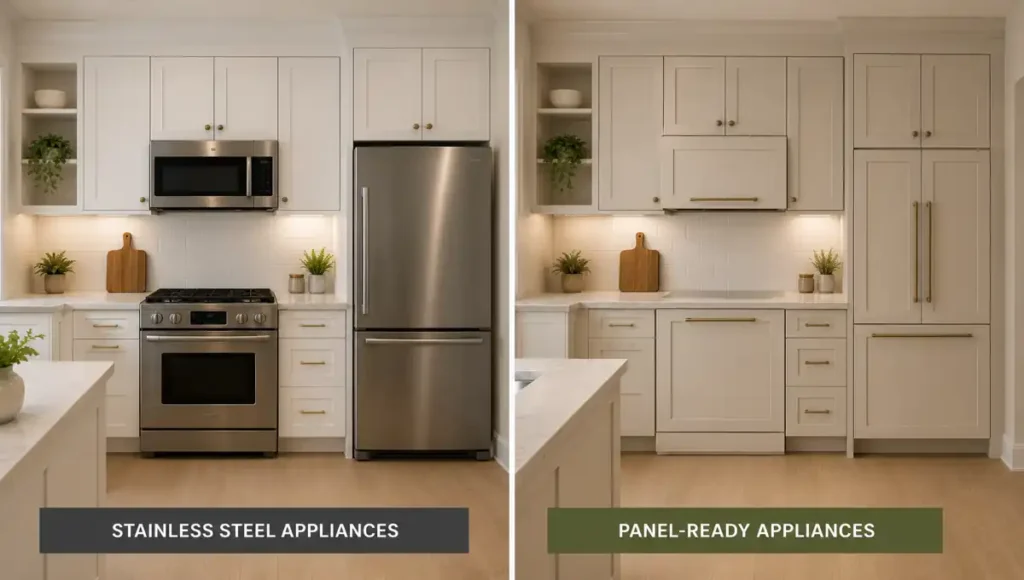
Panel-Ready Designs (Seamless Integration): Stainless steel appliances break up visual lines, making a small room feel choppy and split into fragments. Panel-ready appliances accept custom wood front faces that match your cabinets, creating a seamless look that expands the room.
⚠️ E-E-A-T Expert Appliance Tip from a Certified Kitchen Designer:
Always check your building’s electrical panel capacity before purchasing new high-efficiency cooking equipment. Modern induction cooktops and built-in convection ovens often require dedicated 220-volt structural circuits to function safely and comply with local housing codes.
Small Kitchen Storage Solutions
To get the most out of a small kitchen, you need to use smart storage solutions that utilize every available inch of space.
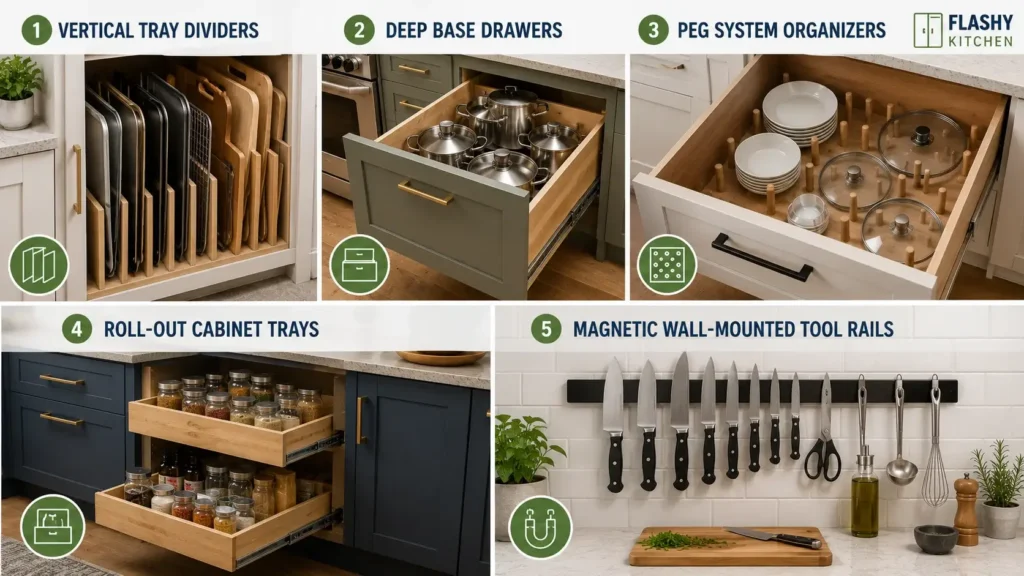
- Vertical Tray Dividers: Store tall, flat items like baking sheets and cutting boards upright using slim vertical dividers to keep them organized and easy to grab.
- Deep Base Drawers: Replace traditional lower cabinets with deep, full-extension drawers that pull all the way out into the room so you can easily reach heavy pots.
- Peg System Drawer Organizers: Use adjustable wooden pegs inside your deep drawers to secure plates, bowls, and pot lids to keep them from sliding around.
- Roll-Out Cabinet Trays: Install retrofitted slide-out wooden baskets inside your lower cabinets to pull items forward smoothly on ball-bearing glides.
- Magnetic Wall-Mounted Tool Rails: Mount a strong magnetic steel strip to your backsplash wall to hold your chef knives, freeing up precious space in your cutlery drawers.
Small Kitchen Renovation on a Budget
You don’t need a huge budget to change a small kitchen. With smart planning, creative material choices, and a willingness to handle some tasks yourself, you can achieve an incredible transformation at a fraction of the cost.
- Refurbish Existing Cabinets: If your cabinet boxes are sturdy, paint them yourself using a high-quality bonding primer and two coats of premium satin-finish urethane enamel paint to save thousands.
- Choose Cost-Effective Countertops: Look for prefabricated quartz blanks with pre-finished edges, hardwood butcher block surfaces, or modern high-pressure laminates that mimic natural stone patterns.
- Handle Demolition Yourself: Save significant labor costs by handling simple tasks like ripping out old flooring, safely clearing out cabinets, and completing the final wall painting and trim installation.
Small Kitchen Renovations Before and After
Real-world examples show how smart design choices completely change a dark, cramped space into a bright, efficient kitchen.
Project 1: The Dark 1980s Condo Galley
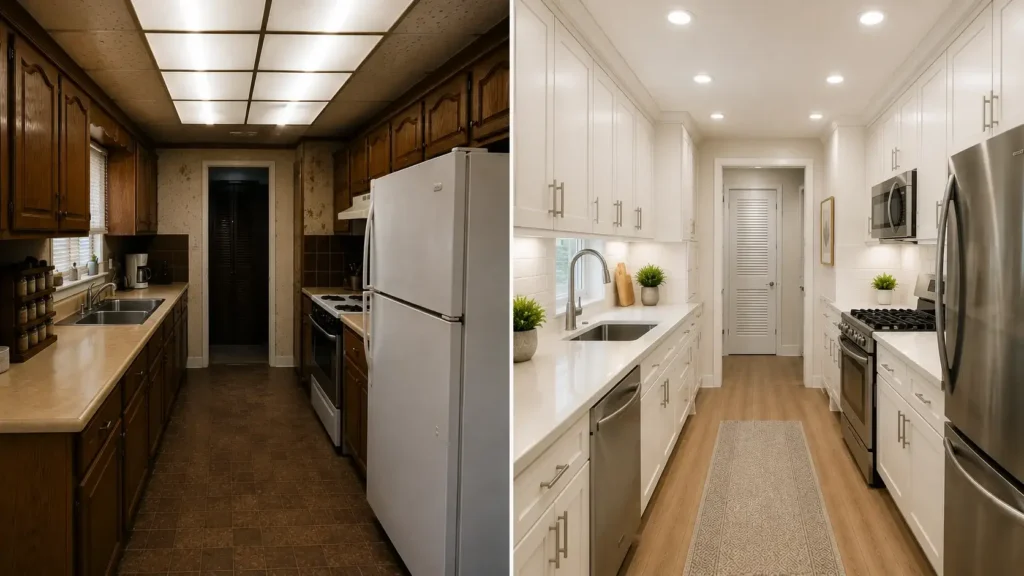
- The Before: This typical kitchen felt like a dark tunnel due to heavy dark oak cabinets, drop ceilings with old fluorescent light panels, and a bulky refrigerator blocking the walkway.
- The After: The owners removed the drop ceiling to gain 10 inches of height and installed 42-inch tall warm white shaker cabinets. They added counter-depth stainless steel appliances, a glossy white subway tile backsplash, and LED recessed ceiling lights.
- The Result: The space felt twice as large and gained 35% more storage space.
Project 2: The Cramped Suburban L-Shaped Layout
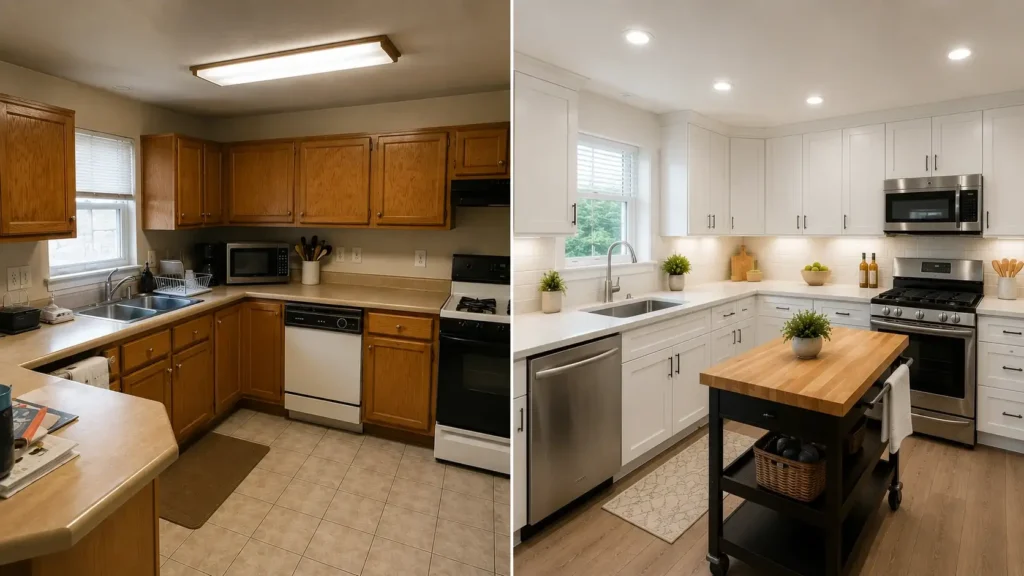
- The Before: This kitchen suffered from a lack of usable workspace because a traditional drop-in sink and a clunky freestanding microwave took up almost all the countertops.
- The After: The owners installed an under-mount stainless steel sink to create a smooth countertop line and moved the microwave off the counter using an over-the-range hood unit. They added a rolling kitchen cart with a butcher-block top for mobile meal preparation.
- The Result: The usable countertop space doubled, creating a comfortable, efficient area for cooking.
Common Small Kitchen Renovation Mistakes
Avoiding common planning errors is just as important as choosing the right design elements. Watch out for these three frequent mistakes during your kitchen renovation:
⚠️ E-E-A-T Trade Secret from a Lead Kitchen Designer:
One of the most common design mistakes in small kitchens is ignoring the “clearance arc” of appliance doors. Homeowners often place a refrigerator right next to a side wall without realizing that the door needs extra clearance to swing open past 90 degrees. If the door can’t open fully, you won’t be able to pull out the internal crisper drawers or wire shelves for cleaning. Always check the manufacturer’s spec sheets and plan for filler strips next to walls to ensure all your doors can open fully and safely.
- Skimping on the Lighting Budget: Installing only a single, central ceiling light fixture leaves your main workspaces in shadow. Always plan out a layered lighting system with under-cabinet LED strips.
- Choosing Oversized Furniture: Placing a large, fixed kitchen island into a tight kitchen blocks your traffic paths. Use slim rolling carts or drop-leaf tables that fold flat against the wall instead.
- Forgetting About Air Ventilation: Cheap, ductless recirculating charcoal filters allow cooking grease and heat to fill small homes. Invest in a range hood that vents air directly outside.
How Long Does a Small Kitchen Renovation Take?
A standard small kitchen renovation usually takes 3 to 8 weeks of active construction. The exact timeline depends on your scope, permits, materials, trade schedules, and whether the project is cosmetic or structural.
1
Demolition and Site Prep
Remove old cabinets, appliances, countertops, and flooring. Clear debris and prepare the room for rough construction.
2
Rough-In Mechanicals
Licensed trades update electrical lines, move plumbing where needed, and adjust ventilation ductwork inside open walls.
3
Drywall and Insulation
Install insulation, hang drywall, apply joint compound, and sand the walls smooth for paint and cabinet installation.
4
Cabinet Installation
Install new base and wall cabinets, then check that every cabinet is level, plumb, secure, and ready for countertop measuring.
5
Countertop Fabrication
The fabricator templates the installed cabinets, cuts the custom slab, and installs the new countertop once it is ready.
6
Plumbing and Appliance Hookups
Install the sink, connect faucet lines, hook up the dishwasher, and slide appliances into their final positions.
7
Backsplash Tile Work
Install backsplash tile, fill joints with grout, clean the surface, and seal edges with neat silicone where needed.
8
Final Finishes and Clean-Up
Apply final paint touch-ups, attach hardware, test switches and outlets, inspect details, and complete the final cleanup.
Small Kitchen Renovation Trends for 2026
Modern kitchen design focuses on balancing clean style with smart tech. These popular design trends are perfect for maximizing utility in compact spaces:
- Smart Workstation Sinks: Sinks now feature built-in tracks that hold integrated accessories like custom cutting boards, colanders, and roll-up drying racks right over the basin.
- Hidden Appliance Garages with Pocket Doors: Specialized appliance garages use pocket doors that slide back out of view to keep items plugged in but hidden.
- Integrated Smart Cooktops: Slim induction cooktops feature built-in Wi-Fi connectivity, and their flat glass surfaces double as extra counter space when cool.
- Statement Backsplashes in Neutral Rooms: Running a beautifully textured zellige tile or a boldly veined quartz slab all the way up to the ceiling adds luxury style without cluttering.
FAQs For Small Kitchen Renovation
What is the cheapest way to renovate a small kitchen?
Keep your existing cabinet layout, paint the boxes, install new hardware, and use affordable laminate countertops.
How much does a small kitchen renovation cost?
It ranges between $12,000 and $25,000+, depending on whether updates are cosmetic or require full structural alterations.
Can I renovate a small kitchen for $5,000?
Yes, if you handle DIY labor for cabinet painting, new hardware, and simple laminate counter installation.
How long does a kitchen renovation take?
A standard timeline takes 3 to 8 weeks, while simple cosmetic face-lifts can be finished in under 2 weeks.
What adds the most value during a renovation?
Upgrading to durable quartz countertops, solid shaker cabinetry, and modern energy-efficient appliances yields the highest return.
What layout works best in a small kitchen?
Parallel galley layouts work best for narrow rooms, while L-shaped layouts are ideal for open-concept homes.
What cabinet color makes a small kitchen look bigger?
Light, uniform paint tones like warm white, soft cream, and light sand reflect light beautifully to expand spaces.
Should cabinets go to the ceiling?
Yes. Extending cabinets to the ceiling adds storage for seasonal items and visually draws the eye upward to make the ceiling feel higher.
Is a small kitchen renovation worth it?
Yes. It significantly improves daily cooking efficiency, dramatically expands storage capacity, and boosts your home’s long-term resale value.
Is it cheaper to renovate or replace a kitchen?
Renovating is much cheaper than replacing a kitchen. Keeping your existing layout and painting your old cabinets costs a fraction of the price of a full replacement. You only want to replace items if the old structures are rotting or broken beyond repair.
What is the most expensive part of a kitchen renovation?
The cabinets are the most expensive part of any kitchen renovation. New cabinetry and structural millwork usually take up about 30% of your total project budget. Labor and installation fees are the second largest expense.
Do white cabinets make a kitchen look bigger?
Yes, white cabinets absolutely make a small kitchen feel larger. Light colors reflect natural light around the room instead of absorbing it. This simple visual trick opens up tight spaces and makes the ceilings feel higher.
Can I renovate a kitchen without replacing cabinets?
Yes, you can easily renovate your kitchen without replacing the cabinet boxes. If the structures are sturdy, you can save thousands by just applying a fresh coat of primer and paint. Swapping out old hardware handles and adding a new backsplash will make the whole room look brand new.
Final Thoughts
Renovating a small kitchen requires balancing careful planning, smart layout design, and creative storage solutions. By prioritizing how you use the space every day, setting a realistic budget with a built-in safety cushion, and selecting durable, light-colored materials, you can change a cramped cooking space into a beautiful room.
Whether you handle the project yourself to save on costs or work with a team of licensed trade professionals, maximizing every square inch of your kitchen creates a comfortable space that adds real value to your home for years to come. Use these proven guidelines to start planning your kitchen makeover with confidence.