
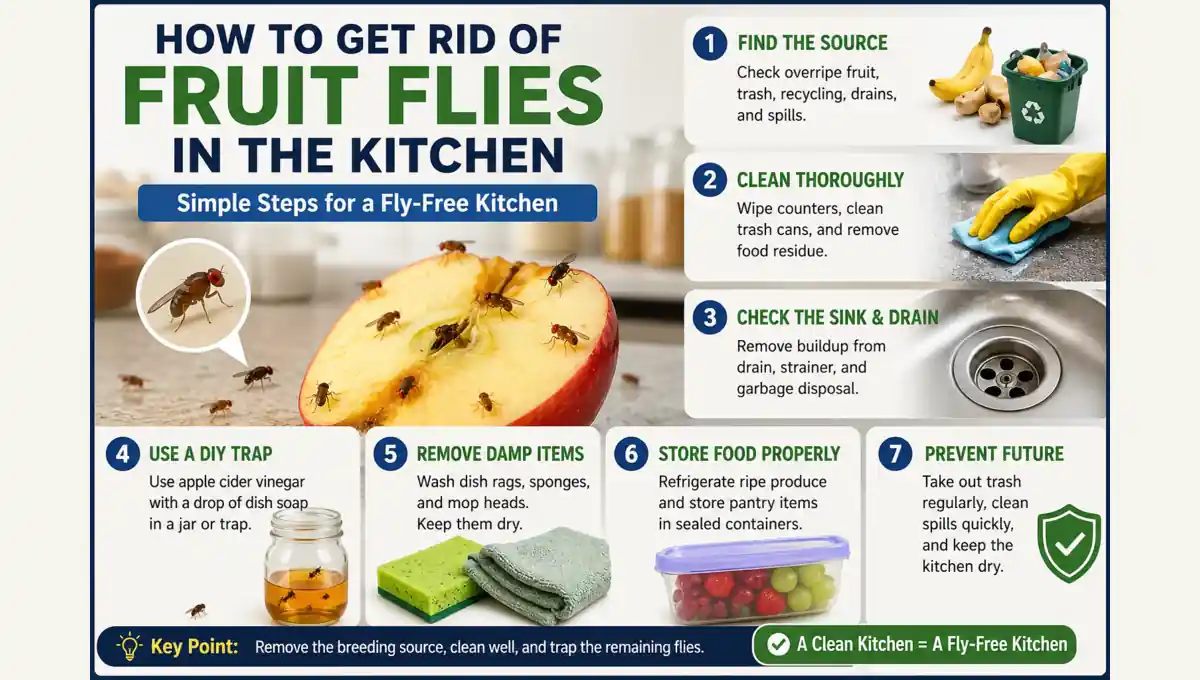
Fruit flies can keep appearing even after you wipe the counters and throw away obvious bad fruit. Learning how to get rid of fruit flies in the kitchen starts with stopping the breeding cycle, not just killing the adults you can see. That means finding fermenting food or damp organic residue, removing it, then trapping the flies that remain. You also need to confirm that the tiny insects near your sink are actually fruit flies, not drain flies or fungus gnats. By the end, you will know where to look, what to clean, how to trap adults, and when a persistent problem needs professional help.
Quick Answer
If you need to know how to get rid of fruit flies in the kitchen, remove the breeding source first, then trap the remaining adults. Check ripe produce, trash, recycling, drains, garbage disposals, spills, damp rags, and hidden food residue before assuming a vinegar trap will solve the problem.
- Remove spoiled or fermenting food.
- Refrigerate vulnerable ripe produce.
- Clean trash, recycling, and damp food residue.
- Check and clean a suspected sink drain.
- Use a baited trap for remaining adults.
- Search again if fly numbers do not fall.
Are These Tiny Flies Actually Fruit Flies?
Tiny flies in the kitchen are not all the same pest, so identification comes before treatment. Fruit flies usually gather near fermenting produce, drinks, trash, or recycling; drain flies tend to stay near wet drains, while fungus gnats are usually linked to damp houseplant soil.
| What you notice | Likely pest | Where to check |
|---|---|---|
| Small tan or brown flies near fruit or drinks | Fruit flies | Produce, trash, recycling, spills |
| Fuzzy, moth-like flies close to drains | Drain flies | Drain film, traps, standing water |
| Small dark flies around houseplants | Fungus gnats | Moist potting soil |
Fruit flies are attracted to fermentation, not simply to the presence of fresh fruit. That is why a clean fruit bowl does not rule them out.
If you searched for how to get rid of tiny fruit flies in the kitchen, start by watching where the insects gather. Activity around produce points toward fruit flies; activity tightly centered on a drain or houseplant should make you verify the pest before treating it.
Step 1: Find and Remove the Breeding Source
Knowing how to get rid of fruit flies in the kitchen means finding the breeding source that keeps producing new adults. Fermenting food, sticky spills, kitchen trash, recycling residue, and damp organic matter can support fruit fly larvae even when counters look clean.
If you are asking, “Why do I have fruit flies in my kitchen?” start with ripe, overripe, or damaged produce. Check bananas, tomatoes, peaches, onions, potatoes, produce bags, pantry corners, and refrigerator drawers. Throw away food that is clearly rotting and refrigerate ripe produce when practical.
Then inspect places that normal cleaning often misses:
- The rim and bottom of the trash can
- Bottles and cans in the recycling bin
- Compost containers
- Damp dish rags or mop heads
- Juice, wine, or soda residue
- Drip trays and beverage equipment
- Spills beneath or behind appliances
University Extension guidance repeatedly points to fermenting produce, beverage residue, garbage, recycling, drains, garbage disposals, and food-soiled cleaning tools as possible breeding sites. The practical takeaway is simple: a kitchen can look clean while hidden breeding material remains.
A deep kitchen clean helps most when it targets those hidden sources instead of already-clean countertops. Better pantry organization also makes forgotten onions, potatoes, and damaged produce easier to spot.
If you are wondering where fruit flies are coming from in your kitchen, watch where they repeatedly land. Those activity spots often narrow the search faster than cleaning every surface again.
Step 2: Check the Kitchen Sink and Drain
If you want to know how to get rid of fruit flies in the kitchen sink, first confirm that the sink area is actually producing them. A kitchen sink drain can hold moist organic buildup, but drain flies can create a very similar complaint.
Remove visible food debris from the strainer, disposal splash guard, sink edges, and nearby wet surfaces. A thorough kitchen sink cleaning should remove residue rather than simply cover odor.
For a suspected drain, cover the opening overnight with a clear plastic bag or similar transparent cover secured around the opening. If small flies emerge into the covered space, the drain or disposal deserves closer cleaning. This source check is more useful than pouring cleaner into every drain by default.
Clean accessible drain surfaces and remove organic film physically where safe. A proper sink drain cleaning focuses on buildup that can hold food residue and moisture.
Do not mix bleach with vinegar, ammonia, drain cleaners, or other household cleaners. Follow product labels and basic kitchen safety rules instead of combining chemicals in hopes of making a stronger treatment.
Step 3: Trap the Adults That Are Left
When learning how to get rid of fruit flies in the kitchen, treat a home trap as adult control, not the cure for a breeding site. A fruit fly trap can reduce visible adults, but it cannot remove eggs or larvae developing in hidden food residue.
For a simple trap, put a small amount of apple cider vinegar in a jar. Add a drop or two of dish soap, or use a paper funnel with a small opening so flies can enter but have trouble leaving.
Does apple cider vinegar kill fruit flies? In a trap, the fermented smell works mainly as bait, while the trap design or soapy liquid captures adults. It does not sanitize the kitchen or end an active breeding site.
Place the trap near the strongest activity, away from uncovered food. Check it daily.
A full trap is useful information. If catches remain high for several days, do not keep adding traps and assume the job is done. Search again for the source producing new adults.
I Cleaned Everything. Why Are Fruit Flies Still Here?
If fruit flies keep coming back after cleaning, one of three things is usually happening: a breeding source remains, developing flies are still emerging, or the insects were identified incorrectly. This is the point where repeated surface cleaning stops being useful and targeted troubleshooting matters.
Check beneath appliances, under trash liners, inside recycling containers, around coffee or beverage equipment, in produce bags, on damp cleaning tools, and anywhere a sticky spill could have dried unnoticed.
Comparing university Extension guidance shows why a cleaned kitchen may not become fly-free immediately. Under favorable conditions, published development times run from roughly a week to about 10 days, so some adults can still emerge after the source is removed. The useful sign is a steady drop in numbers, not instant disappearance.
If the trap keeps filling but the room does not improve, treat that as evidence that something was missed. Check the sink again, inspect hidden food residue, and reconsider whether the insects are drain flies or fungus gnats.
How long does it take to get rid of fruit flies? There is no honest fixed deadline because temperature, infestation size, and successful source removal all matter. A clear decline over the following days is more useful than expecting every fly to disappear overnight.
For a small infestation, source removal and a homemade trap cost little if you already have basic cleaning supplies and a jar. Professional pest-control pricing varies by location and service scope, so compare local quotes only if large numbers persist, the source is inaccessible, or you cannot identify the pest.
How to Keep Fruit Flies From Coming Back
Fruit-fly prevention works by removing fermenting food and damp organic matter before another breeding site develops. Kitchen sanitation matters most around produce, drinks, kitchen trash, the recycling bin, drains, and cleaning tools.
Inspect produce when you bring it home. Use damaged or very ripe items first, and refrigerate suitable produce during an active infestation.
Rinse bottles and cans before leaving them in indoor recycling. Empty trash and compost regularly, especially when food scraps are wet.
Wipe sticky spills as soon as you notice them, including liquid that runs beneath containers or appliances. Wash food-soiled cloths and let them dry rather than leaving them damp.
Keep the garbage disposal and kitchen sink drain free of food buildup. Prevention does not require leaving vinegar traps on the counter forever; once the breeding source is gone, removing food and moisture is more useful than continuously trapping random adults.
What to Do Next
The reliable answer to how to get rid of fruit flies in the kitchen is source removal first and adult trapping second. Check produce, trash, recycling, damp cloths, hidden spills, the sink, and the garbage disposal today.
If numbers do not steadily fall, repeat the source search and verify the pest. Persistent activity after those checks is the point to consider professional identification rather than buying more traps.