You walk into your kitchen to grab a coffee, and suddenly a cloud of tiny bugs flies up from the sink or the fruit bowl. Figuring out how to get rid of gnats in the kitchen starts with one vital rule. You have to know exactly which bug you are fighting. Homeowners often waste days setting out vinegar traps for insects that actually breed inside plumbing pipes. By identifying whether your pests are swarming the produce, the garbage disposal, or the windowsill herbs, you can deploy the exact natural solution needed to eliminate them by tomorrow morning.
Quick Answer
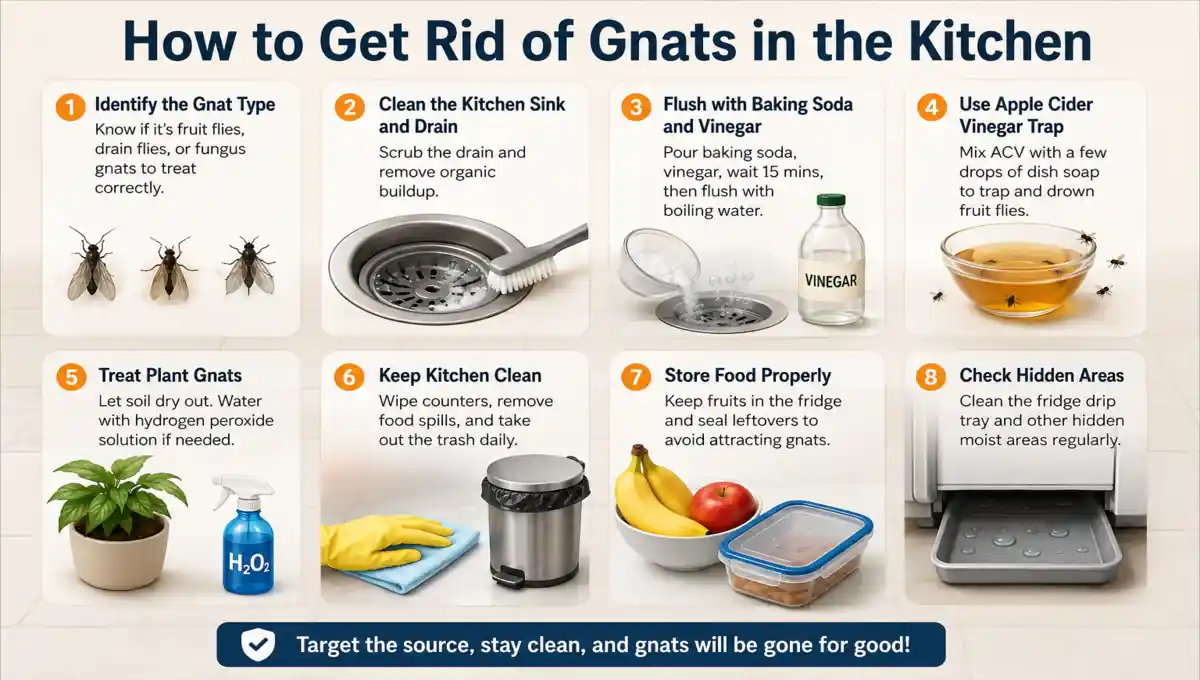
The fastest way to get rid of gnats in the kitchen is to identify their breeding ground and apply a targeted treatment. Pour 1/2 cup of baking soda and 1 cup of white vinegar down the drain, wait 15 minutes, and flush with two quarts of boiling water for sink pests. Mix two tablespoons of apple cider vinegar with five drops of liquid dish soap in a small bowl to trap and drown produce pests. Let the top two inches of soil in your kitchen potted plants dry out completely to kill plant pest larvae.
Identify Your Kitchen Gnats
If you want to know how to get rid of gnats fast in the kitchen, you must first identify the target. Gnat is just a catch-all term homeowners use for any small flying insect. In reality, you are dealing with one of three distinct pests. Treating a plumbing issue with a fruit trap will fail every time.
Use this breakdown to identify the exact little black flies in your space:
| Pest Type | Appearance | Location | Food and Breeding Source |
|---|---|---|---|
| Fruit Flies | Brown or tan with distinctive red eyes | Hovering over countertops, trash cans, or pantry | Overripe produce, fermenting sugars, and sticky spills |
| Drain Flies | Fuzzy, moth-like, and dark gray or black | Resting on walls near the sink or over the basin | Organic sludge and biofilm stuck inside the plumbing |
| Fungus Gnats | Tiny, mosquito-like with long legs | Around the windowsill or above potted indoor plants | Damp soil and fungal growth in overwatered plant roots |
Many homeowners confuse common kitchen gnats with fruit flies, but identifying the exact pest is crucial for applying the right elimination technique. Once you know what you are looking at, you can target the source. People asking how to get rid of black gnats in the kitchen are almost always dealing with drain flies. If you are trying to figure out how to get rid of little gnats in the kitchen, watch where they land to determine the exact treatment needed.
How to Get Rid of Gnats in the Kitchen Sink and Drain
If the bugs are hovering around your faucet or resting on the tile backsplash, you are dealing with drain flies. Learning how to get rid of gnats in the kitchen sink means destroying their breeding ground. That ground is the organic sludge that coats the inside of your plumbing.
Most retailer listings quote heavy chemical enzymatic cleaners for this problem. You can learn how to get rid of gnats in the kitchen naturally using simple household items instead.
First, look at the garbage disposal unit. Drain flies frequently lay eggs on the underside of the black rubber splash guard sitting in the drain opening. This baffle creates a dark, moist pocket that traps food particles. Pull this rubber piece out or fold it upward. Scrub the slimy underside with an old toothbrush and liquid dish soap. To destroy the organic buildup where these pests lay their eggs, you must thoroughly clean the kitchen sink drain using a physical scrub before applying any flush.
The Baking Soda and Boiling Water Flush
Do not pour pure bleach down your drain. While checking homeowner forums, I regularly see bleach recommended as a quick fix for drain flies. Bleach passes right over the organic biofilm without penetrating it, meaning the larvae embedded inside survive entirely unharmed. Repeated bleach use can degrade rubber pipe seals and react dangerously with other household cleaners.
Use this safe carbon dioxide reaction to break up the sludge in the P-trap instead.
- Boil two quarts of water in a kettle.
- Pour half of the boiling water flush directly down the drain to loosen the grime.
- Pour 1/2 cup of baking soda into the drain.
- Follow it immediately with 1 cup of white vinegar.
- Cover the drain with a plug while the mixture fizzes and foams heavily.
- Let it sit for 15 minutes to break down the biofilm.
- Flush the drain with the remaining boiling water.
Repeat this process two days in a row to ensure all newly hatched larvae are washed away. Taking time to clean kitchen sink basins thoroughly every evening will prevent future organic buildup from taking hold.
The Apple Cider Vinegar Trap for Fruit Gnats
If the bugs are hovering around your bananas or the trash can, you are dealing with fruit flies. Learning how to get rid of fruit gnats in the kitchen requires baiting them with what they want. They want fermenting sugar.
Across published figures from home improvement sources as of August 2026, the standard and most effective trap ratio requires 2 to 3 tablespoons of apple cider vinegar mixed with 3 to 5 drops of liquid dish soap. You can add 1/2 cup of warm water to increase the aroma, but the vinegar and soap are the core mechanics.
Mix these ingredients in a small bowl or a glass jar. Place it right next to the fruit bowl or trash can.
The liquid dish soap is the mandatory ingredient. Without the soap, a gnat can land on the surface of the vinegar, drink, and fly away. The soap breaks the liquid surface tension. When the bug lands, it immediately sinks and drowns.
Do not use white vinegar for this trap. White vinegar is too acidic and lacks the sweet, fermenting fruit smell needed to draw the pests in.
How to Treat Plant Gnats in Kitchen Herbs
If you keep basil or succulents by the kitchen window and notice tiny bugs flying up when you water them, you have fungus gnats. These pests lay their eggs in damp soil, and the larvae feed on the roots of your plants.
Getting rid of them requires a change in environment. Stop watering your plants until the top two inches of the soil are completely dry. Fungus gnat larvae cannot survive in dry soil.
For severe infestations, you can water the plants with a mixture of one part 3 percent hydrogen peroxide to four parts water. This solution bubbles up and kills the larvae on contact without harming the plant roots. You can also sprinkle food-grade diatomaceous earth over the top of the dry soil. This creates a physical barrier that shreds adult gnats when they try to land and lay new eggs.
How to Stop Gnats from Coming Back
Eliminating the current swarm is only half the job. To stop gnats from returning, you must remove their food and breeding sources permanently.
Keep apples, tomatoes, and bananas in the fridge during the hot summer months. Take out the kitchen trash daily, and scrub the bottom of the can to remove sticky spills.
Moisture and food residue can attract pests to anything left sitting out. If you leave cooking spoons on the counter, ensure you clean wooden kitchen utensils properly so they do not harbor sugars or starches overnight.
Wipe counters every night to ensure no sticky fruit juice is left behind. When you perform a deep clean kitchen routine, pay special attention to the grout lines and the gap between the stove and the counters where crumbs fall.
Finally, check the condensation pan underneath your refrigerator. This shallow plastic tray catches defrost water and often accumulates dust and organic matter over time. It creates the perfect hidden breeding ground for drain flies if left unchecked. Pull the tray out once a year, wash it with hot soapy water, and slide it back in.
Frequently Asked Questions
Why do I suddenly have gnats in my kitchen?
A sudden swarm usually means a pest successfully found a breeding ground and laid eggs. A single female fruit fly can lay up to 500 eggs on a rotting potato in the pantry. Those eggs hatch into flying adults in under a week, turning one bug into an infestation seemingly overnight.
Does pouring bleach down the drain kill gnats?
No. Bleach glides over the top of the thick, protective organic sludge where drain flies lay their eggs. It will not eliminate the infestation, and repeated use can corrode your plumbing fixtures and degrade the rubber seals inside the P-trap.
Will regular white vinegar get rid of gnats?
White vinegar works great for cleaning the sink drain, but it fails as a trap bait. Fruit flies are attracted to the smell of fermenting fruit. You need the sweet, fruity aroma of apple cider vinegar, old wine, or beer to successfully lure them into a trap.
Conclusion
Successfully figuring out how to get rid of gnats in the kitchen comes down to pairing the right bug with the right treatment. Flush your drains with baking soda and boiling water to eliminate drain flies, and set out a soapy apple cider vinegar trap to catch fruit flies. By targeting the source directly, you can clear the swarm from your home in under 24 hours.