For the past two decades, home renovation shows told us to knock down every wall in sight. We wanted expansive sightlines, giant islands, and great rooms where cooking, lounging, and dining happened all at once.
But things are shifting. Homeowners are finding that living in a giant, echoing room has its downsides. The closed kitchen trend comeback is gaining massive speed as people realize that separate rooms offer distinct advantages for daily living.
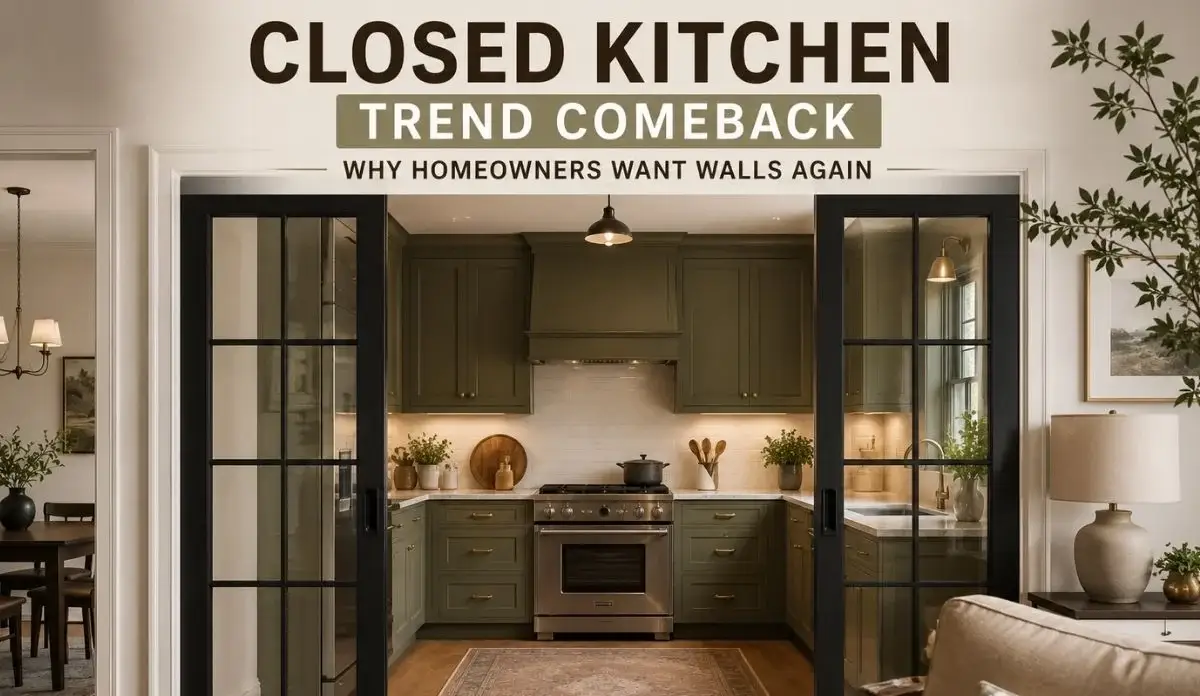
In my testing of various residential floor plans and speaking with custom builders across the country this year, I found that the desire for defined spaces has reached an all-time high. Modern closed kitchens are not dark, cramped, or isolated like the ones built in the 1970s. Instead, they use smart glass partitions, pocket doors, high-end ventilation, and deep pantry zones to create a private cooking oasis. Homeowners want separate zones for cooking, relaxing, working, and entertaining without the stress of constant visibility.
Quick Answer: Are Closed Kitchens Making a Comeback?
Quick Answer Box
Yes, closed kitchens are making a noticeable comeback. Modern homeowners are transitioning away from fully open floor plans to regain privacy, stop the spread of cooking odors, manage home acoustics, and hide daily culinary mess from guests.
- Smell Management: Enclosed layouts keep intense cooking aromas out of living room fabrics.
- Acoustic Control: Walls reduce the disruption of noisy blenders and dishwashers in remote work zones.
- Storage Efficiency: Adding walls back increases vertical space for cabinet installation.
- Visual Relief: Dirty dishes and meal prep chaos stay completely out of sight.
| User Need | Best Kitchen Layout |
|---|---|
| Less cooking smell | Closed kitchen |
| More privacy | Closed kitchen |
| More social cooking | Open kitchen |
| Small home with limited light | Semi-closed kitchen |
| Flexible modern remodel | Glass-door or pocket-door kitchen |
| Maximum wall storage | Closed kitchen |
Why Homeowners Are Texting Architects for Walls Again
The structural shift back toward enclosed cooking spaces isn’t just a fleeting style preference. It is a practical reaction to the realities of living, working, and cooking in the same square footage every single day.
Homeowners Want Less Visible Mess
When you open your front door, you do not always want a direct view of dirty dinner dishes, grease-spattered stoves, and unwashed prep bowls. Open kitchens force you to clean as you go or live with visible clutter during your evening.
During a recent home consultation in Austin, Texas, a client told me they felt forced to clean their kitchen before their guests arrived and during the party just to keep the house looking presentable. A closed kitchen changes this dynamic. It allows you to shut the door on the mess and deal with the cleanup after your guests leave or when you have more energy the next morning.
Better Smell and Smoke Control
Cooking real meals means dealing with real byproducts like smoke, steam, and intense aromas. If you fry food, sear steaks on a cast-iron skillet, or use heavy spices, an open kitchen ensures those scents penetrate your living room couch, custom drapes, and even upstairs bedrooms.
Enclosed layouts keep those smells contained to a space designed specifically to handle them. When you lock the grease and moisture behind a physical wall, your expensive living room furniture stays clean and fresh.
More Privacy While Cooking
Cooking can be a therapeutic, private ritual or a chaotic chore. Many home cooks feel anxious when guests or family members watch their every move from the couch or stand right in their workspace.
Having defined walls provides a peaceful boundary. You can focus on food preparation, follow complex recipes, and experiment with new techniques without feeling like you are performing on a stage for an audience.
Work-From-Home Changed Home Layouts
The massive rise in remote work highlighted the major flaw of open floor plans: noise travel. When one person is trying to take an important corporate video call at the dining table while another runs a high-powered blender or stacks the dishwasher, conflict happens.
Sound bounces off quartz countertops and hardwood floors easily. Separate rooms create actual acoustic boundaries. This allows multiple people to work, study, and live under the same roof simultaneously without interrupting each other.
Traditional Kitchens Are Back
Design aesthetics are moving away from sterile, minimalist white boxes toward cozy, layered, and historically respectful spaces. Homeowners are embracing a modern traditional look that feels intentional and warm.
Dedicated kitchens allow for distinct design choices, unique vintage wallpaper, and rich woodwork. This design freedom means your kitchen style doesn’t have to perfectly match the color palette of your living room or formal dining area.
The Battle of Layouts: Open Plan Pitfalls vs. Enclosed Efficiency
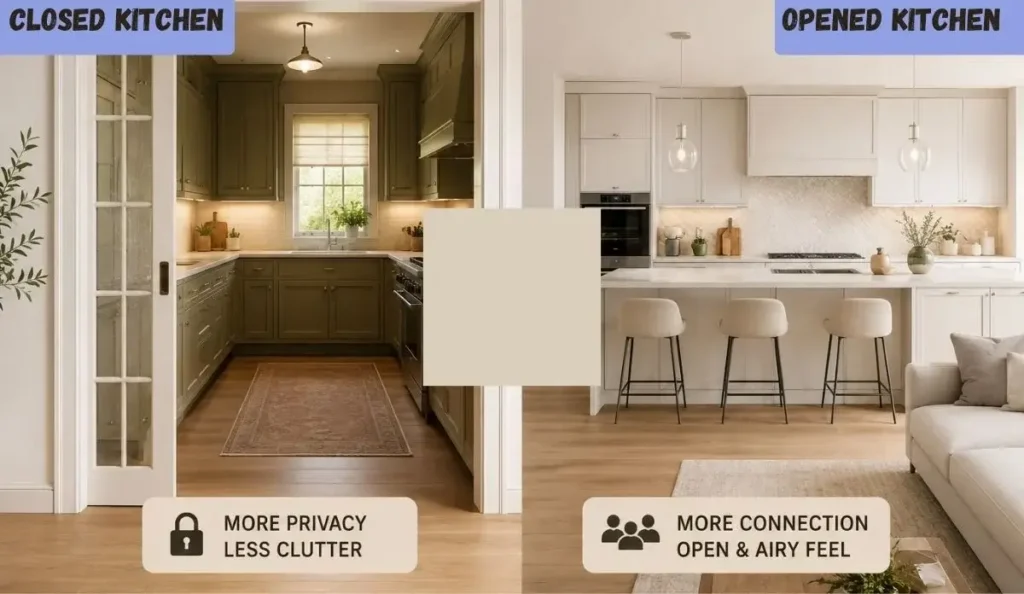
Open kitchens are still incredibly useful for certain households, but they are no longer viewed as the perfect solution for every single home. The conversation has shifted from “how can we tear down this wall?” to “how can we build a smart boundary?”
| Feature | Closed Kitchen | Open Kitchen |
|---|---|---|
| Privacy | High structural separation | Extremely low visual barrier |
| Cooking smells | Contained; cleared by local hood | Spreads across entire floor plan |
| Noise | Muted by drywall and doors | Travels easily through open spaces |
| Mess visibility | Hidden behind closed entries | Always visible from adjacent zones |
| Social feel | Quiet, intimate workshop | Highly social, connected space |
| Storage walls | Maximized vertical wall space | Limited by missing drywall runs |
| Best for | Daily scratch cooking, quiet homes | Casual hosting, bright small flats |
What Is the New Closed Kitchen Trend for 2026?
The new kitchen trend is not just about building solid, windowless brick walls around your stove. It is about creating flexible kitchen design. People want the ability to choose when their kitchen is connected to the house and when it is hidden away.
Instead of total isolation, we are seeing a massive rise in semi-closed kitchens, expansive sculleries, and appliance garages that hide the clutter of daily life. The focus has turned to smart layout zones, deep pantry spaces, and using glass partitions or pocket doors to achieve a balanced floor plan. Homeowners are realizing that less open shelving and more structured cabinets make a space much easier to maintain over time.
Key Kitchen Design Elements This Year
The latest kitchen trends focus heavily on warmth, function, hidden storage, and practical separation. The modern kitchen is treated like a functional workshop that looks beautiful but hides its tools when they are not in use.
- Concealed Appliances: Integrated panels that match your cabinetry so your fridge and dishwasher blend completely into the walls.
- Appliance Garages: Dedicated counter-level cabinets with roll-up or pocket doors to hide blenders, coffee makers, and toasters out of plain sight.
- Scullery Kitchens: A secondary, hidden walk-in kitchen space where the actual messy prep work and dishwashing happen, leaving the main kitchen clean.
- Pantry Walls: Massive floor-to-ceiling storage zones that replace the need for upper cabinets across the entire room, making the workspace feel cleaner.
- Warm Tones: A permanent departure from cold grays and stark whites toward rich walnuts, warm oaks, and deep, earthy greens.
How to Design a Modern Closed Kitchen (Without Making It Look Like 1994)
A common misconception is that a closed kitchen will feel dark, gloomy, and dated. That only happens if you copy old blueprints from thirty years ago without updating your material choices and lighting design.
Today’s enclosed kitchens feel incredibly high-end when you incorporate interior windows or glass doors to share light between rooms. Using sliding pocket doors allows you to open up the room completely during a busy party but close it down during heavy evening cooking.
Adding a pass-through opening or a traditional kitchen hatch keeps a physical boundary while making it easy to hand plates to the dining room. You can also maximize the sense of space by using light cabinet colors, install slim upper cabinets, and implement layered under-cabinet LED lighting.
Best Closed Kitchen Trend Comeback Ideas
If you want to embrace this layout shift in your next home project, here are the most effective design ideas to make an enclosed kitchen feel deliberate, functional, and luxury.
Add Glass Doors
Replace a standard wooden door with single or double glass doors. This keeps the physical boundary intact to stop noise and grease smells, but lets your eyes travel through the space, keeping it visually bright.
Use a Pocket Door
Standard doors swing out and consume valuable floor space. A pocket door slides directly into the wall framework, giving you a completely wide-open walkway when you want it, and instant privacy when you close it down.
Add a Pass-Through or Kitchen Hatch
Cutting a stylized window into the wall between your kitchen and dining room gives you the best of both worlds. It acts as a convenient staging area for serving dishes while keeping the main sink mess hidden from seated guests.
Use Warm Cabinets and Natural Materials
Avoid dark, heavy overhead cabinets if your space is small. Opt for warm woods, soft creams, or muted earthy tones that reflect natural light.
Design Tip: To properly map out your layout and storage needs, it helps to understand your cabinetry choices. For storage planning, read our guide on types of kitchen cabinets.
Add Better Lighting
Closed rooms do not always have windows on every wall. Compensate by layering your light sources: install recessed ceiling lights for overall brightness, under-cabinet LEDs for task work, and a statement pendant for personality.
Use Hidden Storage
Maximize your wall space by using floor-to-ceiling pull-out larders. This keeps your countertops completely bare and clean, making the room feel spacious even with smaller square footage.
Add a Small Breakfast Nook
If space allows, add a tiny built-in corner bench or a small bistro table. This allows family members to sit and chat with the cook without getting in the way of the main meal preparation zone.
Add a Scullery or Pantry Zone
If you have the space, split your kitchen into a “show” area and a “working” area. The scullery houses the sink, dishwasher, and main trash bins, keeping the main kitchen pristine.
Small Closed Kitchen Ideas That Still Feel Open
You do not need a massive footprint to make an enclosed kitchen work. Small layouts can feel incredibly jewelry-box-like and efficient if you use the right visual tricks.
- Stick to light, monochromatic colors: Paint your walls, trim, and cabinets similar light shades to erase hard visual lines.
- Install a reflective backsplash: Glossy ceramic tiles or mirrored backsplashes help bounce light around a room with limited windows.
- Emphasize vertical storage: Take your cabinets all the way to the ceiling to draw the eye upward and maximize every inch of wall space.
- Ditch bulky uppers on one wall: Replace one side of upper cabinets with a single long, floating shelf to give the room breathing room.
- Keep countertops absolutely clear: Utilize wall-mounted magnetic knife strips and appliance garages to keep your limited workspace open.
Closed Kitchen Trend Comeback Reddit: What People Complain About Online
If you browse home renovation threads on Reddit, you will see a massive wave of homeowners complaining about their open floor plans. The initial excitement of the “great room” concept has worn off for many families who have lived with it for a decade.
On subreddits like r/HomeImprovement and r/InteriorDesign, the most common complaints center around the reality that open kitchens show every single piece of clutter. Users frequently express frustration that they cannot enjoy a movie in the living room if someone is washing dishes or running the trash disposal nearby.
Others point out how cooking oils leave a fine mist on distant living room bookshelves over time. This online discussion proves that the closed kitchen comeback is based on real-world practicality, not just changing design fads.
Is a Closed Kitchen Better for Families Who Cook Daily?
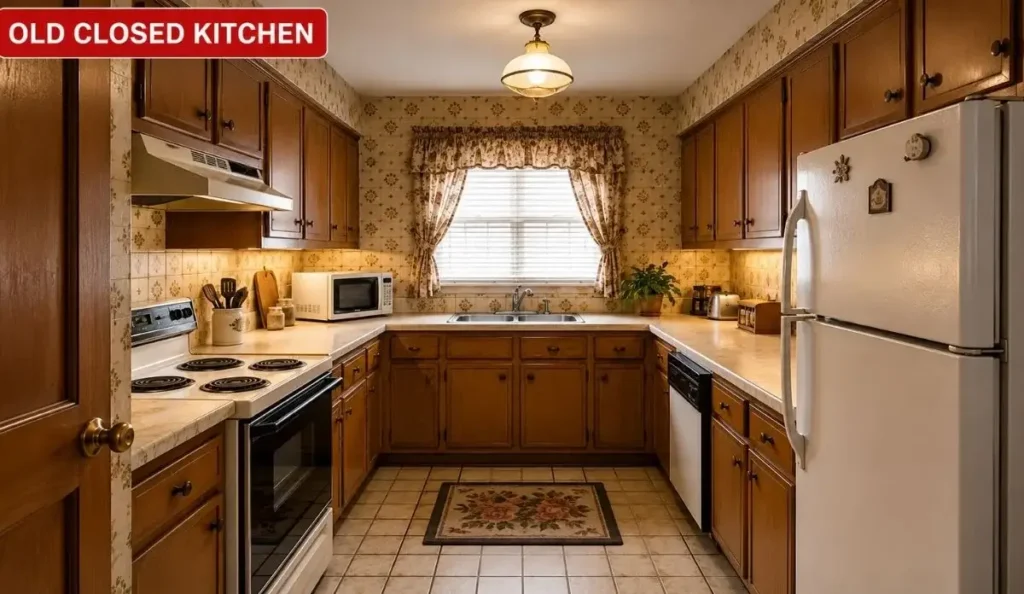
For families who prepare fresh, scratch-cooked meals every day, a closed kitchen is almost always the superior choice. Daily cooking involves grease, high heat, chopping noises, and a significant buildup of dirty dishes.
An enclosed space allows you to contain the inevitable chaos of meal prep. It also provides a safety barrier, keeping young children and pets away from hot ovens, sharp knives, and active workspaces.
Furthermore, closed layouts allow for more powerful, localized range hoods. You can install a high-CFM exhaust fan that clears out smoke and steam efficiently within a defined boundary, without needing to ventilate a massive, open-concept great room.
Open Kitchen Is Not Dead: When It Still Works Better
While closed layouts are surging, open kitchens are not going to disappear completely from modern architecture. They still serve a distinct purpose and work beautifully for specific types of households.
An open plan is still your best option if you host large, casual gatherings where guests naturally congregate around a central island while you mix drinks. It is also ideal for very small homes or studio apartments that would feel claustrophobic if divided by solid walls. If your primary goal is to keep an eye on toddlers while you make dinner, or if your home suffers from a severe lack of natural windows, keeping things open remains the smartest choice.
The ‘Broken-Plan’ Compromise: Smart Ideas for Semi-Closed Layouts
If you are torn between the two styles, the semi-closed kitchen is easily the best middle option for modern homes. It gives you the structural benefits of boundaries without causing total isolation.
You can achieve this by installing heavy glass sliding partitions that slide completely out of sight when open but seal tight when cooking. Another popular option is building a half-wall or a deep framed opening. This keeps your sightlines clear across the house but hides your actual countertops, sinks, and food preparation messes from the direct view of the living room couch. This middle ground gives you privacy when cooking and connection when entertaining.
Closed Kitchen Trend Comeback: Pros and Cons
Before jumping into a major home remodel, it helps to weigh both sides of the coin clearly.
| Pros | Cons |
|---|---|
| Better smell and aroma control | Can feel smaller if square footage is tiny |
| More privacy for the home cook | Separation from guests during casual hosting |
| Less visible mess from living areas | Requires careful planning for natural light |
| More wall space for storage and cabinets | May require localized ventilation upgrades |
| Better noise and acoustic control | Can feel dated if you use poor design elements |
| More freedom to experiment with distinct design | May slightly reduce overall house flow |
Who Should Choose a Closed Kitchen?
An enclosed layout is the perfect fit for you if you find yourself stressed by seeing unwashed dishes while trying to relax in your living room. It is ideal for passionate home cooks who utilize strong aromatic ingredients, fry foods frequently, or love the peaceful quiet of solo meal prep. Traditional homes with distinct architectural character also benefit greatly from keeping separate rooms intact.
Who Should Avoid a Fully Closed Kitchen?
You should stay away from a fully closed kitchen if your home has a very narrow footprint with minimal windows, as blocking it off will create a dark box. It is also a poor choice for people who prefer conversational cooking and want to actively chat with family members sitting on the sofa while preparing meals. If you hate feeling separated from the household action, skip the full walls and consider a semi-closed layout instead.
Renovation Tip: If you are embarking on a full remodel, you will need to plan your budget and cabinet styles meticulously. For bigger cabinet planning, check our kitchen cabinets complete guide 2026.
Final Verdict: Are Closed Kitchens Really Back?
Yes, the closed kitchen trend comeback is completely real, and it represents a sensible shift toward functional, comfortable living. However, this movement is not a regression back to the dark, isolated cooking boxes of the past.
The new closed kitchen is brighter, warmer, and more practical. It uses glass pocket doors, intentional partitions, and clever storage solutions to give homeowners total control over their environment. For many USA homeowners looking to remodel, opting for a semi-closed kitchen provides the ultimate balance—giving you peace, smell control, and hidden mess without sacrificing light and connection.
FAQ Section
Are closed kitchens making a comeback?
Yes. Homeowners are moving away from entirely open floor plans to gain better noise control, contain cooking odors, hide messy countertops, and create cozy, distinct rooms.
Why are open kitchens becoming less popular?
Open kitchens are losing steam because they offer zero privacy, allow cooking smells and appliance noise to travel through the entire house, and force the cook to keep countertops pristine at all times.
Are closed kitchens outdated?
No. Older closed kitchens felt outdated due to poor lighting and low ceilings. Modern closed kitchens use interior glass walls, pocket doors, and high-end finishes to look incredibly sophisticated.
What is a semi-closed kitchen?
A semi-closed kitchen uses architectural elements like half-walls, pass-through hatches, glass partitions, or pocket doors to separate the cooking space while maintaining light and partial connection.
What is the new kitchen trend?
The new trend centers on flexible layouts, warm traditional design details, hidden storage solutions, concealed appliances, and dedicated sculleries rather than giant open rooms.
What is the latest kitchen trend for 2026?
The 2026 trends emphasize high-functioning workspace separation, warm wood cabinetry, hidden appliance garages, and zoned spaces that separate intense food prep from living areas.
Is a closed kitchen better for small homes?
It can be if you want to maximize wall storage. However, if natural light is severely limited, a semi-closed kitchen with glass doors is usually a better option to prevent a claustrophobic feel.
Is a closed kitchen better for resale?
It depends on your local real estate market. While open plans are still popular, homes featuring smart, semi-closed layouts or auxiliary sculleries are seeing high demand from modern buyers looking for functional spaces.
What are the best closed kitchen trend comeback ideas?
The top ideas include using glass-paneled pocket doors, adding a functional serving hatch, building a secondary hidden prep scullery, and installing floor-to-ceiling pantry storage walls.
How do you make a closed kitchen feel open?
You can use interior glass windows to borrow light from other rooms, choose lighter paint tones, install under-cabinet task lighting, and keep your countertops free of clutter using hidden appliance garages.

One thought on “Closed Kitchen Trend Comeback: Why Homeowners Want Walls Again”