A clogged drain stops your kitchen dead in its tracks. Dirty water pools, dishes pile up, and the smell of old food quickly takes over the room. Figuring out how to unclog a kitchen sink does not automatically mean calling a plumber or pouring harsh chemicals down the pipes. Most blockages happen close to the surface—usually a buildup of solidified grease, coffee grounds, or food scraps caught in the curve of the pipe. By using basic household items and a few simple hand tools, you can clear the blockage yourself.
Quick Answer
If your sink will not drain, start with the least invasive method and work your way up to physical removal:
- Bail out standing water into a bucket first so natural treatments reach the blockage directly.
- Flush metal pipes with boiling water, or use hot tap water for plastic pipes to melt grease.
- Pour a mixture of baking soda and white vinegar down the drain to break up organic gunk.
- Use a standard cup plunger to force the blockage loose, making sure to plug the opposite side on double sinks.
- If water still stays put, place a bucket underneath, unscrew the P-trap, and clear the trapped debris.
Step 1: Bail Out the Standing Water
If you are searching for how to unclog a kitchen sink with standing water, you must do some prep work before trying any remedies. Most online guides skip this step, but pouring boiling water or a natural drain cleaner into a sink already full of cold, dirty water simply dilutes the treatment. The mixture will never reach the actual blockage.
Grab a bucket, a large cup, and a pair of rubber gloves. Manually scoop the murky water out of the basin and dump it into a toilet or an outside drain. Get the water level as low as possible, ideally emptying the sink bowl completely. This ensures that whatever method you apply next goes directly into the pipe and makes direct contact with the grease or food causing the problem.
Method 1: The Hot Water Flush (Check Your Pipes First)
Often, learning how to unclog a drain is as simple as melting the grease that holds the food particles together. However, you must check the material of your pipes under the sink before starting.
If you have older metal pipes, bring a kettle of water to a rolling boil and pour it slowly directly into the drain. However, if you have white or black plastic (PVC or ABS) pipes, do not use boiling water. Most residential PVC drain pipes are only rated to handle water temperatures up to 140°F. Pouring 212°F boiling water directly into plastic pipes risks softening the plastic, weakening the solvent-welded joints, and compromising the seals. For plastic plumbing, simply run your tap water as hot as it gets and pour that down the drain.
While comparing under-sink materials during research, I noticed that ignoring this temperature limit is the number one cause of warped joints in DIY plumbing. Always verify your pipe material before introducing extreme heat, keeping essential kitchen safety tips in mind to avoid burns.
Method 2: The Baking Soda and Vinegar Reaction
If hot water fails, it is time for a chemical reaction. A diy drain cleaner is safer for your plumbing than caustic store-bought chemicals, which generate intense heat and can damage old pipes.
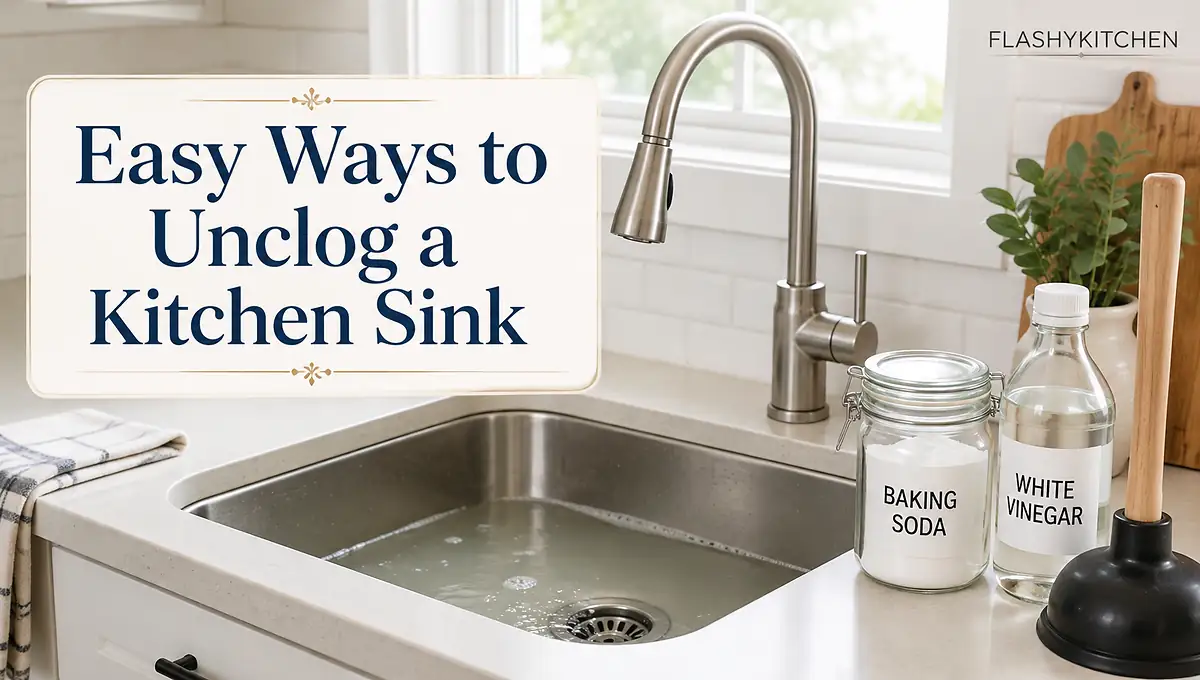
Pour one cup of dry baking soda directly into the drain opening. Follow it immediately with one cup of white vinegar. This drain opener baking soda vinegar combination creates an instant foaming action that breaks down fats and organic matter.
As soon as you pour the vinegar in, place a rubber stopper or rag over the drain. This forces the expanding carbon dioxide gas downward against the blockage rather than letting it fizz up into the sink. Let this baking soda and vinegar drain cleaner sit for at least 15 minutes. Once the time is up, flush the system heavily with hot water. Using this method monthly is also an excellent way to routinely clean kitchen sink drain lines and keep odors away before severe blockages form.
Method 3: Use a Cup Plunger (Correctly)
When a clogged sink drain refuses to clear with liquids, you need physical pressure. A standard cup plunger—the type with a flat bottom, not the flanged type used for toilets—is the best tool.
Fill the sink with just enough warm water to submerge the rubber bell of the plunger, creating an airtight seal. If you have a double basin sink, you must tightly plug the adjacent drain with a wet rag. If you do not seal the opposite side, the force of your plunging will simply push air up and out the second drain rather than pushing the blockage down the pipe. Keep the plunger vertical and pump vigorously up and down for 20 to 30 seconds.
Method 4: Clean Out the P-Trap
When the kitchen sink clogged despite plunging and natural remedies, the problem is almost certainly a solid mass lodged in the P-trap. The P-trap is the U-shaped pipe directly beneath the sink, designed to hold a small amount of water to block sewer gases from entering your home.
Place a bucket directly under the trap to catch the inevitable spill. Unfasten the slip-nuts on both ends of the curved pipe. Pull the pipe free, take it outside or to another sink, and push the gunk out using an old bottle brush or a wire coat hanger. Reattach the trap, tighten the nuts by hand, and run the water to check for leaks. If you want to better understand how these lower fittings connect, reviewing a standard kitchen sink plumbing diagram makes identifying each pipe joint much easier.
Method 5: Use a Drain Snake for Deep Clogs
If you removed the P-trap and found it completely empty, your problem is a clogged drain deep in pipe territory, usually in the wall or the main branch line. To reach it, you will need a drain snake for sink pipes, formally called a plumber’s auger.
Feed the metal cable directly into the drain opening or wall pipe until you meet resistance. Lock the length of cable, then begin turning the crank clockwise to allow the corkscrew tip to bite into the clog. Pull the cable back out slowly, wipe off the debris, and flush the system with water.
Frequently Asked Questions
What if my kitchen sink clogged tried everything?
If you have bailed the water, used baking soda, plunged correctly, cleaned the P-trap, and snaked the wall pipe but the water still backs up, you likely have a main line clog. This requires a professional plumber with a motorized auger.
Does baking soda and vinegar really unclog a sink?
Yes, but only for partial blockages caused by organic matter like grease, soap, and soft food. The expanding gas creates a natural scouring action that helps dislodge the sludge. However, it will not dissolve solid objects or heavy fibrous materials.
Conclusion
Knowing how to unclog a kitchen sink saves you the stress of a broken routine and the cost of an urgent service call. Start by bailing out the water, try the natural baking soda method, and take apart the P-trap if necessary. To maintain your plumbing over the long term, check out our comprehensive kitchen sink guide for expert tips. Moving forward, build a fast habit to clean kitchen sink basins daily, and make sure to deep clean kitchen work areas regularly so grease and food debris never get a chance to settle in your drains.