Most people buy a kitchen pantry storage cabinet because things have stopped fitting anywhere else. Bulk buys, tall cereal boxes, the stand mixer that lives on the counter because nothing else will take it.
Then the cabinet arrives and holds less than expected. The problem is almost never the size of the box. It is the shelves inside it, how far apart they sit, and whether you can reach the back. This page covers what actually drives capacity, whether pull-out shelves earn their price, and how much weight those shelves will carry.
Quick Answer
Capacity comes from shelf spacing and interior setup, not from cabinet size alone. Two cabinets with the same footprint can hold very different amounts depending on how the inside is arranged.
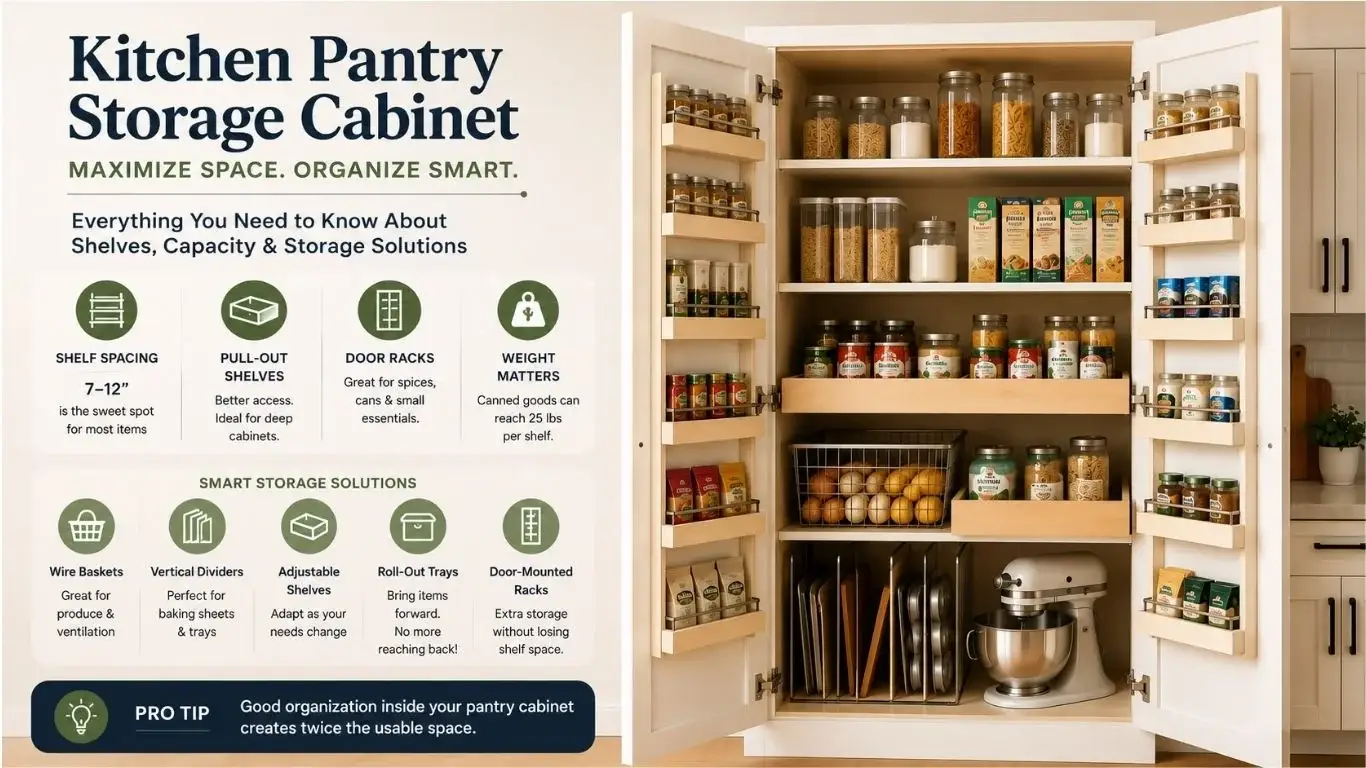
- Set shelves 10 to 12 inches apart for boxed goods, 7 to 8 inches for cans
- Pull-out shelving roughly doubles the price of a comparable cabinet in one maker’s published range
- Door racks add storage but steal usable shelf depth behind them
- A shelf of canned goods can reach 25 pounds fast, and most listings publish no weight rating
- Potatoes, onions and anything needing airflow do not belong in a sealed cabinet
What a Kitchen Pantry Storage Cabinet Actually Holds
A pantry storage cabinet holds dry goods, canned items, serveware and small appliances, and how much of each depends on the interior layout rather than the outside dimensions. A cabinet with six closely spaced shelves stores far more canned goods than one with four widely spaced shelves, even at identical width.
Shelf count on its own tells you nothing. Retailer filters happily let you sort by shelf count, and I found one that offers everything from zero to 26 shelves with no spacing information anywhere on the page. Twenty-six shelves at 4-inch spacing would hold almost nothing you actually buy.
Drawers change the math again. A drawer holds less by volume than the shelf it replaces, because the drawer box walls and the runners eat space. What drawers buy you is access to small items that get lost at the back of a shelf.
If you are still choosing the cabinet itself rather than its contents, our guide to kitchen pantry cabinet sizes and types covers standard widths, depths and heights.
Shelf Spacing Is What Decides Capacity
Shelf spacing sets what fits. Most pantry goods need 7 to 12 inches of clearance, and getting this right adds more usable storage than buying a wider cabinet. Adjustable shelves matter more than any other interior feature because your storage needs change and fixed shelves cannot follow.
| Shelf spacing | What it fits comfortably |
|---|---|
| 6″ to 7″ | Soup cans, small jars, spice containers |
| 8″ to 9″ | Larger cans, pasta boxes on their side, canisters |
| 10″ to 12″ | Cereal boxes upright, bottles, tall jars |
| 14″ and above | Small appliances, mixing bowls, bulk containers |
Spacing figures are practical guidance based on common package sizes, not published manufacturer data.
Adjustable shelves sit on shelf pins, small metal supports that slot into pre-drilled holes in the cabinet sides. The holes are usually spaced 1 1/4 or 2 inches apart, which sets how finely you can tune each shelf. Closer hole spacing gives you more control.
Reading through buyer reviews on retailer listings, the ability to move shelves comes up as a positive far more often than any other interior feature. Fixed shelving is the one configuration worth avoiding outright. You cannot change it later, and the storage you lose is permanent.
Are Pull-Out Shelves Worth It?
Pull-out shelves are worth the money when your cabinet is 20 inches deep or more, and rarely worth it below that. In one manufacturer’s published range, a shelved cabinet and a pull-out version of the same 24x24x90-inch frame are listed at $396 and $825. That is roughly double for the same box. Figures published as of August 2026.
The same range lists a narrower cabinet with pull-out interior fittings at $609, and a version with wire baskets behind a door at $900. Door finishes differ slightly between the compared units, so this is close but not a perfectly controlled comparison. All figures come from one company, which shows a pricing structure rather than a market average.
What the premium buys is reach. On a deep fixed shelf, the back row sits behind the front row and you unpack to get to it. A roll-out tray on undermount slides, the runners hidden beneath the tray rather than beside it, brings the whole shelf out to you.
Below about 18 inches of depth there is little to reach past, and a $20 tiered riser gives you the same visibility for a fraction of the cost. Skip pull-outs if your cabinet is shallow, or if you mainly store light boxed goods you can see anyway.
| Option | Best for | What it cannot do |
|---|---|---|
| Fixed shelf | Nothing. Avoid where a choice exists | Adapt when your storage changes |
| Adjustable shelf | Everything. The default choice | Solve back-row access on deep shelves |
| Roll-out tray | Deep cabinets, heavy items, bulk stock | Justify its cost in shallow cabinets |
| Wire basket | Produce, bagged goods, airflow | Hold small or loose items securely |
| Door rack | Spices, cans, foil boxes, flat packets | Take anything tall or heavy |
| Vertical divider | Baking sheets, boards, platters, trays | Store anything that is not flat |
Door Racks, Wire Baskets and Dividers
Door racks, wire baskets and vertical dividers each solve one storage problem well and fail at the others. Choosing between them is easier once you know what each cannot hold, which is the part product listings never mention.
Door-mounted racks
Door racks hold spice jars, small cans, foil boxes and flat packets in shallow tiers fixed to the inside of the door. Several listings advertise 12 door shelves as a headline feature.
Twelve door shelves is not twelve shelves of storage. Each one is 3 to 4 inches deep, and the rack projects into the cabinet, so the main shelves behind it lose that same depth. You gain visible storage for small items and lose reach for large ones.
Wire baskets and ventilated shelving
Wire baskets let air move around what they hold, which suits potatoes, onions, garlic and anything bagged. Solid shelves trap moisture around produce and shorten its life.
The trade-off is containment. Small items, loose packets and anything narrow will slip through the mesh, so baskets work best for bulk and produce rather than for tidy dry goods.
Vertical dividers
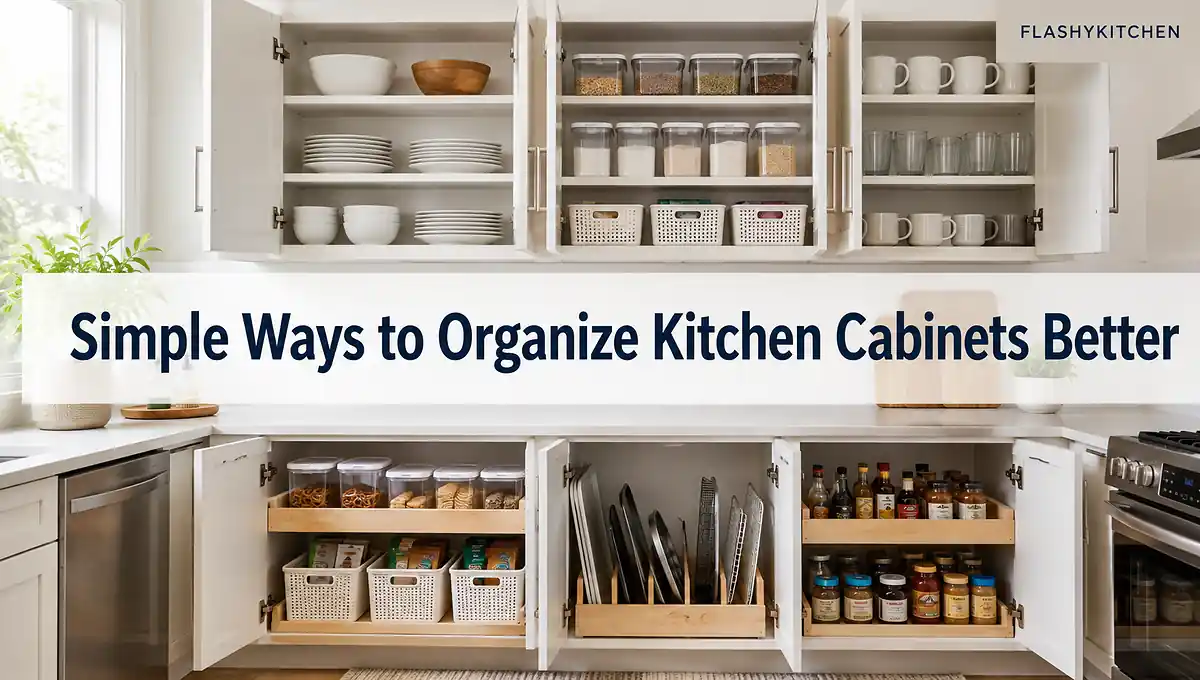
Vertical dividers turn a single shelf into slots that hold flat items upright. Baking sheets, cutting boards, serving platters and muffin tins all store on edge instead of in a stack you have to lift.
This is the cheapest capacity gain available in most cabinets, and it takes minutes to fit. Dividers do nothing at all for anything that is not flat.
How Much Weight Can Pantry Shelves Hold?
Weight ratings for pantry cabinets are published inconsistently, so treat a missing rating as a warning rather than a reassurance. One retailer filters its range by capacity bands running from under 200 pounds up to over 800 pounds for a whole unit. A single listing on another site publishes 300 pounds for the complete cabinet.
That is the extent of the published data. Comparing listings across several retailers, most give no weight figure at all, which makes the filter bands hard to use in practice.
Work out your own load instead. A standard can weighs about 15 ounces, so two dozen cans on one shelf is roughly 25 pounds before anything else goes on. Add a 5-pound flour bag and a few glass jars and a single shelf passes 40 pounds easily.
Material decides whether the shelf holds that flat. Particle board, the cheapest core, sags first and buyer reviews on budget units regularly report soft panels arriving damaged. Plywood and solid wood cost more and stay level under load for longer.
Total load matters for stability, not just for sagging. A tall cabinet carrying 200 pounds across its shelves is top-heavy enough to tip if a loaded door swings open or a child pulls on a shelf. Fit the anti-tip anchor that ships with most freestanding units, and put it into a wall stud rather than drywall. Check the shelf thickness too: anything under 5/8 inch will bow across a wide span. [VERIFY: published maximum shelf span before deflection for 3/4-inch shelving, sourced figure needed].
What to Store in It, and What Not To
Pantry storage cabinets suit dry goods, canned items, serveware and small appliances used weekly rather than daily. They are enclosed, dark and dry, which is right for most shelf-stable food and wrong for several things people put in them anyway.
Good candidates group into three sets. Dry goods and canned items on the middle shelves at eye level. Plates, bowls and serving dishes where the spacing suits their height. Small appliances low down, because they are heavy and awkward to lift.
Some things do not belong. Potatoes, onions and garlic need airflow and will sprout or soften in a sealed box. Oils and ground spices degrade faster in warmth, so keep the cabinet away from the range. Anything needing refrigeration is obvious, but people still try it with eggs and opened sauces.
Heat matters more than most buyers expect. A cabinet beside the stove runs warmer than the rest of the room, and that shortens the life of everything oily inside it.
Getting More From the Cabinet You Already Have
You can usually add real capacity to an existing cabinet for under $100, which is worth trying before replacing anything. Shelf pin holes, riser inserts and retrofit trays cover most of what a more expensive cabinet would give you.
Start by moving the shelves. Most cabinets have pre-drilled pin holes running the full height, so repositioning takes minutes and costs nothing. Match the spacing to what you actually store rather than leaving the factory setting.
Some makers sell add-on shelves for their own cabinets as separate items, which is the cheapest way to add a level.
Retrofit roll-out trays fit inside an existing box on their own slides. Measure two things before ordering: the clear opening width between the door hinges, not the cabinet width, and the interior depth from the back wall to the inside face of the closed door. Trays are sold to the opening, and a filler strip, a thin spacer, closes the gap if the hinges block the run.
Once the shelving fits your goods, the containers do the rest of the work. Our walkthrough on how to organize a kitchen pantry covers decanting, labeling and zone storage.
Common Questions About Pantry Storage Cabinets
How wide is a standard pantry cabinet?
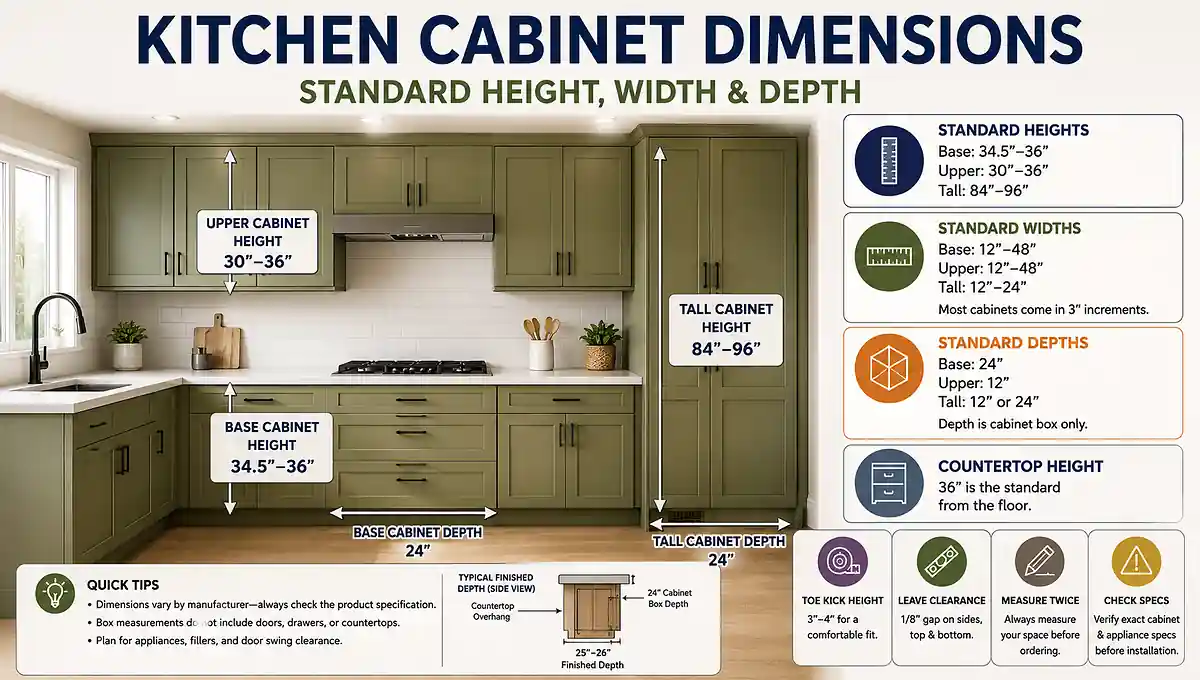
Common widths run from 18 to 30 inches for built-in units and 23 to 55 inches for freestanding ones. Width matters less for capacity than shelf spacing does, since a narrow cabinet with well-spaced shelves outperforms a wide one with fixed shelving. Our separate sizing breakdown covers the full dimension ranges for both types.
Are glass doors a good idea on a pantry cabinet?
Glass doors show contents at a glance and force you to keep the inside tidy, which some people find useful and others find stressful. The real cost is light. Ground spices, cooking oils and grains all degrade faster with light exposure, so glass suits serveware and display items better than food storage.
Is a pantry cabinet with a countertop section worth it?
An open countertop section trades enclosed storage for appliance space, which works if your counters are full and your shelves are not. Check the cable cutout position before buying. Buyers regularly report the opening sits centered where it blocks the appliance rather than feeding a cord past it.
Bottom Line
Fix the shelf spacing before you spend on anything else, because it costs nothing and returns more capacity than any upgrade. Add pull-outs only where the cabinet is deep enough to hide a back row, and treat a missing weight rating as a reason to check the shelf material yourself.
For style direction and layout options, our kitchen pantry ideas collection covers the rest.
One thought on “Kitchen Pantry Storage Cabinet: What Fits and How Much It Holds”