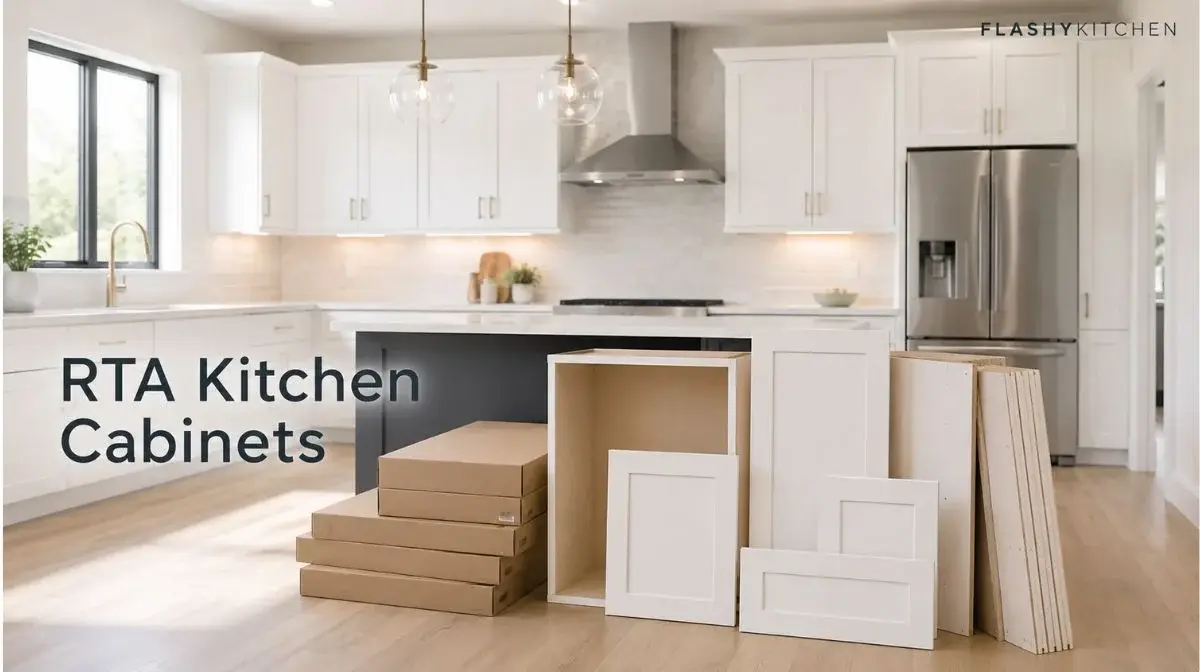
Remodeling a kitchen is a massive investment, but taking on a little assembly work can cut your materials bill drastically. Having analyzed hundreds of budget and premium kitchen renovations, we consistently see RTA kitchen cabinets emerge as the smartest way to stretch a renovation budget.
By shipping flat, these units eliminate costly factory labor and massive freight charges. Whether you are updating a rental property or tackling your own forever home, unassembled boxes deliver high-end finishes without the retail markup.
Quick Answer: Are RTA Kitchen Cabinets Worth It?
Yes, RTA kitchen cabinets provide excellent value, but they are not for everyone. Here is the bottom line:
- They save money: You bypass factory assembly fees.
- Shipping is cheaper: Flat-pack boxes cost significantly less to transport than fully built units.
- Higher quality materials: Because you save on labor, you can often afford upgrades like solid wood doors and plywood boxes for the same price as cheap retail particle board.
- Skip them if: You lack basic hand tools, hate building flat-pack furniture, or are on an extremely tight installation timeline.
RTA Kitchen Cabinets at a Glance
| Feature | Expert Insight |
|---|---|
| Best For | DIYers, budget remodels, property flippers |
| Average Cost | $2,500 – $5,500 (10×10 layout materials) |
| Assembly Time | 15–30 minutes per cabinet box |
| Material to Look For | CARB2 compliant plywood, solid wood doors |
| Top Online Brands | The RTA Store, Lily Ann Cabinets, Nelson Cabinetry |
What Are RTA Cabinets?
RTA stands for ready-to-assemble. Instead of arriving fully built, these cabinets ship in flat packages containing pre-cut panels, doors, dovetail drawer boxes, and all necessary hardware. You assemble them on-site using basic tools like a drill, rubber mallet, and wood glue.
When exploring various types of kitchen cabinets for a renovation, unassembled options sit right in the sweet spot between low cost and high structural integrity. For a broader understanding of how these fit into your remodeling plans, a complete kitchen cabinet guide can help map out your entire project timeline.
True Cost Breakdown
While many sources give a vague price range, calculating your exact budget requires breaking down the individual expenses. For a standard 10×10 kitchen layout, here is a realistic cost breakdown:
- Materials (Cabinets & Trim): $2,000 – $4,500
- Freight Shipping: $250 – $400 (often free over a certain spend limit)
- Assembly Labor (If hiring a handyman): $500 – $900
- Total DIY Cost: $2,250 – $4,900
RTA vs Stock Cabinets
How do flat-pack options stack up against off-the-shelf units? Compared to standard stock kitchen cabinets found at local big-box stores, online ready-to-assemble lines usually offer vastly superior materials for the same price. Retail stores heavily mark up their pre-assembled particle board units to cover floor space and shipping. By buying unassembled, you trade your manual labor for a higher-grade product.
Material Quality and Construction
We always advise our readers to look past the door color and inspect the box construction. The highest quality units utilize I-beam construction for stability and half-inch plywood for the side panels.
Always look for CARB2 compliant materials, which ensure the wood products meet strict formaldehyde emission standards. Avoid cheap particle board options if your budget allows, as they are prone to water damage. Premium hardware, like soft-close hinges and full-extension undermount drawer glides, should come standard on good quality lines.
Popular Styles and Layouts
Because e-commerce distributors warehouse massive inventories, your design choices are practically endless. The undisputed market leaders are crisp white Shaker kitchen cabinets, favored for their transitional appeal. However, if you are designing a sleek, minimalist space, high-gloss slab kitchen cabinets are highly accessible through online flat-pack retailers.
Before ordering, you must decide between framed vs frameless cabinets. Frameless (European-style) RTA units offer slightly more interior storage and a modern aesthetic but require much tighter alignment during assembly.
Pro Assembly Tips
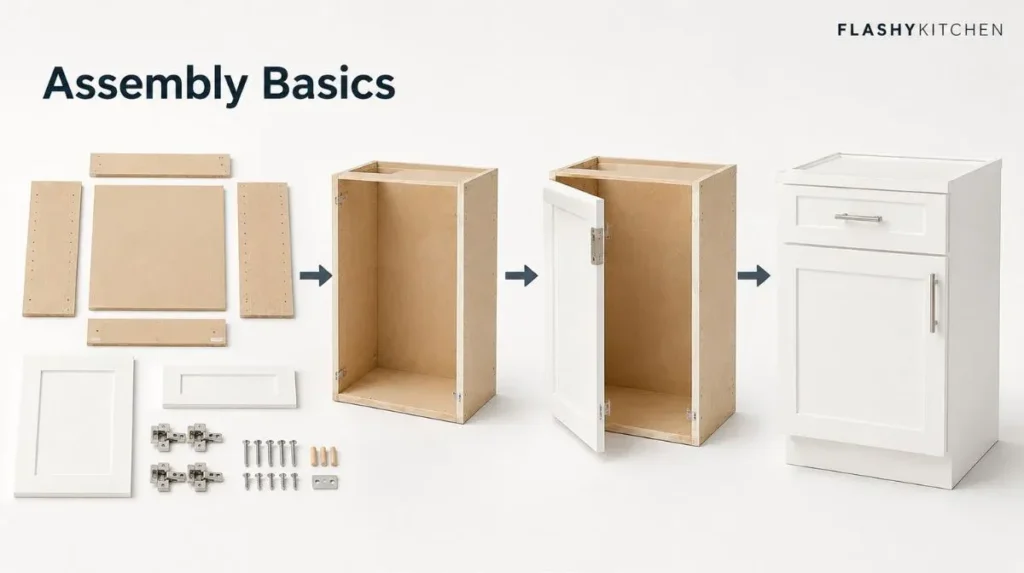
While manufacturers provide instructions, our experience shows that a few extra steps guarantee a kitchen that lasts decades:
- Use Wood Glue: Don’t just rely on the provided cam-locks or screws. Run a bead of quality wood glue along every joint before joining panels.
- Use a Brad Nailer: For the back panels, a brad nailer provides a much tighter, squarer fit than hand-driving tiny screws.
- Square the Box: Use a framing square before the glue dries. An out-of-square cabinet will cause nightmares when you try to align the doors later.
Common Mistakes to Avoid
- Buying only by the lowest price without checking materials.
- Ignoring the risk of shipping damage and not inspecting boxes upon arrival.
- Skipping sample doors and hoping the color matches your floor.
- Not reading assembly instructions before starting.
- Ordering without accounting for filler strips, toe kicks, or side panels.
- Assuming ready-to-assemble means low quality every time.
- Thinking cabinet assembly is easier than the actual wall installation.
Finalizing Your Order
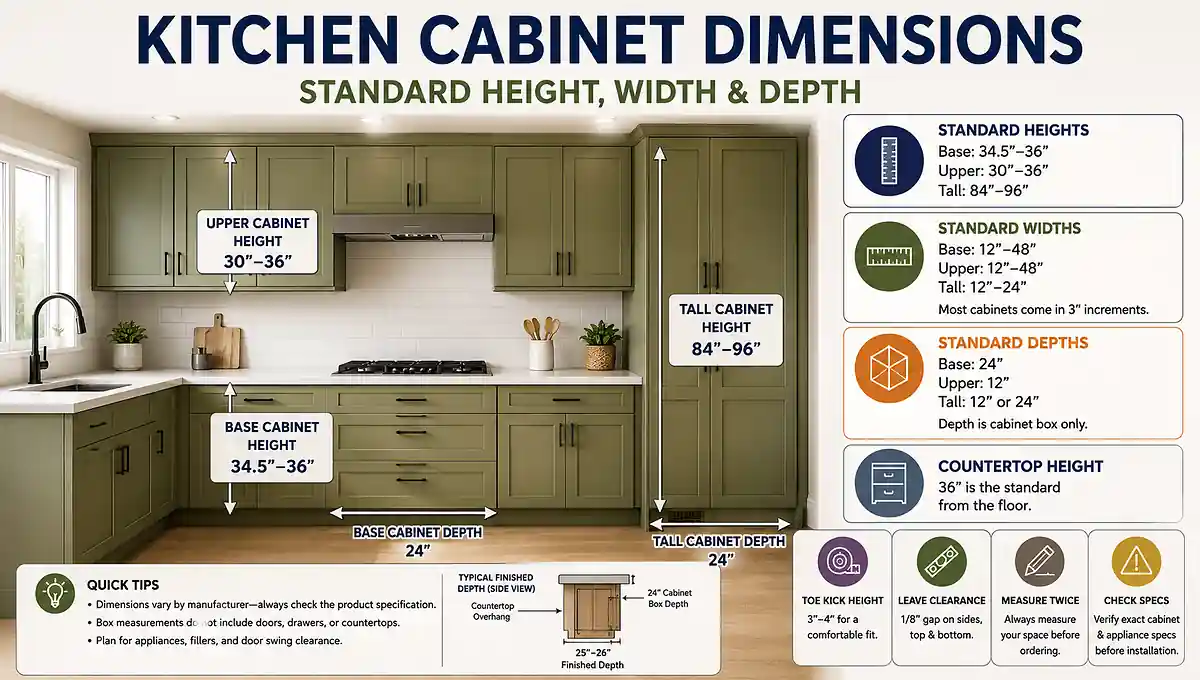
To successfully fill your space, your cart will need a precise mix of base, wall, and tall cabinets. Always order a sample door first to verify the finish against your home’s lighting and flooring. Don’t forget to add essential finishing pieces like toe kicks, crown molding, and filler strips—leaving these out is the most common ordering mistake DIYers make.