
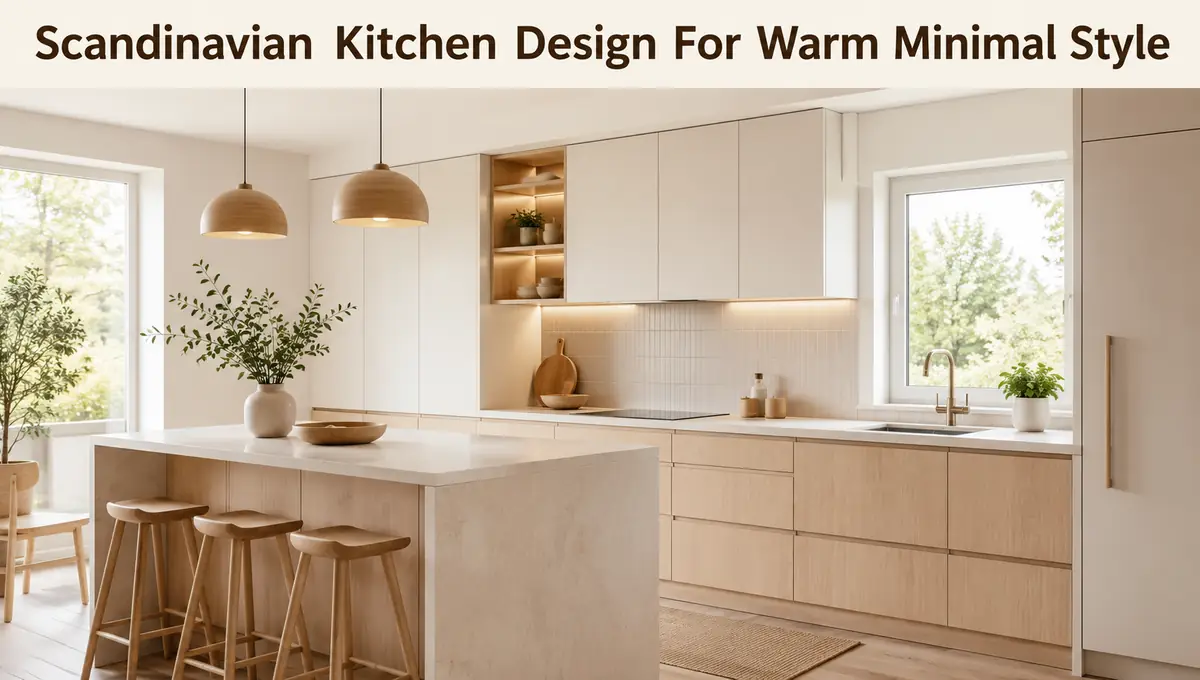
Designing an authentic scandinavian kitchen requires balancing functional minimalism, organic warmth, and practical daily living. Originating across the Nordic countries of Denmark, Norway, Sweden, and Finland, this architectural interior approach prioritizes bright, light-filled rooms that counteract long, dark winter months. Rather than feeling cold, stark, or clinical, a well-executed Scandinavian layout relies on pale natural hardwoods, tactile stone surfaces, soft neutral colors, and layered warm illumination to achieve hygge—the Danish concept of cozy contentment. By the end of this guide, you will know exactly which cabinets, wood species, colors, and lighting fixtures to select for your home.
Quick Answer
A scandinavian kitchen design combines frameless flat-panel cabinets, pale natural wood accents, neutral color palettes, and layered warm lighting. To execute this look without creating a sterile environment, focus on five foundational elements:
- Frameless Slab Cabinets: Flat-panel doors with handleless touch-latches or integrated J-pull channels.
- Pale Hardwoods: Natural White Oak or European Ash for lower cabinets and flooring.
- 2700K Warm Lighting: Layered fixture placement using warm-tone LEDs.
- Tactile Surfaces: Matte vertical stacked tiles or honed stone backsplashes.
- Integrated Storage: Hidden panel appliances and clutter-free counters.
Core elements of a modern Scandinavian kitchen design
At its foundation, minimalist scandinavian kitchen design centers on utility and light reflection. Traditional Nordic homes feature large windows to maximize daylight, a trait that directly shapes the interior architecture. When planning a nordic scandinavian kitchen design, every layout choice must serve an ergonomic purpose while maintaining visual calm.
Unlike an ornate Victorian kitchen filled with heavy trim or a retro 1950s kitchen dominated by bold contrast, a scandinavian modern kitchen uses clean lines and uninterrupted sightlines. Space planning prioritizes open-concept movement, floating prep areas, and seamless transitions into adjoining living zones.
Key structural characteristics include:
- Unadorned Architecture: Structural beams and window frames remain simple, emphasizing light oak or clean painted trim.
- Integrated Storage: Floor-to-ceiling pantry units keep appliances hidden, preserving open counter space.
- Reflective Neutrals: Matte white, off-white, or pale gray walls bounce natural light across the room.
- Biophilic Touches: Potted greenery, woven rattan baskets, and stone elements connect the interior to nature.
Scandinavian kitchen cabinets: Slab doors and frameless construction
The cabinetry sets the architectural tone for the entire room. Authentic scandinavian kitchen cabinets feature frameless box construction, often referred to as European-style cabinetry. Because the cabinet box lacks a front face frame, the doors fit tightly together with minimal gaps, creating a smooth, continuous surface.
To maintain a modern scandinavian kitchen aesthetic, pair frameless boxes with flat-panel doors. You can explore complete profile variations in our guide to slab kitchen cabinets.
When specifying scandinavian style kitchen cabinets, cabinet hardware requires careful consideration:
- Push-to-Open Latches: Mechanical or magnetic touch-latches eliminate handles completely for a seamless look.
- Integrated J-Pull Channels: A concealed groove routed directly into the top edge of the cabinet door allows easy opening without visual hardware clutter.
- Low-Profile Finger Pulls: Slim aluminum or matte black edge-mount pulls attached to the top lip of the door offer a subtle, tactile grip.
Wood species selection: White oak, ash, birch, and pine
Wood brings essential warmth to wood scandinavian kitchen design, breaking up white surfaces and adding natural texture. However, not all light woods perform equally well in a high-humidity kitchen environment.
While analyzing timber specs, I found that many homeowners confuse softwoods like White Pine with hardwood alternatives. Softwoods dent easily under daily impact, whereas closed-grain hardwoods hold up significantly better over time.
| Wood Species | Janka Hardness Rating | Grain Profile & Color Tone | Maintenance & Durability | Ideal Application |
|---|---|---|---|---|
| White Oak | 1,360 lbf (Hard) | Tight, straight grain; neutral tan to pale straw | High water & dent resistance; resists yellowing | Lower cabinets, island bases, flooring |
| European Ash | 1,320 lbf (Hard) | Prominent, wavy grain; pale white to cream | Highly durable; requires UV-resistant clear coat | Custom slab doors, open shelving |
| Yellow Birch | 1,260 lbf (Hard) | Subtle, uniform grain; warm light amber | Good dent resistance; can darken over time | Butcher block counters, dining tables |
| Eastern White Pine | 380 lbf (Soft) | Wide grain with visible knots; pale yellow | Dents very easily; absorbs moisture readily | Accent paneling, decorative ceiling beams |
For long-term durability, consider white oak kitchen cabinets finished with a matte, non-yellowing polyurethane sealer.
Layering Scandinavian kitchen lighting: The 2700K color rule
Because natural daylight can be scarce during northern winters, artificial scandinavian kitchen lighting is a critical design element rather than an afterthought.
To avoid a cold or hospital-like feel, follow the 2700K Kelvin Warmth Rule:
- Color Temperature: Specify all LED bulbs between 2700K and 3000K. Higher temperatures cast a blue light that makes white cabinets look clinical.
- Task Illumination: Install continuous pucks or linear LED strips under upper cabinets to illuminate work surfaces. Learn optimal placement in our guide to kitchen under-cabinet lighting.
- Statement Fixtures: Hang iconic scandinavian pendant lights for kitchen island installations. Look for matte powder-coated dome pendants, opal glass globes, or sculpted timber shades hung in pairs or trios.
Colors, tiles, and backsplash choices
While crisp white remains the traditional choice, modern Nordic color palettes incorporate muted, nature-inspired tones.
When selecting a scandinavian kitchen backsplash, prioritize subtle texture over loud patterns:
- Vertical Stacked Tiles: Standard 2×8 subway tiles laid vertically rather than in a staggered brick pattern emphasize ceiling height.
- Matte Zellige Tiles: Handcrafted ceramic tiles with slight glaze variations add organic texture to plain walls.
- Slab Backsplashes: Extending your countertop material up the wall creates a clean, continuous look.
Scandinavian sub-styles: From Japandi to Rustic Nordic
The overarching design framework includes several popular sub-styles:
- Scandinavian Japandi Kitchen: Merges Nordic minimalism with Japanese wabi-sabi philosophy. Expect dark oak, walnut accents, low-profile furniture, and muted charcoal elements.
- Scandinavian Farmhouse Kitchen: Blends clean lines with cozy farmhouse details like an apron-front sink, subtle beadboard paneling, and warm brass hardware.
- Rustic Scandinavian Kitchen: Features raw, reclaimed timber, hand-hewn ceiling beams, and wrought iron accents alongside white cabinetry.
- Pastel & Boho Variations: A pastel scandinavian kitchen introduces soft blush pink, pale mint, or powder blue on lower cabinets, while boho variations add hanging macramé planters and terracotta pottery.
If you are exploring different layout concepts, review our overview of various kitchen design styles to see how Nordic principles compare.
What are Scandinavian-style kitchen tables?
In many Nordic homes, the dining table functions as the primary gathering area—a reflection of the hygge lifestyle.
When evaluating scandinavian-style kitchen tables, look for pieces characterized by slender tapered legs, light wood construction, and organic silhouettes.
- Round Pedestal Tables: Ideal for small spaces, round tables with central trumpet or tripod bases allow easy seating flow without sharp corners blocking pathways.
- Trestle Tables: Long rectangular light-oak tables with plank tops and sled bases comfortably accommodate larger family gatherings.
- Accent Seating: Pair a solid wood scandinavian kitchen table with woven-seat wooden chairs, molded shell seating, or clean timber benches.
How much does a Scandinavian kitchen remodel cost?
Because this style emphasizes clean integration and frameless cabinetry, pricing depends heavily on your choice between off-the-shelf modular systems and custom architectural millwork.
While comparing retailer quotes against custom cabinet estimates, I noticed that off-the-shelf pricing often omits custom finish panels and fillers. These additions are usually necessary to achieve a seamless, wall-to-wall integrated look.
| Remodel Tier | Cabinet Strategy | Countertops & Surfaces | Appliances & Lighting | Estimated Total Cost |
|---|---|---|---|---|
| Entry (Modular Hybrid) | Frameless RTA boxes + custom third-party slab fronts | Solid birch butcher block or entry-tier laminate | Standard stainless steel; surface-mount lights | $12,000 – $22,000 |
| Mid-Range (Semi-Custom) | Factory semi-custom frameless units in white oak/ash | Honed engineered quartz (1/2″ profile) | Panel-ready dishwasher; integrated LED channel lights | $25,000 – $45,000 |
| High-End (Custom) | Custom architectural millwork with concealed channels | Natural marble or quartzite slab backsplash | Fully integrated column refrigeration; designer pendants | $50,000 – $85,000+ |
Note: Prices as of August 2026 and vary by region and whether labor is included.
Realities and trade-offs: What standard design guides skip
While minimalist kitchens look stunning in curated photos, daily family life reveals practical trade-offs:
- Matte Cabinet Fingerprints: Ultra-matte, handleless black or dark gray slab doors show skin oils quickly. Choose laminate doors treated with oleophobic coatings, or stick to natural pale wood veneers.
- Open Shelving Maintenance: Floating wood shelves look charming, but items kept near a cooktop gather grease and dust over time. Limit open shelving to 1–2 display tiers away from the stove.
- Toe-Kick Ergonomics: Floating lower cabinets or zero-toe-kick flush bases force cooks to stand further back from the counter, which can cause lower back strain. Maintain a standard 3.5-inch deep by 4-inch high recessed toe-kick on all active work zones.
- Keeping Finishes Clean: Pale wood and white surfaces require regular care to prevent staining. Learn best practices for maintaining your finishes with our guide on how to clean kitchen cabinets.
How to adapt Scandinavian design to a small kitchen
Minimalist design principles work exceptionally well in tight layouts, making a small scandinavian kitchen feel significantly larger than its footprint.
When managing a small scandinavian kitchen design:
- Maximize Vertical Space: Run frameless wall cabinets all the way to the ceiling to eliminate dust-gathering soffits and expand storage.
- Choose Slim Appliances: Opt for 24-inch panel-ready refrigerators and dishwashers that blend into the cabinetry line.
- Use Open Islands: Replace a heavy, solid-base island with an open-legged scandinavian kitchen island work table to preserve floor visibility.
If you are renovating a narrow space, check out our layout guide for planning a small galley kitchen remodel.
Frequently asked questions
What is the difference between a Scandinavian and a Japandi kitchen?
A Scandinavian kitchen focuses on Nordic functionalism using light woods like pine, ash, and white oak paired with crisp white surfaces. A Japandi kitchen blends Nordic layout principles with Japanese aesthetics, incorporating darker woods like walnut, richer earth tones, matte black fixtures, and handcrafted ceramic details.
Are Scandinavian-style kitchen cabinets more expensive than Shaker cabinets?
Standard stock frameless slab cabinets are often cheaper to manufacture than five-piece Shaker doors. However, custom European handleless systems with integrated J-pull channels or electric touch-latches require precise installation tolerances, which can increase overall labor and hardware costs.
What colors go best in a Scandinavian kitchen besides white?
Soft, nature-inspired tones work best. Popular accent colors include muted sage green, pale slate gray, warm beige, soft terracotta, and dusty blue. These shades add depth to the space while preserving a bright, serene feel.
Conclusion
Designing a scandinavian kitchen comes down to balancing simple architecture with cozy everyday functionality. By pairing frameless cabinetry and pale hardwoods with 2700K warm lighting, you can build a bright room that feels welcoming year-round. As a practical next step, measure your available aisle clearances before ordering custom slab cabinet doors. Focus on durable hardwoods and comfortable toe-kick depths to create a kitchen that serves your household for years.
One thought on “Scandinavian Kitchen Design: Key Elements, Colours & Ideas”