
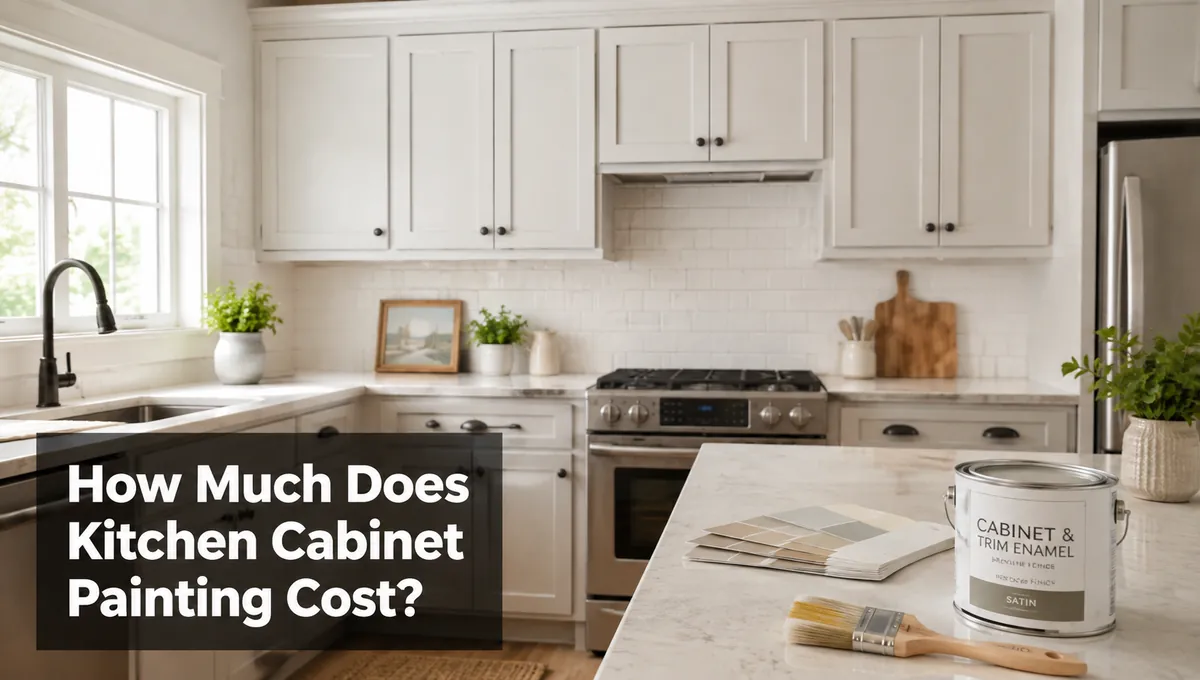
Kitchen cabinet painting cost depends more on cabinet condition and preparation than on the price of paint alone. A small kitchen with sound, simple doors can cost far less than one with grease buildup, damaged coatings, detailed profiles, or a dark-to-light color change. That is why two quotes can differ by thousands without either being automatically wrong.
A kitchen cabinet painter may also include work that a cheaper estimate leaves out. This guide separates DIY spending from professional pricing, explains the main cost drivers, and shows how to compare estimates so you can decide whether painting, refinishing, refacing, or replacement makes financial sense.
Quick Answer
Kitchen cabinet painting cost can range from a few hundred dollars for a basic DIY project to several thousand dollars for professional work. The useful number is the price for your cabinet count, condition, prep, and finish, not a broad average.
- DIY lowers material and labor spending but takes time.
- More doors and drawers increase handling and prep.
- Failed paint or grease raises labor cost.
- Spray finishing adds masking and setup.
- Skip painting when the boxes or layout need replacement.
What Should Cabinet Painting Cost in 2026?
Current published prices cover very different scopes, so there is no honest single number that fits every kitchen. A retailer DIY guide lists about $400 to more than $1,000, while one current professional marketplace reports roughly $1,390 to $3,353. Another 2026 cost guide reports about $425 to $1,465.
| Published scope | Current range | What it represents |
|---|---|---|
| DIY-oriented project | $400 to $1,000+ | Paint, primer, supplies, and tools as needed |
| Broad professional cost guide | $425 to $1,465 | Reported professional project range |
| Professional marketplace | $1,390 to $3,353 | Reported hired-project costs |
| In-home repainting service | Around $4,250 | One service provider’s stated project average |
The fourth figure comes from a current in-home repainting service that states an average project cost around $4,250. Prices are current as of August 2026 and vary by region, cabinet count, condition, coating system, repairs, and whether labor is included.
This wide spread is useful once scope is separated. A DIY number mostly reflects material cost, while professional cabinet painting cost can include door removal, masking, surface repairs, priming, spraying, cabinet-box work, reinstallation, and cleanup.
Do not average these ranges together. Kitchen cabinet painting cost becomes more useful when you separate DIY materials from hired labor and specialist finishing. Use the ranges to identify your project category, then compare estimates with the same work included.
Why Is Painting Cabinets So Expensive?
The labor cost is high because a durable cabinet finish depends on preparation. A painter may spend more time removing and labeling cabinet doors, cleaning grease, sanding or deglossing, repairing defects, masking the kitchen, priming, and handling parts than applying the final cabinet enamel. Proper preparation also improves adhesion and reduces peeling or chipping risk.
Door count can matter more than kitchen floor area. One current professional pricing guide lists about $125 to $185 per painted door or drawer piece for its own process, including both sides and exterior cabinet boxes but excluding cabinet interiors. That is a company-specific rate, not a national standard.
| Cost driver | Why it changes the price |
|---|---|
| More doors and drawer fronts | More removal, prep, coating, and reinstallation |
| Grease or failed coating | More cleaning, sanding, or removal |
| Detailed door profiles | More hand prep and application time |
| Dark-to-light change | More blocking and coverage may be needed |
| Grain filling or repairs | Extra work before primer |
| Spray finish | More masking, equipment, and controlled application |
Cost per cabinet, cost per door, and cost per drawer front are useful only when the contractor defines what each unit includes. Cost per linear foot can work for rough comparison, but door count and preparation can still make two kitchens with the same cabinet length price differently.
Before choosing a color, settle the finish direction so every contractor prices the same job. Current cabinet color trends can help narrow the color decision before estimates are compared.
How to Find a Kitchen Cabinet Painter and Compare Quotes
A useful kitchen cabinet painter quote explains the surfaces, preparation, coating system, application method, repairs, and reinstallation. A total with no scope is hard to compare, even when the cabinet painter cost looks attractive.
When you request a cabinet painting estimate, confirm whether it includes door and drawer-front removal, cleaning and degreasing, sanding or deglossing, repairs, primer, topcoats, cabinet boxes, hardware handling, cleanup, and reinstallation. Professional pricing guidance shows that cabinet condition, preparation, door count, wood type, grain filling, hardware changes, and application method can all affect the quote.
A professional kitchen cabinet painter should also explain how the existing coating and cabinet material affect the prep plan. If spraying is promised, ask whether doors are sprayed on-site or off-site and what masking or containment is included.
A kitchen cabinet spray painter may charge more because spraying requires equipment, setup, masking, ventilation, and controlled handling. The higher price only makes sense if the scope and finish quality justify it.
Review how to clean kitchen cabinets to understand the grease and residue that must come off before sanding or coating. Clean, dry preparation is important for paint adhesion.
Hire or DIY: Which Actually Saves Money?
DIY vs professional cabinet painting is mainly a trade between cash, time, workspace, and finish risk. DIY can save money when the cabinets need little repair and you already own basic tools, but a difficult surface or failed old coating can erase that advantage.
A current retailer guide puts many DIY projects around $400 to more than $1,000. Your paint and primer cost may be only part of the material cost because sandpaper, degreaser, masking supplies, rollers, brushes, repair products, and protective equipment can add to the bill.
Brush finish and roller finish methods are more accessible to DIYers, while spraying is the more advanced application route in current retailer guidance.
Time also has value. Cleaning, labeling, sanding, priming, coating both sides of doors, waiting between coats, and reinstalling hardware can extend the job far beyond the hours spent applying paint.
Drying time is not the same as curing time. One manufacturer recommends at least 24 hours of drying before reinstallation and says two or three days is better; it also advises avoiding heavy abrasion or cleaning for five to seven days while hardness develops.
Kitchen cabinet painting cost can also rise when failed coatings or repairs must be corrected before a new finish goes on. Professional cabinet painting is worth considering when the job needs extensive prep, controlled spraying, detailed doors, repairs, or a coating system you cannot confidently identify.
Can Your Cabinets Be Painted Successfully?
Painting works best when the cabinet boxes are sound, the layout works, and the visible surfaces can accept a compatible coating system. It will not repair swollen boxes, loose construction, severe delamination, or storage problems.
Wood cabinets are generally suitable for painting when properly prepared. Laminate cabinets need a sound surface and a bonding primer designed to improve adhesion, while previously painted cabinets should have loose or failing paint corrected before recoating.
MDF cabinets also need a coating system suited to their engineered surface, especially around damaged or moisture-swollen edges. Check your cabinet materials before assuming every cabinet needs the same preparation.
Metal requires its own surface preparation and compatible coating system. The approach for metal kitchen cabinets should not simply copy a wood-cabinet process. Current painting guidance also treats solid wood, laminate, and metal as different substrate types.
Older paint creates a separate safety issue. Renovation, repair, or painting work in a pre-1978 home with lead-based paint can create dangerous lead dust. Federal rules require contractors performing covered projects in pre-1978 homes to be lead-safe certified, while homeowners doing their own work should follow lead-safe practices.
Paint, Refinish, Reface, or Replace?
Painting is usually the lowest-cost logical choice when color is the main problem and the boxes, doors, and layout are still worth keeping. It becomes poor value when cabinet structure, door style, or kitchen layout is what you actually dislike.
Cabinet painting vs refinishing comes down to the desired surface. Painting covers the existing appearance with an opaque coating; refinishing can preserve visible wood grain when the material and existing finish allow it.
Cabinet painting vs refacing is a larger change. Refacing keeps the boxes but changes doors, drawer fronts, and exposed faces, so compare refinishing vs refacing if you are unsure how much cabinetry should stay.
A dedicated cabinet refacing project can make more sense when you dislike the door style but trust the boxes. Painting cannot turn a raised-panel door into a slab door.
Painting vs replacing kitchen cabinets becomes a clearer decision when the boxes are swollen, failing, or poorly arranged. Paying to coat cabinets that you expect to remove soon means paying twice for the same kitchen problem.
Which Choice Makes Sense for Your Budget?
Kitchen cabinet painting cost is easiest to control when you count doors and drawers, inspect the existing finish, and make every quote cover the same work. DIY suits sound cabinets when you have time and workspace; hire a professional kitchen cabinet painter when repairs, failed coatings, detailed doors, or spraying raise the risk of a poor result. If the boxes, door style, or layout are the real problem, compare refacing or replacement before spending money on paint.




One thought on “Kitchen Cabinet Painting Cost: What You’ll Pay in 2026”