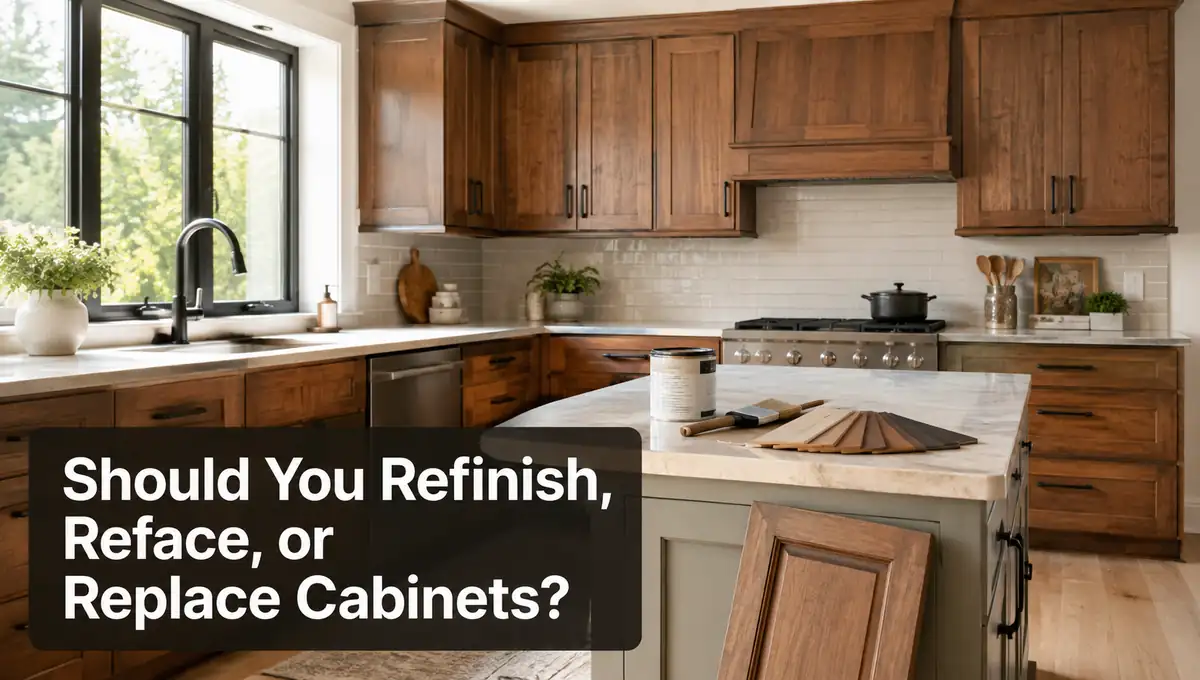
Kitchen cabinet refinishing is usually the least expensive way to update cabinets when the boxes, doors, and layout are still worth keeping. But a lower starting price does not save money if the real problem is a dated door style, weak cabinet boxes, poor storage, or a layout you already dislike. The useful question is not simply “Which option costs less?”
A better question is, “How much of this kitchen should I keep?” By the end, you should know when to refinish, when refacing earns its extra cost, when replacement is smarter, and what to check before paying for any of them.
Quick Answer
Kitchen cabinet refinishing usually saves the most when the existing boxes are sound, the layout works, and only the finish looks worn or dated. Refacing costs more because it changes doors, drawer fronts, and exposed faces. Replacement costs the most but can fix structure, storage, and layout problems.
- Refinish for a surface problem.
- Reface for a door-style problem.
- Replace for a box or layout problem.
- Check the cabinet material before choosing a finish.
- Compare equal project scope, not headline quotes.
What Does Kitchen Cabinet Refinishing Actually Change?
Kitchen cabinet refinishing keeps the existing cabinet structure and renews the visible surface. Depending on the material and desired result, the work can include cleaning, stripping or deglossing, sanding, staining, painting, and adding a protective clear coat.
The term is used two ways in the trade. Some professionals reserve “refinishing” for stain and clear finish on visible wood, while others include prepared-and-painted surfaces. Solid wood is the clearest candidate for traditional stain-based refinishing.
Refinishing normally keeps the cabinet boxes, face frames, doors, and drawer fronts. It can change color, sheen, and minor surface damage, but it cannot change a raised-panel door into a slab door, add storage, or move cabinets.
Cabinet refacing goes further. The boxes stay, while doors and drawer fronts are replaced and exposed box surfaces are typically covered to match.
That gives you the first decision rule: a finish problem points toward refinishing, a door-style problem points toward refacing, and a structure or layout problem points toward replacement.
Paint, Reface, or Start Over: Which Saves More?
Refinishing usually has the lowest project cost because it reuses the most material. Refacing adds new doors, drawer fronts, and facing material. Replacement adds new cabinet boxes and is the only one of the three that can fully change cabinet size, placement, and storage.
| Option | What stays | What changes | Best fit |
|---|---|---|---|
| Refinishing | Boxes, doors, fronts | Surface finish | Good cabinets, wrong finish |
| Refacing | Cabinet boxes | Doors, fronts, exposed faces | Good boxes, wrong style |
| Replacement | Little or none | Boxes, doors, storage, layout | Damage or poor layout |
Current 2026 published guides put professional cabinet refinishing around $1,992 to $4,495 and professional refacing around $4,234 to $10,226. Prices vary by region, cabinet count, material, finish, and labor scope.
New cabinets are quoted differently. Published 2026 pricing runs about $100 to $1,200 per linear foot across stock through custom construction; installation, demolition, disposal, and repairs may be separate. Prices vary by region and scope.
While comparing current cost guides, I found that scope creates the biggest trap. One quote may include repairs and hardware while another excludes removal.
When comparing kitchen cabinet refinishing services with other quotes, line up the same items: repairs, doors, drawer fronts, veneer, hinges, drawer slides, pulls or knobs, crown molding, masking, finish work, removal, disposal, and related repairs.
If your project is really about opaque paint rather than restoring a wood finish, use a separate cabinet painting cost comparison. Painting and stain-based refinishing do not always have the same preparation, labor, or material cost.
A kitchen cabinet refinishing cost calculator is only a starting point if it ignores door count, repairs, finish type, or local labor.
Can You Refinish the Cabinets You Already Have?
The cabinet material and condition matter more than age alone. Old wood cabinets can be excellent candidates if the boxes are solid, joints are tight, and the visible surfaces can accept the intended finish.
| Cabinet surface | Refinishing potential | Main concern |
|---|---|---|
| Solid wood | High | Existing damage and old coating |
| Wood veneer | Good with care | Sanding through the thin face |
| MDF | Better for paint | Moisture swelling |
| Laminate or melamine | Limited | Adhesion and special primer |
| Thermofoil | Limited when failing | Peeling or delamination |
| Swollen particleboard | Poor | Structural moisture damage |
Solid wood can handle more stripping and sanding than thin wood veneer. MDF is better suited to paint than stain. Laminate needs careful prep and bonding primer, while some vinyl-covered or Formica surfaces are poor DIY candidates.
That is why identifying your cabinet materials comes before choosing primer, stain, or paint.
Check the boxes around the sink, dishwasher, floor, and plumbing openings. Scratches, worn clear coat, and small holes are surface problems. Soft particleboard, swelling, mold, loose joints, or widespread delamination point to cabinet repair or replacement rather than cosmetic work.
A kitchen cabinet repair and refinishing job can make sense when damage is minor and localized. It does not make sense to coat over a failing substrate and hope the finish will hold it together.
Also separate “I hate the color” from “I hate the cabinets.” If you like the doors and layout, refinishing may solve the whole problem. If you dislike the door profile, refacing may be more efficient.
If storage and placement frustrate you, use the broader kitchen cabinet guide and evaluate replacement.
Returning painted cabinets to a natural wood look is possible only when the material below the paint is suitable and can be stripped without exposing filler, damaged veneer, MDF, or mixed substrates. Do not assume every painted cabinet is stain-grade wood.
What Does Refinishing Involve, and Can You DIY It?
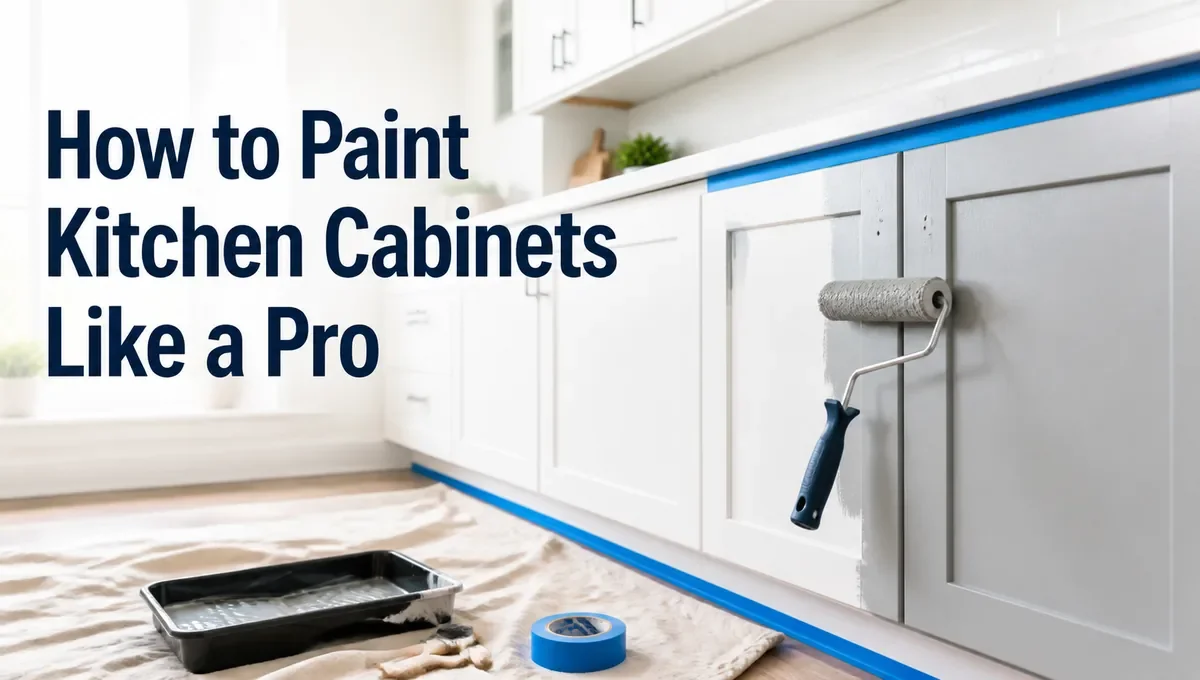
How to refinish kitchen cabinets depends on the existing coating, but the sequence is usually preparation first and finish second. Remove and label doors and hardware, clean kitchen cabinets, degrease cooking residue, repair defects, then strip, sand, or degloss only as the substrate requires.
For stain, the goal is usually clean, suitable wood that can absorb color evenly. For paint, the system may include a bonding primer and cabinet-grade enamel. Urethane enamel, waterborne acrylic, and acrylic-alkyd coatings are common categories for trim and cabinet work; satin and semi-gloss are common paint-sheen choices because they are easier to clean than flatter finishes.
Previously lacquered or heavily coated cabinets need extra care because coating compatibility affects adhesion.
Kitchen cabinet door refinishing is easier to control when doors are removed and worked on flat. Spray painting kitchen cabinets can leave a more even surface, but it increases masking, ventilation, equipment, and overspray concerns.
DIY makes sense when you can identify the substrate, manage dust, make minor repairs, and allow full cure time. A coating can feel dry before it is hard enough to resist blocking, the sticking between painted surfaces.
Professional kitchen cabinet refinishing makes more sense when stripping is difficult, veneer is thin, repairs are extensive, or you want a sprayed finish without building a temporary spray setup.
Metal kitchen cabinets need different surface preparation and coating choices from wood, MDF, or laminate.
What Goes Wrong With Refinished Cabinets?
Most early failures come from the surface below the final coat, not the color chosen. Grease, moisture, loose old coatings, poor sanding, or incompatible primer can weaken adhesion and lead to peeling, chipping, or cracking.
Common mistakes include:
- Leaving grease around pulls, ranges, and frequently touched door edges.
- Sanding veneer too aggressively and cutting through the wood face.
- Painting over peeling thermofoil, loose laminate, or active delamination.
- Reinstalling doors before the coating has cured enough to resist blocking.
- Treating swollen particleboard or moisture damage as a paint problem.
- Using a coating system without checking the existing finish and substrate.
Heat, water, scratches, and daily wear hit finishes hardest near sinks, ranges, and handles. Better prep cannot make damaged cabinet material structurally sound.
There is also a safety limit to DIY sanding. Renovation, repair, or painting work that disturbs lead-based paint in a pre-1978 US home can create hazardous lead dust. The U.S. Environmental Protection Agency recommends lead-safe practices and advises homeowners planning this type of work to use a lead-safe certified contractor when appropriate.
That safety check should happen before stripping or sanding an unknown old painted finish.
Refinish What You Have or Start Over?
Refinish what you have when the cabinet boxes are strong, the layout works, the door style still suits the kitchen, and the finish is the main complaint. In that situation, replacing sound boxes can spend money without solving an additional problem.
Reface when the boxes deserve to stay but the doors do not. It gives you a larger style change without removing the cabinet framework, but it still will not fix poor cabinet placement or add meaningful storage.
Start over when boxes are swollen, warped, loose, or badly damaged, or when you need different cabinet sizes, taller storage, wider drawers, appliance relocation, or a new layout.
Doing nothing can also be the right choice. If the finish is serviceable and a larger kitchen remodel is already planned soon, an interim kitchen cabinet makeover may not justify its cost.
Which Option Should You Choose?
Kitchen cabinet refinishing is the strongest value when your existing boxes, doors, and layout work and the surface is the real problem. Choose refacing when you want different doors but can keep the boxes; replace cabinets when structure, storage, or layout needs to change. Next, inspect the boxes, identify the surface material, and request quotes that cover the same work before comparing prices.