
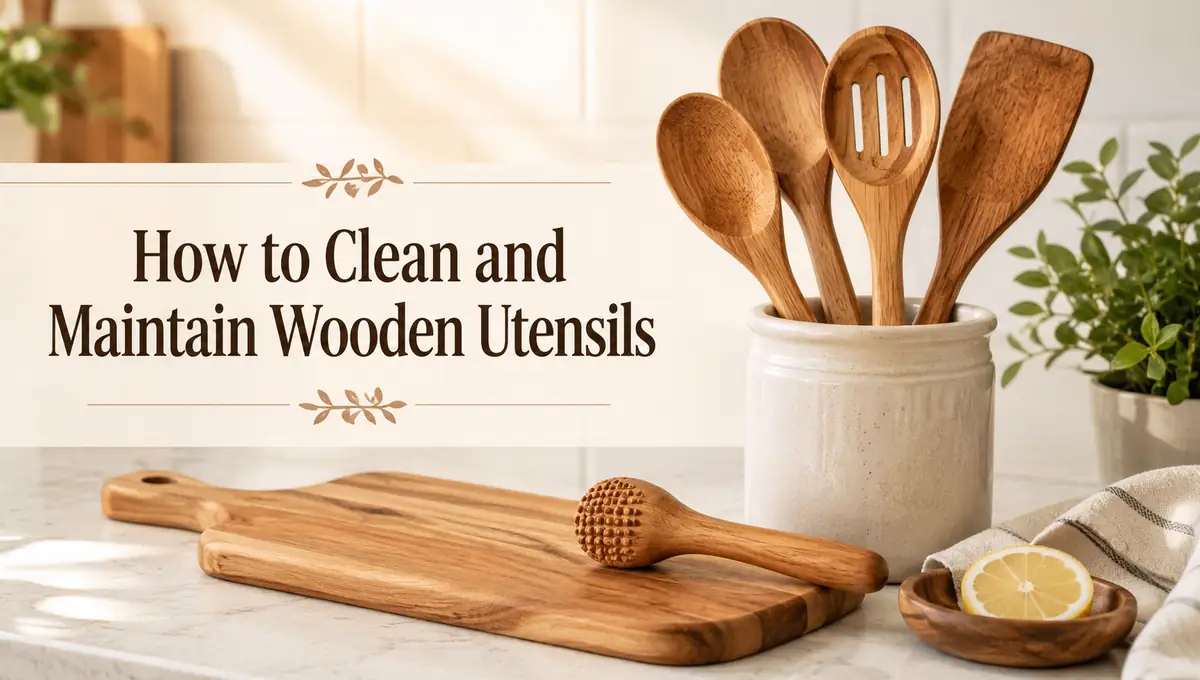
Wooden spoons, spatulas, and cutting tools bring natural warmth, balance, and durability to any kitchen. Because wood is a natural, porous organic material, it requires a bit more attention than stainless steel or plastic. If you want your wooden kitchen tools to last for years without splitting, smelling sour, or turning rough, you need a solid cleaning, maintenance, and prevention routine.
Home cooks searching for this topic want fast, safe, and practical home solutions without any confusing jargon. Alongside proper cooking habits, exploring broader kitchen organization and tool care guides can help you keep your entire culinary workspace clean and efficient. Here is your complete guide to cleaning, maintaining, and protecting your wooden utensils.
1. The Safe Daily Washing Routine
The biggest mistake people make is treating wooden tools like regular dinner plates. To keep wood healthy, follow these strict daily rules:
- Wash immediately: Never let food dry on wood. Rinse your tools under warm tap water right after cooking to wash away sauce and grease easily.
- Use mild dish soap: Apply a tiny drop of mild dish soap to a soft sponge. Never use heavy chemical degreasers or abrasive metal scrubbers.
- Hand wash only: Never soak wood in a sink full of standing water, and never put wooden spoons in the dishwasher. The intense heat, harsh detergent chemicals, and high-pressure water will warp, crack, and ruin them in a single wash cycle.
- Dry vertically: Always towel-dry your tools with a clean cloth and place them upright in an open container so air can circulate completely around them.
2. Deep Cleaning and Removing Tough Odors
Routine soap won’t remove stubborn garlic smells or sticky grease residues left behind by heavy frying. Use these natural home remedies to deep clean your tools:
- The Lemon and Salt Scrub: Lay the utensil flat, cover it generously with coarse salt, and scrub it using half a fresh lemon. Let the mixture sit for 10 minutes to draw out deep stains and odors, then rinse thoroughly with warm water.
- Vinegar and Warm Water: Wipe greasy or sticky spatulas with a clean cloth dampened in equal parts white vinegar and warm water to cut through polymerized oil residue instantly.
- Baking Soda Paste: For persistent onion, fish, or spice smells, mix baking soda with a few drops of water to form a thick paste. Rub it onto the tool, let it sit for 15 minutes, and rinse clean.
3. Essential Prevention Tips: Protecting Wood Before Damage Happens
Prevention is the easiest way to make your wooden utensils last a lifetime. Following these golden rules helps you avoid common kitchen mishaps:
- Never store damp tools in drawers: Trapped moisture creates the ideal dark environment for mold and black spots to grow. Always let tools dry 100% in the open air before putting them away.
- Avoid thermal shock: Do not leave wooden spoons resting inside a boiling pot of soup, curry, or sauce. Extreme, sudden heat causes the wood fibers to expand rapidly, leading to splits and warping.
- Say no to cooking oils: Never use kitchen oils like olive oil, vegetable oil, or canola oil to condition wood. These oils contain unsaturated fats that spoil over time, turn sticky, and emit a foul smell. Always use food-grade mineral oil.
- Inspect for deep splits: If a wooden spoon develops a deep crack or split where bacteria can hide, it is safer to discard it to keep your food hygienic.
4. Fixing Rough Wood and Regular Conditioning
Over time, hot water and washing can cause the wood grain to raise, making your smooth spoons feel rough or “hairy.” Here is how to restore them:
- Light Sanding: Once the tool is completely dry, take a fine-grit sandpaper (220-grit) and gently rub the rough spots only in the direction of the wood grain. Wipe away the fine dust with a dry cloth.
- Regular Oiling: Condition your wooden tools every 6 to 8 weeks. Pour a few drops of food-grade mineral oil onto a clean, lint-free cloth, rub it evenly over the clean dry tool, let it soak for 20 minutes, and buff away any excess oil.
Conclusion
Caring for wooden kitchen utensils is simple once you build the right daily habits. By washing them by hand immediately, using natural ingredients for deep cleaning, following smart prevention steps, and oiling them regularly, your favorite wooden spoons will stay clean, smooth, and beautiful for years to come.