
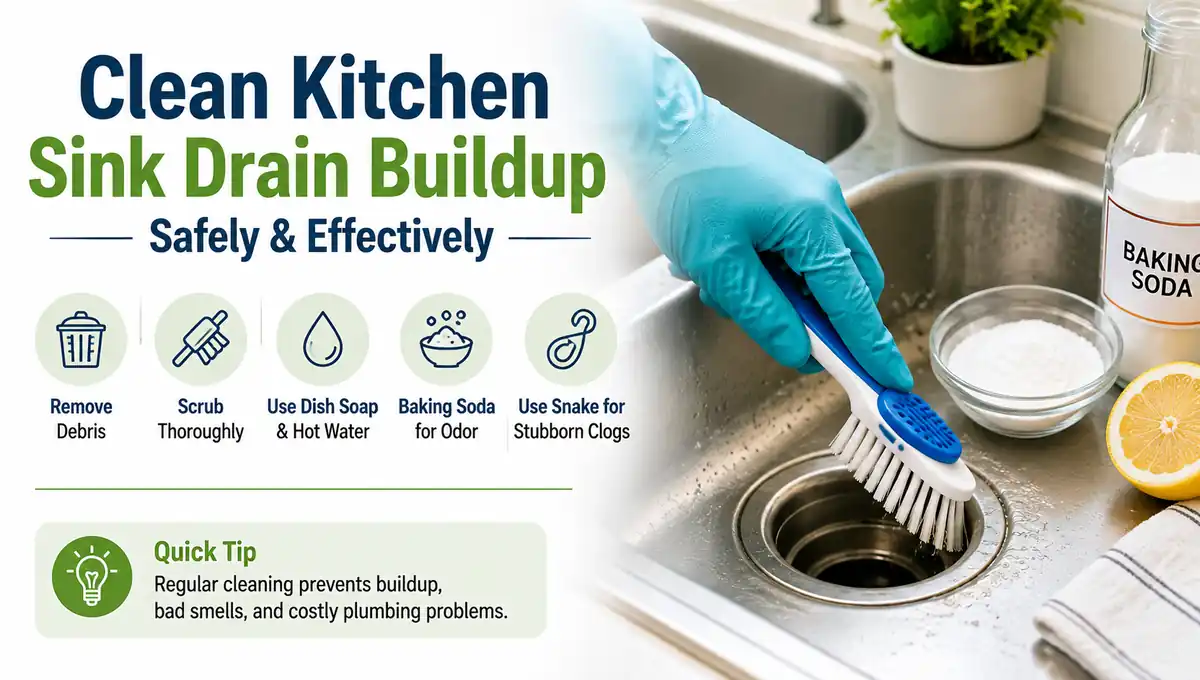
A dirty kitchen drain can smell sour, collect black gunk, hold grease, or start draining more slowly than usual. Knowing how to clean kitchen sink drain buildup safely means matching the method to the problem instead of pouring random cleaners into the pipe.
A drain that smells but still flows needs different treatment from a sink holding standing water. For routine cleaning, start with physical debris removal, dish soap, a brush, baking soda when odor is the issue, and hot tap water. If drainage stays slow, move to mechanical cleaning or the P-trap rather than using stronger chemicals.
Quick Answer
If you’re deciding how to clean kitchen sink drain buildup safely, remove visible debris first, scrub the opening, loosen light grease with dish soap, and flush with hot tap water. Use baking soda mainly for odor, not as a substitute for removing stuck material.
- Clean the strainer, stopper, and drain cover.
- Scrub visible gunk inside the opening.
- Flush light grease with dish soap and hot water.
- Clean disposal parts if your sink has one.
- Use a drain snake when buildup is physically blocking flow.
Is Your Drain Dirty, Smelly, Slow, or Actually Clogged?
Before choosing a cleaner, watch what the sink does. A dirty drain can still move water normally, while a partial clog usually shows up as slow drainage, gurgling, or water that lingers in the basin.
| Problem | Likely issue | Best first action | Avoid |
|---|---|---|---|
| Smells but drains normally | Food residue or organic film | Scrub and deodorize | Repeated harsh drain opener |
| Greasy film | Fats, oils, and grease | Dish soap and hot tap water | Adding more oil or grease |
| Black gunk near the opening | Stuck food and organic buildup | Brush and remove it physically | Depending only on fizzing mixtures |
| Slow drain | Partial blockage | Remove debris or use a drain snake | Treating it like surface dirt |
| Standing water | Significant clog | Unclog mechanically or get help | Mixing multiple chemicals |
Cleaning, deodorizing, and unclogging are different jobs. Match the method to the symptom before adding anything to the drain.
How to Clean a Kitchen Sink Drain in 7 Steps
These steps show how to clean kitchen sink drain buildup from the visible opening toward the pipe. Working in that order solves the easiest causes first and limits unnecessary exposure to chemicals.
Gather gloves, dish soap, a narrow brush, paper towels, baking soda if odor is present, and a small bucket if you may inspect the P-trap. If you have a garbage disposal, switch it off before cleaning any removable part.
1. Remove the Strainer, Stopper, and Visible Gunk
Take out the sink strainer, drain stopper, or removable cover. Lift away food scraps, greasy residue, and sludge with paper towels instead of pushing the material deeper into the pipe.
Wash the removable parts with warm water and dish soap. Use an old toothbrush or narrow cleaning brush around drain holes, grooves, and the underside of the stopper where grime can hide.
If visible gunk remains attached to a surface, physical removal is usually more useful than pouring another liquid over it.
2. Scrub the Drain Opening
Apply a small amount of dish soap to the brush and scrub the accessible walls of the drain opening. Focus on the rim, threads, stopper seat, and any dark or greasy film you can reach safely.
Rinse the brush often so you are lifting material out instead of spreading it around. If the basin needs attention too, clean your sink after the drain work so loosened residue does not stay on the sink surface.
This also helps when the drain smells but water moves freely, because residue can sit where a quick rinse never reaches.
3. Flush Light Grease With Dish Soap and Hot Tap Water
For light grease buildup, use a small amount of grease-cutting dish soap followed by hot tap water. Dish soap contains surfactants, compounds that help oil mix with water so greasy residue can be carried away more easily.
Do not treat boiling water as a universal drain-cleaning step. Current PVC drain, waste, and vent guidance from a major pipe manufacturer lists 140°F as the maximum operating temperature for PVC systems, so hot tap water is the safer default when you do not know your drain-pipe material.
Hotter is not automatically better; the pipe material matters.
4. Use Baking Soda for Lingering Odor
If the drain flows normally but smells stale, baking soda can be used as an odor-control step after visible debris is gone. Sprinkle some into the drain, let it sit, then flush it away with warm or hot tap water.
Baking soda is most useful here as a deodorizing aid, not as a cure for a solid clog or thick layer of kitchen grease. If the smell returns quickly, assume the source has not been removed and inspect deeper surfaces.
It is a simple natural option for odor, but natural does not mean effective against every type of buildup.
5. Clean the Garbage Disposal if You Have One
If your sink has a garbage disposal, odor and gunk can collect around the sink flange, rubber splash guard or baffle, and grind chamber. Turn the unit off before touching removable parts, and follow the disposal manual for any baffle that can be taken out.
Manufacturer guidance advises using cold water while the disposal grinds food and continuing the flow briefly afterward.
Never put your hand into the disposal chamber. If something is jammed or the unit will not run, treat that as an appliance troubleshooting problem rather than ordinary drain cleaning.
6. Use a Drain Snake for Physical Buildup
If the sink is still slow after you remove visible debris, a drain snake may be more useful than another cleaning mixture. A drain snake is a flexible cable that reaches into the pipe to break up or retrieve a blockage.
Feed the tool according to its instructions, avoid forcing it around a bend, and clean it after use. Drain-cleaning guidance also treats snaking as the logical next step when residue is physically blocking flow rather than merely causing odor.
A hand snake is not a guarantee. If the cable cannot reach the obstruction or the drain closes again soon afterward, stop repeating the same attempt.
7. Rinse the Drain and Clean the Sink Basin
Once water flows freely, rinse the drain and wash the sink basin with warm, soapy water. Drain cleaning can splash dirty material onto the basin, so finishing with the sink surface keeps the job from ending halfway.
Food-safety guidance from the U.S. Department of Agriculture separates cleaning from sanitizing. In one study, 34% of tested kitchen sinks were contaminated after meal preparation, which is why the agency recommends washing the sink and sanitizing it when food-preparation conditions call for it.
A clean drain does not automatically mean a sanitary sink surface, so treat them as separate jobs.
Does Baking Soda and Vinegar Really Clean a Drain?
Baking soda and vinegar create a visible fizz, but the reaction is not a powerful grease-cutting treatment. The acid and base react with each other, producing carbon dioxide bubbles while reducing the useful acidity and alkalinity that existed before mixing.
While comparing current drain-cleaning advice, I found a clear source disagreement here. Some household guides still recommend the combination, while current chemist-reviewed guidance says the reaction can cancel much of what each ingredient contributes when used separately.
The fizz may move loose particles, but bubbles do not prove that grease has dissolved. Greasy buildup calls for physical removal, dish soap, and appropriate water temperature.
Use baking soda mainly for odor after debris is removed. If you use vinegar, keep it away from chlorine bleach.
That safety rule is not optional. Chlorine bleach can release dangerous chlorine gas when mixed with certain cleaners, and public-health guidance warns not to mix household cleaning products.
“My Drain Still Stinks”: Find the Real Odor Source
If a smelly kitchen sink drain smells again soon after cleaning, the source is probably still present. Stop adding fragrance and check the places where wet food residue can stay trapped.
Start with the underside of the strainer or stopper and the first few inches of the drain opening. Visible mold, mildew, slime, or black gunk needs physical cleaning rather than another deodorizing rinse.
With a garbage disposal, inspect the rubber splash guard or baffle. The top can look clean while the underside still holds food film.
If there is no disposal, or the odor survives a thorough cleaning, consider the P-trap. The P-trap is the curved section of pipe under the sink that keeps a small water seal between the room and sewer gases, but debris can also collect inside it.
Odor combined with slow drainage points more strongly toward buildup or a partial clog. A persistent sewage-like smell, leaking trap, or several affected fixtures deserves plumbing diagnosis rather than repeated deodorizing.
Lemon can freshen a disposal briefly, but scent is not cleaning. If the smell returns, the source remains.
How to Clean a Kitchen Sink Drain With a Garbage Disposal
A garbage disposal changes where you should look for buildup, but the basic rule stays the same: remove food residue before trying to deodorize it. Turn off the unit first and follow its care manual for removable parts.
Clean the sink flange and both accessible sides of the rubber splash guard or baffle. A narrow brush can reach folds and edges that running water misses.
Cold running water is generally used while the disposal is grinding food, according to current manufacturer operating guidance. Let the water continue briefly after grinding so particles move out of the chamber and into the drain line.
A disposal is not a trash can. Grease and excess food can still create trouble farther down the kitchen drain pipe.
If the disposal hums, stops, leaks, or fails to grind, stop treating the problem as drain odor. Those signs point to disposal service or troubleshooting, not another dose of baking soda or lemon.
How to Remove Black Gunk, Sludge, and Grease
Black gunk, sludge, and sticky buildup call for physical removal first. If you can see the material, use a brush or disposable towel to lift it out instead of washing it deeper into the pipe.
For grease, use dish soap and hot tap water after removing solids. Fats, oils, and grease, often shortened to FOG, can cling to drain lines and contribute to blockages as more debris sticks to them.
A slow drain after surface cleaning suggests the blockage sits farther down. A drain snake can reach some obstructions, while a removable P-trap may contain material that a top-down brush cannot reach.
Before opening a P-trap, place a bucket underneath and take a quick photo of how the washers and slip-joint nuts are assembled. If the fittings are corroded, glued, leaking already, or difficult to move, do not force them.
A simple slip-joint trap may be removable, but forcing brittle fittings or reinstalling a washer incorrectly can create a leak. If the same sludge returns, the problem may be farther along the line.
How to Clean a Kitchen Sink Drain Without Vinegar
Vinegar is optional, so a vinegar-free drain routine is straightforward. Remove visible debris, scrub accessible surfaces, use dish soap for oily residue, and rinse with warm or hot tap water.
Baking soda can be used alone when odor is the main complaint. A drain snake handles physical buildup without vinegar, and an enzyme drain cleaner may be an option for compatible plumbing when its label specifically fits the problem.
Read the label before using any commercial cleaner, and never mix cleaners unless the manufacturer explicitly permits it.
For a kitchen sink drain with no disposal, this simple sequence is often enough because there is no grind chamber or splash guard to inspect. If water still drains slowly, move from cleaning to clog diagnosis.
What Should Never Go Down a Kitchen Sink Drain?
The easiest way to keep a kitchen sink drain clean is to stop feeding it materials that turn into buildup. Prevention also reduces how often you need stronger cleaning methods.
- Keep cooking fats, oils, and grease out of the drain.
- Scrape large food scraps into the trash or appropriate food-waste container.
- Keep coffee grounds out because they can collect with grease and other debris.
- Use a sink strainer to catch solids before they enter the pipe.
- Do not pour paint, solvents, or other hazardous household chemicals into the drain.
- Never combine household cleaners in the drain.
A garbage disposal does not cancel these rules; it cannot stop grease from coating pipe walls downstream.
Grease also travels beyond the house. Public wastewater guidance identifies FOG as a contributor to sewer blockages, which makes keeping it out of the sink useful for both household plumbing and the larger sewer system.
If cooking residue has spread beyond the sink, clean kitchen cabinets with a method suited to their finish.
How Often Should You Clean a Kitchen Sink Drain?
There is no single evidence-based schedule for every kitchen. The useful schedule is symptom-based: clear the strainer during normal cleanup, wash accessible drain parts when film appears, and deep-clean when odor or slower flow starts developing.
Heavy daily cooking creates residue faster, and disposal baffles may need more frequent cleaning because food can hide underneath.
Do not confuse drain maintenance with sink sanitation. Food-safety guidance calls for cleaning the sink after food preparation and sanitizing when needed, but that does not mean the drain pipe itself requires disinfecting on the same schedule.
A good maintenance rule is to act on early signs. Cleaning a little gunk is easier than waiting until the drain is slow enough to require a snake.
When DIY Drain Cleaning Is Not Enough
DIY cleaning is reasonable for visible gunk, mild odor, light grease, and some reachable partial clogs. Stop when the symptoms suggest a deeper blockage, damaged plumbing, or a problem affecting more than one fixture.
Call a plumber or seek professional diagnosis if:
- standing water will not clear
- several fixtures drain slowly at once
- the clog quickly returns after snaking
- water backs up into another fixture
- the P-trap or another fitting leaks
- you see a cracked or damaged pipe
- sewage odor continues after the drain is clean
Cost is part of this decision. Published U.S. pricing updated in March 2026 lists kitchen-sink drain snaking around $110 to $215, while professional drain cleaning more broadly runs about $147 to $352. Prices vary by region, clog severity, access, and service-call policies.
If you already own dish soap, gloves, and a brush, routine cleaning may require no special purchase. A hand snake adds a one-time tool cost, but paying for a plumber becomes sensible when repeated DIY attempts risk a leak or fail to reach the blockage.
Do not escalate from one chemical to a stronger one just because the first failed. A persistent obstruction needs diagnosis or mechanical removal.
Frequently Asked Questions
Can I Pour Bleach Down a Kitchen Sink Drain?
Bleach is not a good default treatment for grease, sludge, or a physical clog. If a bleach-based product is used for a labeled purpose, follow its directions and ventilation requirements. Never mix bleach with vinegar, acids, ammonia, or other cleaners because dangerous vapors can be released.
Why Does My Sink Smell When the Dishwasher Runs?
If odor appears mainly when the dishwasher drains, inspect the disposal, sink drain connection, and accessible dishwasher drain path for trapped food or stagnant residue. The dishwasher usually discharges into the sink plumbing or disposal, so odor can become noticeable during that flow. If drainage is poor, water backs up, or the setup looks incorrect, have the connection checked.
Can Fruit Flies Live in a Kitchen Sink Drain?
Small flies near a kitchen drain are not always fruit flies. Drain flies are a separate pest that develops in the wet organic film found inside dirty drains, and university pest guidance says removing that film is the key control step. If true fruit flies are present, also remove ripe produce, spills, trash, and other fermenting food sources.
Keep the Drain Clean Without Overdoing It
Knowing how to clean kitchen sink drain buildup safely is mostly about choosing the right level of treatment. Remove solids first, scrub accessible gunk, use dish soap for grease, and use hot tap water rather than assuming boiling water suits every pipe.
Move to a snake or plumbing help when flow stays slow. Prevent grease and food scraps from entering the drain, and use kitchen maintenance ideas to keep the surrounding area easier to clean.




2 thoughts on “How to Clean Kitchen Sink Drain Safely in 7 Simple Steps”