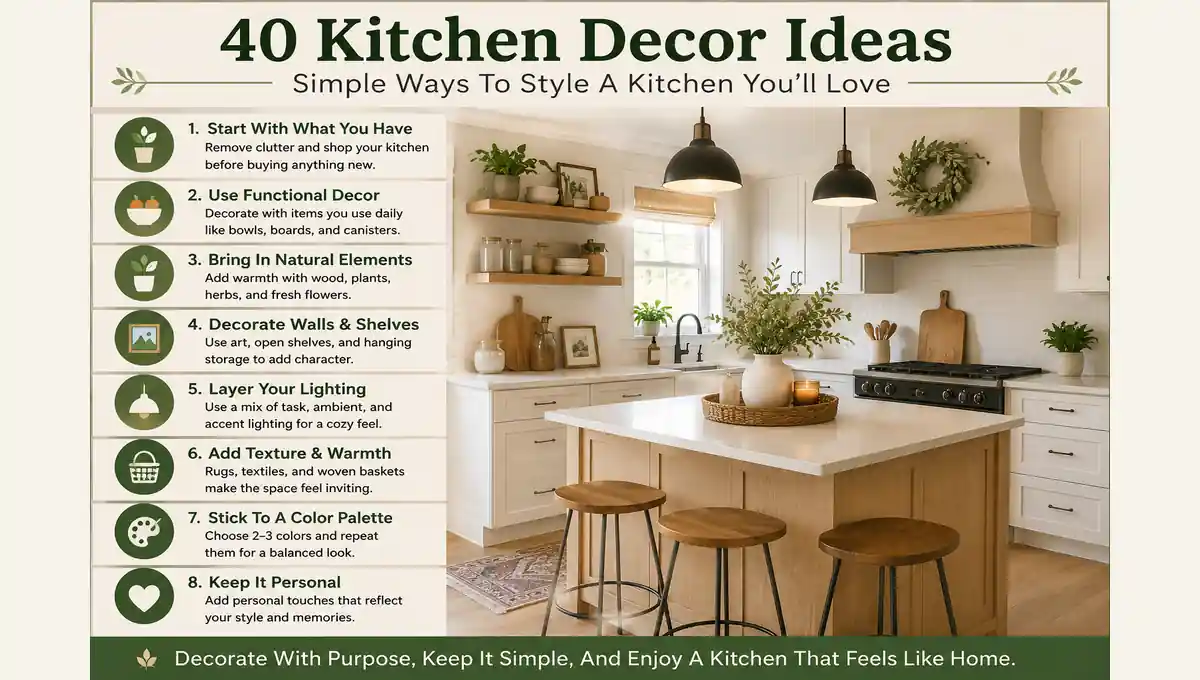
Kitchen decor works best when it makes the room feel intentional without taking away the space you need to cook, clean, and move. A finished kitchen does not need something on every wall, shelf, counter, and cabinet top. It needs a few repeated colors or materials, useful objects that look good, and enough empty space for the room to breathe.
The 40 ideas below are organized by real kitchen zones rather than products to buy. You will know what to add, what to remove, how to handle small spaces, and when the kitchen already has enough visual interest.
Quick Answer
Good kitchen decor starts with what the room already has. Keep work surfaces clear, repeat a small number of colors and materials, and decorate zones that do not interfere with cooking, cleaning, or appliance use. Useful objects should carry much of the visual load.
- Remove clutter before buying anything new.
- Style counters around daily-use items.
- Use walls and windows when counter space is limited.
- Keep islands and tables simpler than display shelves.
- Stop when the room feels connected, personal, and easy to clean.
What Makes a Kitchen Feel Finished?
A kitchen feels finished when its colors, materials, useful objects, and empty spaces look connected rather than accidental. More accessories do not automatically improve the room. A clear focal point, repeated visual cues, personal detail, and controlled negative space usually do more.
While comparing retail collections with homeowner discussions, one pattern stood out: stores naturally show more things to add, while homeowners often struggle with having too much already. That difference matters when judging kitchen decor ideas.
- Choose one main visual anchor. Let the range wall, window, island, art, lighting, or backsplash lead instead of making every surface compete.
- Repeat two or three materials. Warm wood, white ceramic, and black metal can appear in different zones without making everything match exactly.
- Leave some surfaces quiet. Negative space means an area with little visual activity. It helps stronger pieces stand out and keeps the room calmer.
- Work with existing finishes. Bold stone, colorful cabinetry, patterned tile, or strong lighting may already provide enough interest. A busy backsplash usually needs quieter accessories, not more pattern.
Expensive accessories cannot fix poor scale or too much clutter. Rearranging what you already own can sometimes produce the biggest improvement at no added cost.
Before You Add Decor, Decide What Should Leave
If the kitchen already feels cluttered, adding decor usually makes the problem worse. Clear objects that do not earn their space, then judge the room again. This matters most on countertops because decoration competes directly with food prep and appliance use.
- Store rarely used appliances. A mixer, blender, or specialty appliance that comes out occasionally does not need permanent counter space.
- Group loose daily-use items. Salt, oil, pepper, and a spoon rest look calmer when they form one working group instead of four separate displays.
- Remove paper and charging clutter. Mail, receipts, keys, cables, and school papers rarely support the room visually.
- Protect your main prep zone. Keep the area where you chop, mix, plate food, or unload groceries open.
A landing space is the clear counter area where you temporarily set groceries, hot cookware, or food near an appliance. Do not fill these useful spaces merely because an empty counter looks unfinished in a photo.
The cheapest decorating move is often subtraction. It also lowers cleaning effort because fewer objects have to be moved before wiping the counter.
Style Counters and Coffee Zones Without Losing Workspace
Kitchen counter decor should be useful, visually strong, or both. Keep the main work area open, then build small groups near a wall, corner, or appliance that already lives there. These countertop decor ideas give more examples for work surfaces.
- Use one fruit bowl. One larger shape usually looks calmer than several small containers and gives fruit a permanent home.
- Lean a few cutting boards together. Wood introduces warmth and height while keeping boards close to where you use them.
- Put everyday tools in a utensil crock. Wooden spoons, spatulas, and whisks can become functional kitchen decor instead of drawer clutter.
- Use a tray for a real working group. Oil, salt, pepper, or coffee supplies make sense together. A tray filled with decorative filler only creates another object to clean.
- Build one contained coffee zone. Keep the machine, mugs, beans or pods, and daily supplies together. Good coffee bar ideas consolidate existing items rather than multiplying them.
- Choose decorative canisters for food you actually use. Coffee, tea, flour, or sugar can justify the space. Empty canisters placed only for appearance usually cannot.
- Add one living element. Herbs, a small plant, flowers, or a simple branch can soften hard kitchen surfaces.
Should kitchen counters have decor? They can, but empty space should win wherever you regularly prepare food. If a display moves every time you cook, it belongs somewhere else.
Decor near a range also picks up grease faster. Near a sink, it faces splashes. Favor objects that are easy to lift and wipe around.
Use Walls, Shelves, and Cabinet Tops Carefully
Kitchen wall decor can add personality without using counter space, which makes walls especially useful in compact rooms. Choose the wall based on scale and maintenance. An eating-area wall can handle different materials than a surface beside a greasy range.
- Hang one well-scaled art piece. One larger print or painting often handles an empty kitchen wall better than many undersized frames.
- Create a small plate or basket display. Repeating shape can make a collection look intentional even when the pieces are not identical.
- Add a peg rail for useful objects. Aprons, baskets, brushes, or lightweight tools can decorate the wall while freeing storage elsewhere.
- Style open shelves with everyday dishes first. Bowls, plates, glasses, and mugs justify their space because you use them.
- Leave cabinet tops empty when the gap is tight. Above kitchen cabinet decor works only when objects have enough vertical room. A narrow gap filled with tiny pieces often looks dusty and crowded.
- Use a mirror where it can reflect light or an attractive view. Avoid placing one where grease or water will make upkeep annoying.
Kitchen shelf decor needs visible breathing room. Packing floating shelves from end to end makes useful storage look like clutter and increases dusting.
Modern kitchen wall decor can be as simple as one abstract print or a narrow rail. Farmhouse kitchen wall decor may lean toward wood, pottery, or restrained vintage art. The styling rule is the same: match the scale to the wall.
If the wall needs pattern more than objects, kitchen wallpaper ideas offer an alternative to filling it with accessories.
Keep Island and Table Decor Simple
Kitchen island decor usually needs less effort because an island already commands visual attention. Keep enough surface open for prep, serving, homework, or seating. One centerpiece is often enough.
- Use one low centerpiece. A fruit bowl, ceramic vessel, or tray grounds the island without blocking views.
- Add flowers or branches carefully. Taller arrangements work better when they do not interrupt conversation or compete with pendant lights.
- Let a serving bowl double as decor. Wood or ceramic can look good empty and still serve a practical job later.
- Add a table runner for softness. If the fabric already carries color or pattern, keep the centerpiece quieter.
- Match a kitchen table through one shared feature. Repeat a wood tone, metal finish, color temperature, or level of formality rather than matching the cabinets exactly.
That approach answers the common question of how to match a kitchen table with your decor. A table can belong without looking like part of a matching furniture set.
For broader table, chair, bench, and storage choices, use a kitchen furniture guide to judge the pieces together.
Centerpiece kitchen island decor ideas should also pass a practical test: can you move the whole arrangement quickly? If clearing the island requires carrying six fragile objects away, the display is too complicated.
Add Character With Lighting, Windows, Rugs, and Textiles
Lighting, window treatments, and textiles add color and softness without filling counters. These elements work especially well when the cabinetry or backsplash already provides plenty of hard visual detail.
- Let pendant lights repeat another finish. Brass, black, glass, or another existing material can link the ceiling to hardware or furniture below.
- Keep task lighting separate from decorative lighting. Task lighting provides clear light for chopping, cooking, and cleaning. A decorative lamp or pendant should not leave a work surface dim.
For more placement options, these kitchen lighting ideas separate visual lighting from practical work lighting.
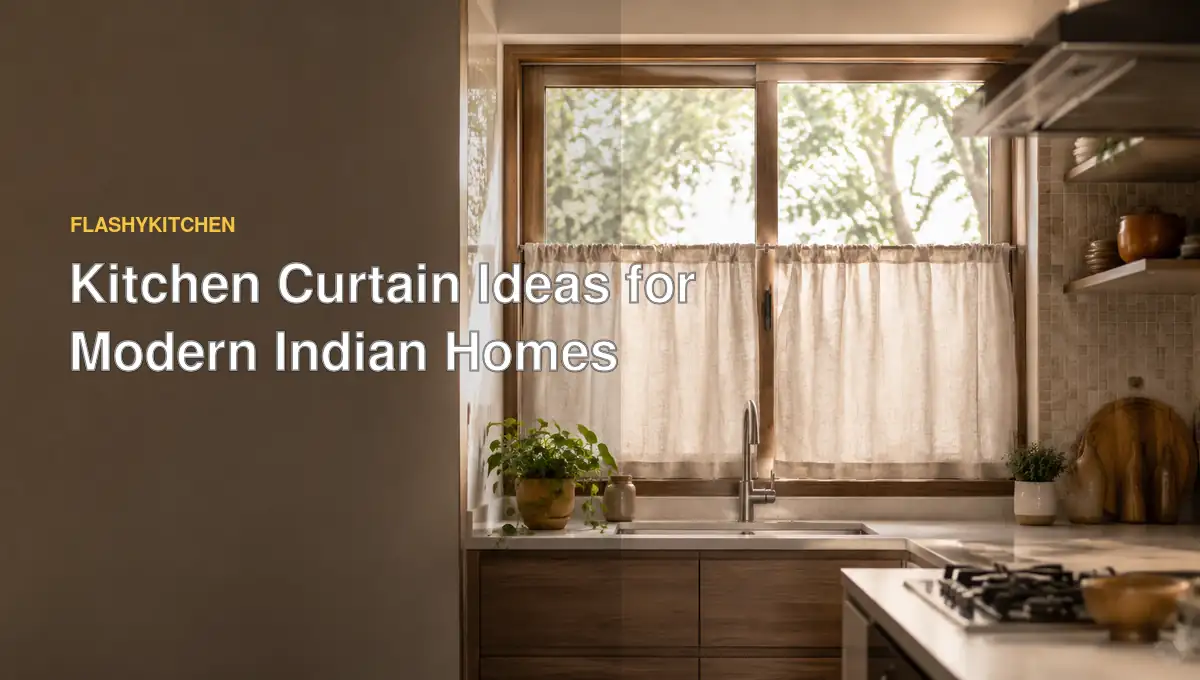
- Soften a window with a washable treatment. Café curtains, Roman shades, or kitchen blinds can add privacy, color, and texture.
- Add a runner where it stays clear of hazards. A kitchen rug can introduce pattern and warmth, but it should lie flat and suit a high-traffic area.
- Repeat an accent color through textiles. Towels, cushions, a runner, or placemats let you test yellow, red, blue, or another stronger color before making a fixed change.
If you replace a hardwired light fixture rather than simply adding a portable lamp, electrical requirements vary by location. Use a licensed electrician where local rules or the work require one.
Textiles near a range or sink should also be easy to wash. A material that traps grease or stays damp creates more maintenance than visual benefit.
Choose a Style and Color Direction
A style direction helps accessories look related without requiring every object to match. Modern, farmhouse, vintage, retro, rustic, and country kitchen decor can all follow the same rule: repeat a few materials and colors, then stop before the theme takes over.
- Keep modern kitchen decor restrained. One sculptural bowl, simple artwork, glass, or a clean-lined accessory often works better than many small pieces.
Modern kitchen decor ideas usually benefit from stronger shapes and fewer objects. The same principle works for modern kitchen wall decor.
- Make farmhouse kitchen decor practical. Wood boards, ceramic crocks, baskets, linen, and simple artwork feel more natural than filling the room with decorative word signs.
Modern farmhouse kitchen decor can use cleaner cabinet lines and fewer rustic objects while keeping wood, woven texture, and warm neutrals.
- Use vintage kitchen decor selectively. An old painting, enamel piece, pottery, glassware, or one retro object can add history without making every appliance look old.
Retro kitchen decor works the same way. One recognizable period cue is often more convincing than turning the kitchen into a themed set.
- Build black and white kitchen decor with texture. Wood, plants, stoneware, woven material, and warm metal keep the limited palette from feeling flat.
- Repeat red or yellow in small doses. Yellow kitchen decor might use a bowl, artwork, or towels. Red kitchen decor can work through a stool, cookware, print, or one appliance.
Rustic kitchen decor and country kitchen decor can rely on natural wood, pottery, baskets, and aged finishes. Too much deliberate distressing can make the room feel staged.
The same principle applies across styles: choose a direction, not a costume.
Small Kitchens and Renters: Use Space, Not Clutter
Small kitchen decor ideas should move personality away from scarce work surfaces and into walls, windows, lighting, rugs, and useful storage. Renters can use the same method because many of these changes leave fixed finishes alone.
- Move decoration upward. One wall, window treatment, or shelf can add personality without reducing prep space.
- Choose one larger object instead of many small pieces. A plant, bowl, vase, or framed print produces less visual noise.
- Let storage become decor. Attractive dishes, cutting boards, jars, towels, and baskets add texture without creating a separate collection of objects to store.
- Shop your own home first. Move artwork, pottery, bowls, trays, or textiles from another room before spending money on new pieces.
For a budget update, start with rearranging existing objects, then textiles, art, and plants. Lighting, wallpaper, hardware, shelving, and fixed surface changes require more commitment and usually cost more to reverse.
Renters should check lease terms and test removable products in an inconspicuous area. A product labeled removable does not guarantee that every paint finish, drywall surface, or old adhesive layer will remain undamaged.
What Makes Kitchen Decor Look Cluttered?
Kitchen decor looks cluttered when too many objects compete for attention or useful work zones become display areas. The problem is often the total visual weight of many small pieces rather than one obviously bad item.
Across the homeowner discussions reviewed for this topic, the repeated concern was not a lack of shopping options. People were trying to find the line between “something is missing” and “this feels too busy.” That is why subtraction deserves as much attention as adding decor.
Watch for common warning signs: every counter corner contains a display, shelves are packed edge to edge, cabinet tops hold many unrelated items, and strong wall patterns compete with colorful accessories.
One larger object can often replace several smaller ones. Grouping daily-use items also helps the eye read them as one unit.
Open shelving has a real limitation. It gives easy access and display space, but objects remain visible and exposed to dust and kitchen residue. If you prefer concealed storage and fast cleaning, closed cabinets are the better alternative.
Cleaning provides the final test. Decor beside the stove collects grease, pieces near the sink catch splashes, and crowded counters slow routine wiping. If an object regularly gets in the way, the room will work better without it.
Make the Kitchen Feel Finished, Then Stop
Good kitchen decor should support daily life rather than create a room you have to clear before using. Start by removing clutter, protect the main work zones, then choose one or two areas that genuinely need more color, texture, or personality.
Use these 40 ideas as options, not a checklist. Once the kitchen feels connected, personal, easy to clean, and comfortable to cook in, the best final styling decision is to stop adding things.
One thought on “Quick Kitchen Decor Ideas: 40 Ways to Style a Kitchen That Feels Finished”